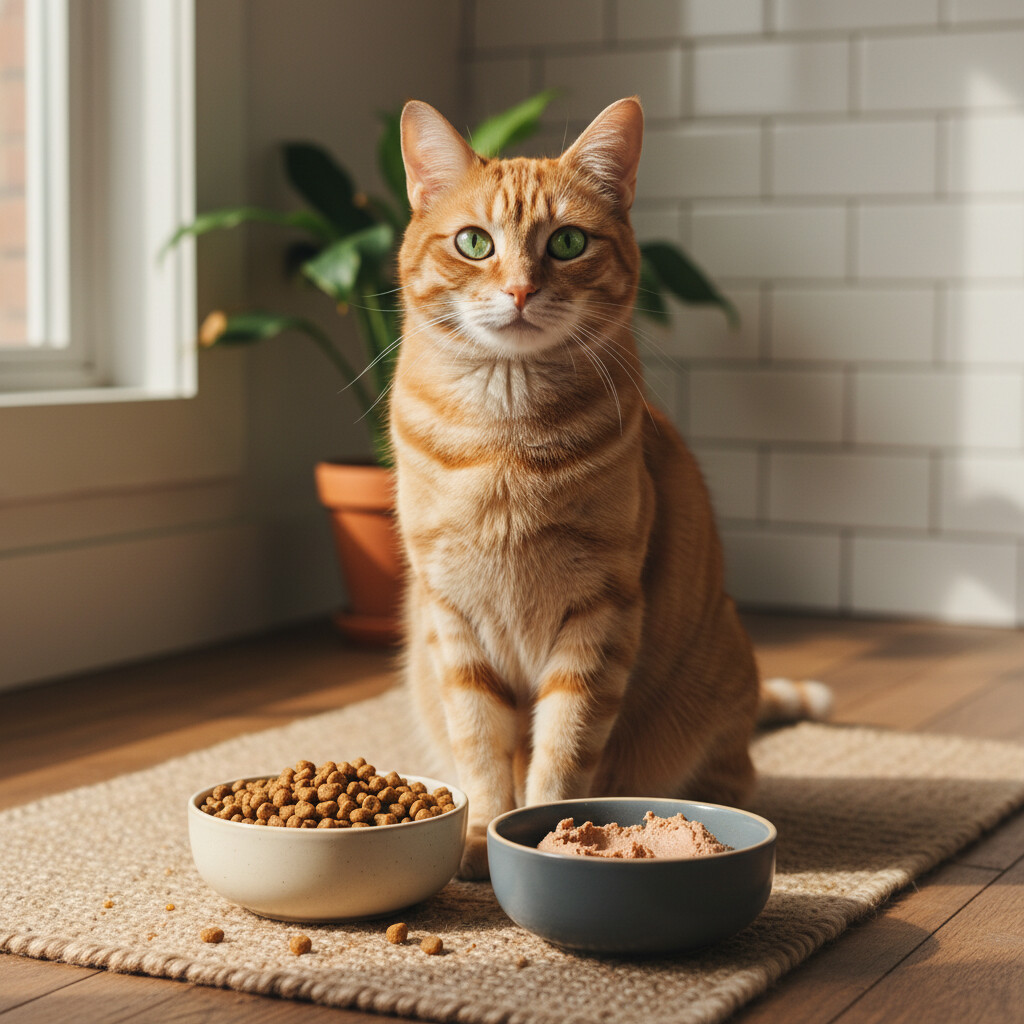
Switching cat food too fast is the most common cause of vomiting and diarrhea in otherwise healthy cats. A gradual transition — typically 7–10 days — avoids digestive upset and gets even finicky cats accepting new food. Here’s the exact method, and what to do when it doesn’t go smoothly.
Why Cats React Badly to Sudden Food Changes
Unlike dogs, cats have highly adapted digestive systems calibrated to a narrow prey-based diet. Their gastrointestinal bacteria are tuned to their current food. When you change the protein source, calorie density, or moisture content abruptly, the gut flora gets disrupted — leading to loose stools, vomiting, and sometimes outright refusal to eat.
There’s also a sensory component. Cats rely heavily on scent to evaluate food. A new smell can trigger food neophobia — a genuine avoidance response, not stubbornness. Some cats need gradual scent exposure before they’ll accept a new food at all.
The 7–10 Day Transition Method
This is the schedule recommended by most board-certified veterinary nutritionists and the AAFP:
| Day | Old food | New food |
|---|---|---|
| 1–2 | 75% | 25% |
| 3–4 | 50% | 50% |
| 5–6 | 25% | 75% |
| 7–10 | 0% | 100% |
Mix the foods together in the bowl — don’t serve them separately, as many cats will pick out the old food and leave the new.
If your cat shows loose stools or vomiting during the transition, hold at the current ratio for an extra 2–3 days before progressing. A cat with a very sensitive gut may take 14–21 days to fully transition.
When to Go Faster or Slower
Faster transitions may be appropriate when:
- Your vet recommends an immediate dietary change (a prescription urinary or kidney diet after a diagnosis, for example)
- The cat is refusing the old food entirely
In these cases, your vet will advise on the timeline. Don’t attempt a fast transition on your own for a cat already showing symptoms.
Go slower if:
- Your cat has a history of IBD, food sensitivities, or chronic GI issues
- Your cat is elderly — senior cats often have more sensitive digestion and more entrenched food preferences (see our guide to caring for older cats for context on how digestion changes with age)
- You’re switching from dry to wet food, which is one of the harder transitions due to the dramatic change in texture and moisture
Switching from Dry to Wet Food
Dry-to-wet is the transition most likely to cause refusal — not because cats dislike wet food, but because the texture, smell, and moisture content change dramatically.
Warming wet food slightly (to body temperature, around 38°C/100°F) significantly improves acceptance. It intensifies the smell and mimics freshly caught prey. Microwave for 5–10 seconds, then stir and test with your finger.
Some cats do better if you start by placing a small amount of wet food alongside (not mixed with) their dry food for the first few days — purely for scent exposure — before beginning the actual ratio transition.
The case for making this switch is solid: cats evolved as desert animals and naturally get most of their water from prey. Most cats on dry-only diets are chronically underhydrated, which stresses the kidneys over time. See our article on how much water cats should actually drink for more on this.
Handling a Finicky Cat
Some cats aren’t food neophobic — they’re just very food-motivated for a specific texture or formula and will actively reject alternatives.
Strategies that work for reluctant transitioners:
Appetite stimulation: Add a small amount of a strong-smelling topper to the new food — low-sodium tuna in water, a few drops of clam juice, or a small amount of warmed chicken broth (make sure it’s onion and garlic free — both are toxic to cats). Use it to make the new food more appealing early on, then taper off over a few days.
Hunger cycles: Cats who graze all day are less motivated to try new foods. If you’re hitting resistance, remove the food bowl after 30 minutes and don’t offer food again for 8–12 hours. Hunger is the best appetite opener — but never withhold food from a cat for more than 24 hours. Feline hepatic lipidosis (fatty liver disease) can develop rapidly in cats who stop eating, particularly in overweight cats.
Texture bridges: If going from pâté to chunks in gravy (or vice versa), look for an intermediate texture. Some cats that reject both pâté and chunky styles will accept a shredded or minced format.
Signs the Transition Is Going Well
- No vomiting or diarrhea during the changeover
- Cat eating the mixed portions without picking around the new food
- Normal litter box output throughout
- Energy and behavior unchanged
When to See a Vet
A food transition should not cause significant illness. Contact your vet if:
- Your cat vomits more than once or twice over a week of transitioning
- Your cat refuses food entirely for more than 24 hours
- There is blood in the stool
- There is significant lethargy alongside food changes
Cats who repeatedly refuse new foods despite everything above may have dental pain that makes eating certain textures uncomfortable — worth raising at your next vet visit. And if you’re not sure how much to feed once the transition is done, our calorie guide by weight covers the calculation from scratch.
The Bottom Line
Give your cat 7–10 days, mix the foods in the bowl, and watch for GI symptoms. Slower is almost always better. A cat that takes 3 weeks to fully accept a new food is fine — a cat that vomits for a week and then refuses to eat at all is a more serious problem.
If your vet recommends a specific dietary change, ask them: “How fast does this need to happen?” The answer shapes everything.