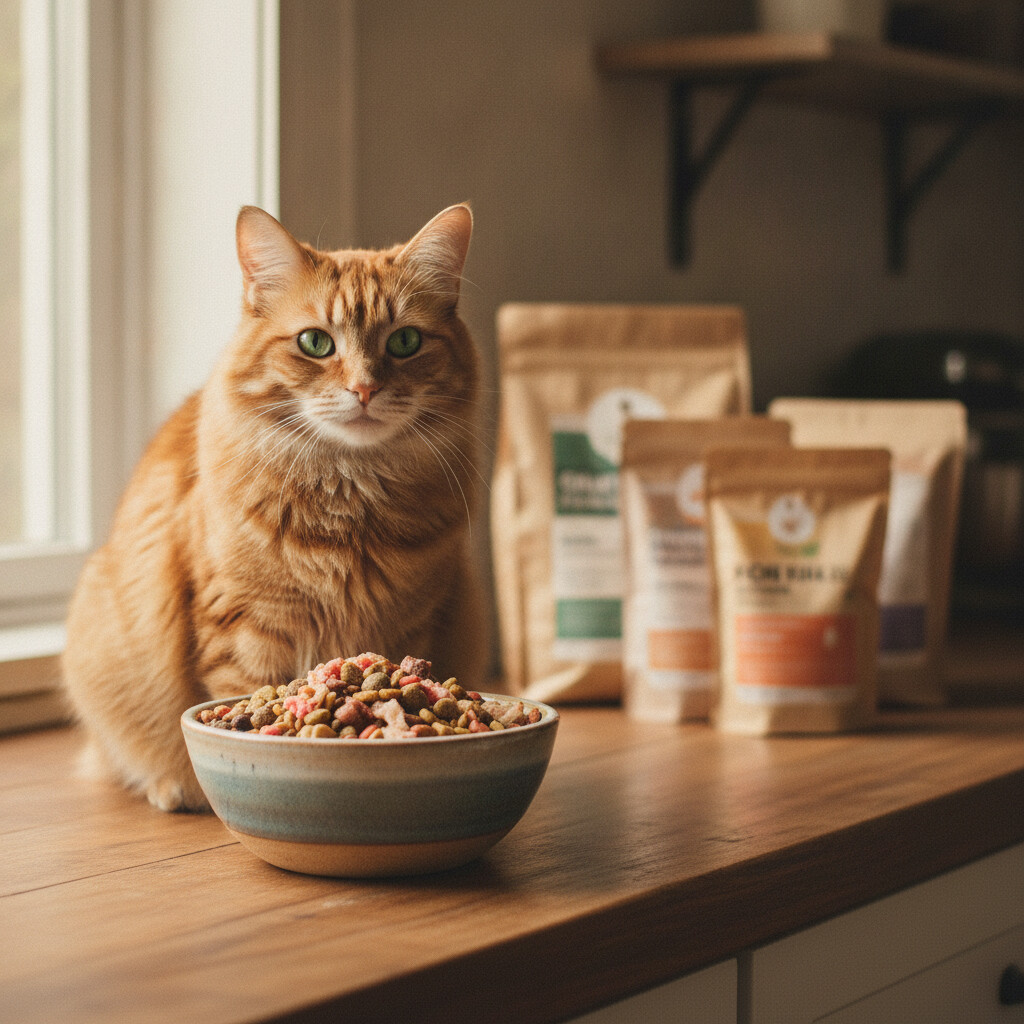
Grain-free cat food is everywhere, marketed as a more natural, species-appropriate choice. The honest answer: for most cats, it makes no meaningful difference — and some grain-free formulas are actually worse than a well-made grain-inclusive food. Here’s what the evidence shows.
Where the Grain-Free Trend Came From
The grain-free movement in pet food started with dogs and largely migrated to cat food without much scrutiny. The logic: dogs evolved from wolves, wolves don’t eat grain, therefore grain is unnatural and inferior.
Even for dogs this reasoning is flawed — domestic dogs evolved alongside humans over thousands of years and developed digestive adaptations for starch that wolves lack. For cats, the argument makes even less sense.
The genuine concern for cats is high carbohydrate loads in the context of obesity or diabetes management. That’s real — but it’s not the same as saying grain is inherently bad. A grain-free food can still be high in carbohydrates if those calories come from other plant starches like potato, pea, or tapioca. Some grain-free formulas are higher in carbohydrates than grain-inclusive equivalents.
What Cats Actually Need From Food
Cats are obligate carnivores. Their nutritional requirements are built around animal protein in ways that can’t be substituted:
Taurine — an essential amino acid found almost exclusively in animal tissue. Cats cannot synthesise it adequately on their own; it must come from diet. Taurine deficiency causes dilated cardiomyopathy (DCM) and retinal degeneration. This is established, well-documented cat nutrition fact (AAFP and WSAVA both have published guidance on it).
Arachidonic acid — an essential omega-6 fatty acid cats cannot synthesise from plant precursors the way dogs and humans can. It must come from animal fat.
Preformed vitamin A — cats cannot convert beta-carotene from plant sources to vitamin A. They need preformed vitamin A from animal tissue (liver is the primary source in commercial foods).
Grains don’t provide any of these. But they also don’t block any of these. A food that meets AAFCO or WSAVA nutritional standards will contain adequate taurine, arachidonic acid, and preformed vitamin A — whether or not it contains grain.
What the Research Actually Shows
No peer-reviewed study has demonstrated that grain-free diets produce better health outcomes in cats compared to well-formulated grain-inclusive diets.
The most significant recent development in this space was the FDA’s investigation into dilated cardiomyopathy in dogs eating certain grain-free diets, published in a series of updates from 2018 to 2022. The investigation identified a possible association between DCM in dogs and diets high in legumes (peas, lentils, chickpeas), which are common grain substitutes in grain-free formulas.
Cats were largely outside the scope of this investigation. Feline DCM is primarily caused by taurine deficiency — and taurine deficiency can occur in any poorly formulated food, grain-free or not. A cat food that meets the AAFCO minimum taurine requirement (0.1% dry matter for dry food) carries minimal DCM risk regardless of whether it contains grain.
The World Small Animal Veterinary Association (WSAVA) and the British Veterinary Association both advise against selecting pet food based primarily on grain-free marketing. Their guidance emphasises choosing manufacturers with qualified nutritionists, dedicated research programs, and transparent feeding trial data — not whether the label says “grain-free.”
What to Actually Look For on the Label
Ignore the grain-free question and ask these instead:
Is animal protein the primary ingredient? The first ingredient should be a named meat or fish: chicken, salmon, beef. “Meat meal” or “chicken by-product meal” as the lead ingredient is a different quality tier. This tells you whether the food is genuinely protein-led.
Does it meet AAFCO standards for your cat’s life stage? The AAFCO nutritional adequacy statement should say “complete and balanced” for your cat’s life stage. If it says “for intermittent or supplemental feeding only,” it’s not a complete diet.
Is it made by a company with a qualified nutritionist on staff? WSAVA specifically recommends choosing foods from manufacturers who employ a board-certified veterinary nutritionist (DACVN) and conduct feeding trials. This information is usually available on the manufacturer’s website.
What replaced the grain? In grain-free foods, check whether pea protein, lentils, or potato starch are high on the ingredient list. These aren’t dangerous, but they’re also not more “natural” than grain — and high-pea formulas can be lower in digestible protein than they appear, because plant protein has lower bioavailability for cats than animal protein.
If you’re already in the habit of reading labels, the How to Transition Your Cat to a New Food Without Drama article covers the guaranteed analysis panel in detail. For thinking through how protein content translates to portion size, How Much Should I Feed My Cat? A Calorie Guide by Weight covers the full calculation.
The Bottom Line
Grain-free is a marketing category, not a nutritional one. A premium grain-free food is usually fine. A cheap grain-free food with potato starch as the second ingredient and a marginal taurine level is worse than a quality grain-inclusive food that meets all AAFCO standards.
The cats who genuinely benefit from reduced-carbohydrate diets are those with diabetes or obesity — and in those cases, the right approach is a therapeutic diet selected with your vet, not simply switching to any grain-free brand.
For healthy cats at a normal weight on a nutritionally complete food: if they’re doing well, there’s no evidence-based reason to switch.
When to See a Vet
These signs warrant a vet visit regardless of diet:
- Weight loss despite normal or increased appetite
- Vomiting more than once or twice a week
- Sudden food refusal lasting more than 24 hours
- Dull, flaky, or thinning coat
- Reduced energy or exercise tolerance (a potential DCM sign in cats — if your cat pants after normal activity, don’t wait)
If you’re unsure whether your cat’s diet is meeting their nutritional needs, ask your vet for a nutritional assessment. Many practices can refer to a board-certified veterinary nutritionist for complex cases.