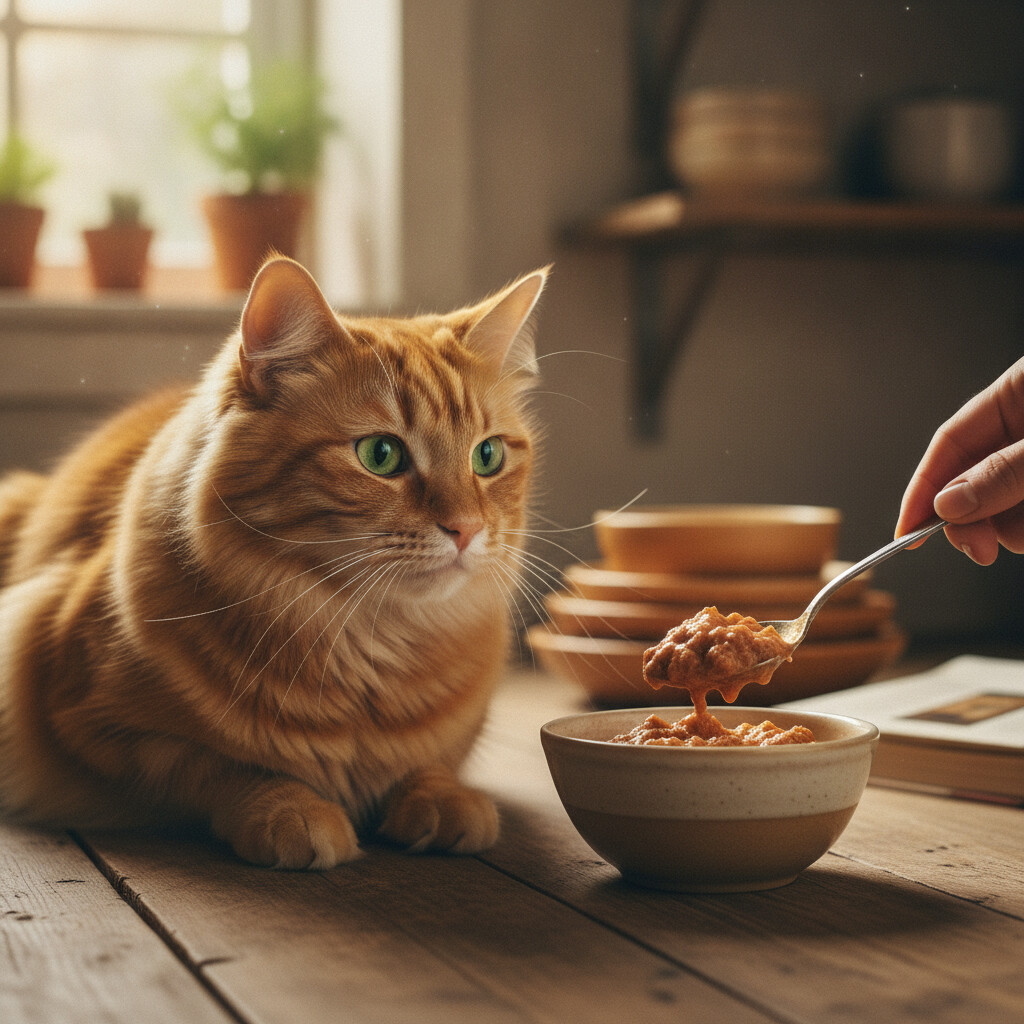
Most cats aren’t picky by nature — they’re picky because they’re cats. Cats have roughly 470 taste receptor genes and rely on smell far more than taste to evaluate food. If your cat is refusing meals, there’s almost always a specific reason, and fixing it usually comes down to one of four things: temperature, texture, routine, or health.
Here’s how to work through it.
Why Cats Become Picky Eaters
Cats are obligate carnivores with smell as their dominant food-evaluation sense. The aroma of food matters far more to a cat than taste alone — which is why a cat will ignore room-temperature wet food they’d have eaten warm.
A few specific reasons cats develop food preferences (or aversions):
Imprinting from early life. Cats develop strong food preferences as kittens. A cat raised exclusively on dry kibble may flat-out refuse wet food — not because of pickiness but because wet food doesn’t register as food. This is genuinely hard to override but can be done gradually.
Texture sensitivity. This is one of the most underestimated factors. Many cats that appear to dislike a certain flavor actually dislike the texture. Pâtés, chunky gravies, and shredded formats all behave differently in the mouth. A cat rejecting chicken pâté might happily eat shredded chicken in broth.
Negative associations. If a cat felt nauseous shortly after eating a specific food (for any reason), they may associate that food with the bad experience — flavor aversion. It’s not revenge; it’s survival wiring, and it can stick for months.
Monotony backlash. Counterintuitively, cats fed one food exclusively for years sometimes start refusing it. The American Association of Feline Practitioners (AAFP) recommends offering variety during kittenhood specifically to prevent this kind of entrenched pickiness.
The Four Things That Actually Work
1. Warm the food
Cold food straight from the fridge has almost no smell, and smell is how a cat decides if food is worth eating. Warming wet food to around body temperature — not hot, just room temp or slightly above — dramatically increases its aroma and, in most cases, its appeal. Fifteen to twenty seconds in the microwave, then stir and check the temperature before serving.
This single change fixes the problem for a large portion of “picky” cats.
2. Try a different texture before switching proteins
Before you buy five varieties of the same protein in different flavors, try the same protein in a different texture. If your cat is rejecting pâté, try mousse, shredded, or chunks in gravy. The reverse also applies. You’re not looking for their favorite flavor — you’re looking for the format they’ll actually eat.
Switching texture is also less disruptive than a full protein change. If your cat has food sensitivities, How to Transition Your Cat to a New Food Without Drama walks through how to do it without triggering a hunger strike.
3. Address the feeding environment
Cats are ambush predators who feel vulnerable while eating. A food bowl wedged into a corner, placed near a noisy appliance, or shared in the sightline of another cat in a tense household can cause a cat to avoid eating even when hungry.
Try placing the bowl where your cat can see the room while eating — back to a wall rather than back to the room. In multi-cat homes, feed cats separately or out of each other’s direct view. Even perceived competition suppresses appetite in lower-status cats.
4. Rotate proteins and brands in advance
If your cat is still eating the current food but you’re noticing declining enthusiasm (eating more slowly, leaving more behind), introduce variety now — before things become a standoff. The AAFP’s feline nutrition guidelines suggest that variety helps prevent selective monotony and means you have somewhere to go if your cat eventually refuses what’s been working.
Keep a rotation of 2-3 different foods and cycle through them weekly. This isn’t catering to their every whim — it’s giving yourself options.
What Doesn’t Work
Waiting them out past 24-48 hours. Unlike dogs, cats cannot safely fast for extended periods. Hepatic lipidosis (fatty liver disease) can develop in as few as 2-3 days in an overweight cat who stops eating — sometimes faster. If your cat hasn’t eaten properly in 24 hours, try something different. If they haven’t eaten in 48 hours, call a vet. The standoff approach that works on dogs does not work on cats and can cause serious, permanent damage.
Escalating to the “exciting” food every time they hold out. This creates a genuinely picky cat because the cat learns that refusing pays off. Offer the new food, give it 30 minutes, remove it without drama, and try again at the next feeding. Consistency matters more than variety here.
Relying on toppers long-term. Sprinkling salmon oil, nutritional yeast, or FortiFlora on every meal works short-term to encourage eating a new food. Use sparingly to bridge the transition, then wean off the topper over 2-3 weeks.
When Picky Eating Is Actually a Medical Problem
This is the most important distinction.
A picky cat sniffs the food, walks away, and then meows at you for something better. A sick cat shows no interest in food at all, is losing weight, has changed drinking habits, or is behaving differently.
| Preference | Appetite Loss | |
|---|---|---|
| Behavior | Rejects some foods, eats others | Disinterested in all food |
| Weight | Stable | Dropping |
| Energy | Normal | Lower than usual |
| Duration | Ongoing quirk | Change from baseline |
Appetite loss — as opposed to pickiness — can signal dental pain (one of the most underdiagnosed causes of food avoidance in cats), kidney disease, hyperthyroidism, respiratory infections, or nausea from any number of causes.
If your cat seems interested in food but approaches and then backs away, or picks up food and drops it, suspect dental pain specifically. That pattern — hunger without eating — is a vet visit, not a feeding strategy problem.
For senior cats whose appetite is declining, also check the signs covered in Signs of Pain in Older Cats (And What to Do). Older cats often mask discomfort well, and reduced food intake is sometimes the only visible signal.
When to See a Vet
- Your cat hasn’t eaten in 48 hours
- Weight is dropping even if they’re still eating something
- Your cat approaches food but backs away or drops it immediately
- Appetite loss combined with changes in thirst (more or less)
- Any change in eating behavior in a cat over 8 years old
- Drooling, pawing at the mouth, or apparent difficulty chewing
Don’t wait on weight loss in cats. It accelerates, and the underlying causes are far easier to treat when caught early.
The Bottom Line
Check temperature first — cold food has no smell and no appeal. Try texture before switching proteins. Look at the feeding environment if you have a multi-cat home. And know the difference between a preference and a loss of appetite: one is a management problem, the other is a vet call.
A cat who has always been a drama queen about food and eats when they feel like it is probably just a cat. A cat who was eating fine last week and suddenly isn’t is telling you something worth listening to.