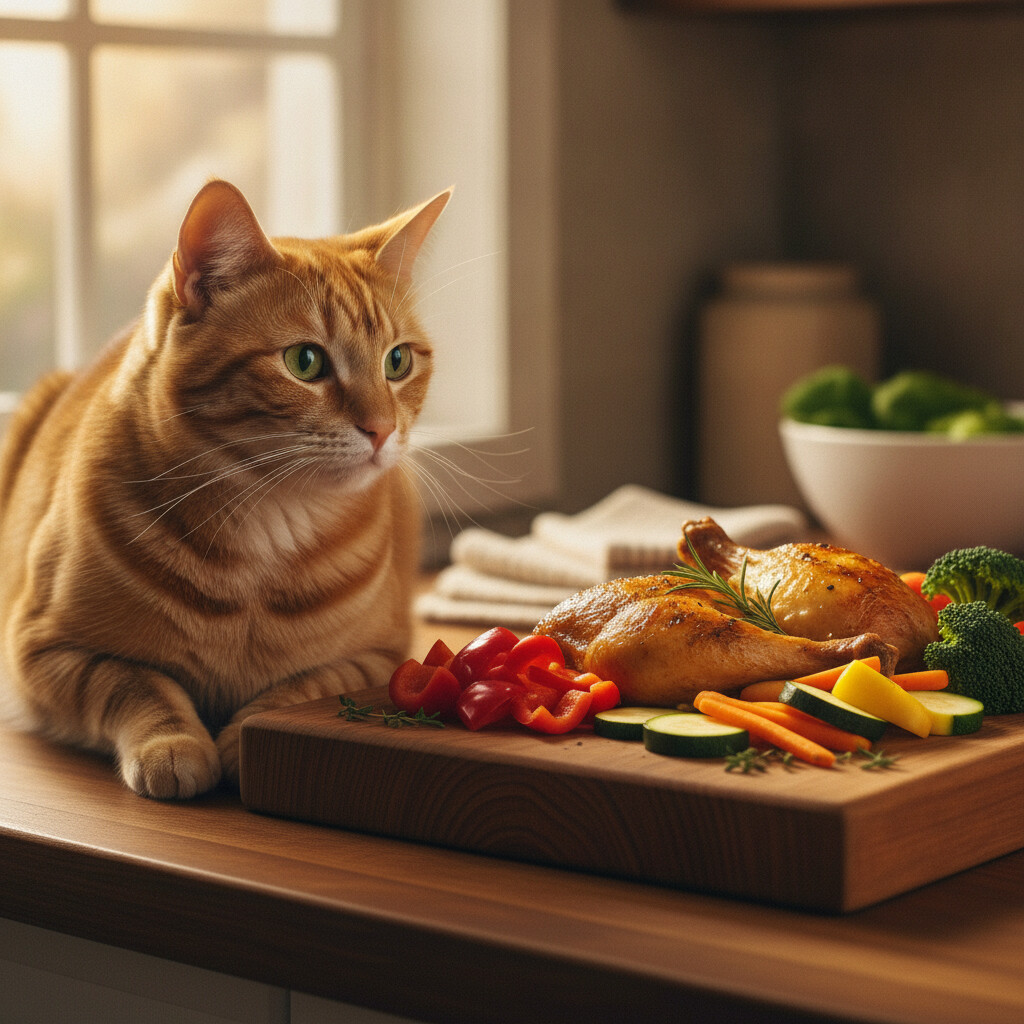
Most human foods are fine for cats. A handful will send you to the emergency vet. The problem is that the dangerous ones — garlic, grapes, xylitol — are ordinary kitchen staples that don’t look like threats. Here’s what’s actually safe, what isn’t, and the practical rules for sharing from your plate.
The Genuinely Dangerous Ones
Onion, garlic, leeks, chives (all allium family). These contain compounds that damage red blood cells, causing Heinz body anemia. This applies to raw, cooked, powdered, and dehydrated forms. The garlic powder in something you’ve already cooked is just as problematic as a raw clove. Even small amounts accumulate over repeated exposure. The ASPCA Animal Poison Control Center lists this family as one of the most common feline toxicity cases they see.
Grapes and raisins. The specific toxin still hasn’t been definitively identified — which makes them especially concerning. The ASPCA lists them as causing rapid-onset kidney failure in some cats (and dogs), with no known safe dose. Even a small amount warrants concern.
Xylitol. An artificial sweetener found in sugar-free gum, some peanut butter brands, candy, and many processed baked goods. It triggers rapid insulin release in some animals, causing dangerous hypoglycemia. Less studied in cats than dogs, but the AAFP advises treating any xylitol exposure as potentially serious. Check labels on anything processed.
Alcohol. Cats cannot metabolise alcohol efficiently. Small amounts that would barely affect a person can cause serious problems. This includes anything baked or cooked with significant alcohol that hasn’t fully evaporated.
Caffeine. Coffee, tea, energy drinks, caffeine supplements. Causes rapid heart rate, tremors, and — in larger quantities — seizures. An entire mug of strong coffee is a veterinary emergency for a cat.
Chocolate. Contains theobromine and caffeine, both toxic. Dark chocolate and baking chocolate are more concentrated than milk chocolate. Any significant amount warrants a vet call.
Raw yeast dough. Continues rising in the stomach and ferments to produce alcohol. Can cause dangerous bloating and alcohol poisoning simultaneously. Fully cooked bread is safe.
Macadamia nuts. Associated with weakness, tremors, and hyperthermia in cats (and dogs). Mechanism not fully understood. Avoid.
Foods That Are Generally Safe
These are fine for most cats in moderate quantities:
Cooked lean meat — chicken, turkey, beef, lamb. Plain, unseasoned, fully cooked, no bones. This is essentially what high-quality cat food is made of. No caveats beyond keeping the preparation clean (no garlic, no onion-infused oils, no heavy seasoning).
Cooked fish — salmon, tuna, sardines. Fine in moderation. Tuna specifically is high in unsaturated fat and low in vitamin E; cats on tuna-heavy diets can develop steatitis (yellow fat disease). Occasional sharing is safe; regular large amounts aren’t.
Cooked eggs. A good protein source. Raw eggs carry salmonella risk and contain avidin, which blocks biotin absorption over time. Scrambled or hard-boiled, no butter or salt — straightforwardly fine.
Plain cooked rice or pasta. Nutritionally irrelevant for cats (obligate carnivores don’t need carbohydrates), but not harmful. Useful for bland diets during digestive upset.
Plain canned pumpkin (unsweetened, not pie filling). A standard vet recommendation for mild constipation or diarrhea. A teaspoon of plain pumpkin provides fibre that helps regulate transit without drugs.
Blueberries. One of the safer fruit options — reasonable antioxidant content, low sugar relative to other fruits. Most cats are indifferent to them, but those who aren’t can have a small amount safely.
Plain cooked carrots or green beans. No nutritional value for cats, but no harm either. Sometimes used as low-calorie treats for cats on a weight-loss plan.
Cheese (small amounts). Fine for most cats, but many are lactose intolerant to varying degrees. Hard cheeses have less lactose than soft ones. Use it as an occasional treat and watch for loose stools as a signal the cat doesn’t tolerate it.
Foods in the Grey Zone
Milk and cream. Cats produce lactase as kittens to digest their mother’s milk. Most adults produce little or none, making them lactose intolerant to varying degrees. Some cats handle small amounts; others get diarrhea reliably. You’ll know which kind of cat you have within a day.
Raw meat. Not inherently toxic, but carries genuine pathogen risk from salmonella, listeria, and other bacteria. If you want to feed raw as part of a considered diet, that requires specific sourcing and preparation — there’s a longer breakdown in the forum’s piece on raw cat food diets. Casual sharing of raw meat from your plate isn’t the same thing.
Avocado. The flesh is only mildly toxic to cats — it’s the pit, skin, and leaves that cause serious problems. The ASPCA lists it as a general concern, but a small amount of plain avocado flesh carries much lower risk than grapes or garlic. Worth avoiding as a habit; not a cause for panic if a cat licked your toast.
Dog food. Not toxic, but nutritionally deficient for cats over time. Dog food lacks the taurine, arachidonic acid, and vitamin A that cats require as obligate carnivores. Fine in a one-off emergency; wrong as a regular food.
Practical Rules for Sharing
Plain is safe; seasoned is risky. The cooked chicken is fine. The chicken you cooked with garlic powder and onion isn’t. Salt, mixed spice blends, and standard seasoning are the main risks in otherwise-fine foods.
Keep table scraps under 10% of daily calories. Even completely safe food can cause problems in excess. And a 20-calorie treat is significant for a 4kg cat — it adds up faster than you’d think. If your cat’s weight has been creeping up, the signs of an overweight cat are more subtle than most owners expect.
Reactions vary. What one cat digests without issue can cause diarrhea in another. Introduce anything new in small amounts first and watch for 24 hours.
Transitions matter more than you think. Switching up food frequently — even with safe foods — can upset the gut bacteria balance more than the food itself. If you’re changing regular food rather than just offering occasional treats, a gradual transition approach avoids most of the GI upset that owners misattribute to the new food being wrong.
When to Call a Vet
Call immediately — don’t wait for symptoms — if your cat consumed:
- Any allium (onion, garlic, leeks, chives, or powders containing them)
- Grapes or raisins, in any amount
- Xylitol (in any amount, in any product)
- Significant chocolate (more than a trace of dark or baking chocolate)
- Caffeine in any meaningful quantity
- Alcohol
For these, the treatment window is short. Contact the ASPCA Animal Poison Control Center (888-426-4435 — consultation fee applies) or your vet immediately.
For general GI upset — vomiting once or twice, soft stools — after eating something from the grey zone: monitor for 24 hours. If it continues or if the cat stops eating, call.