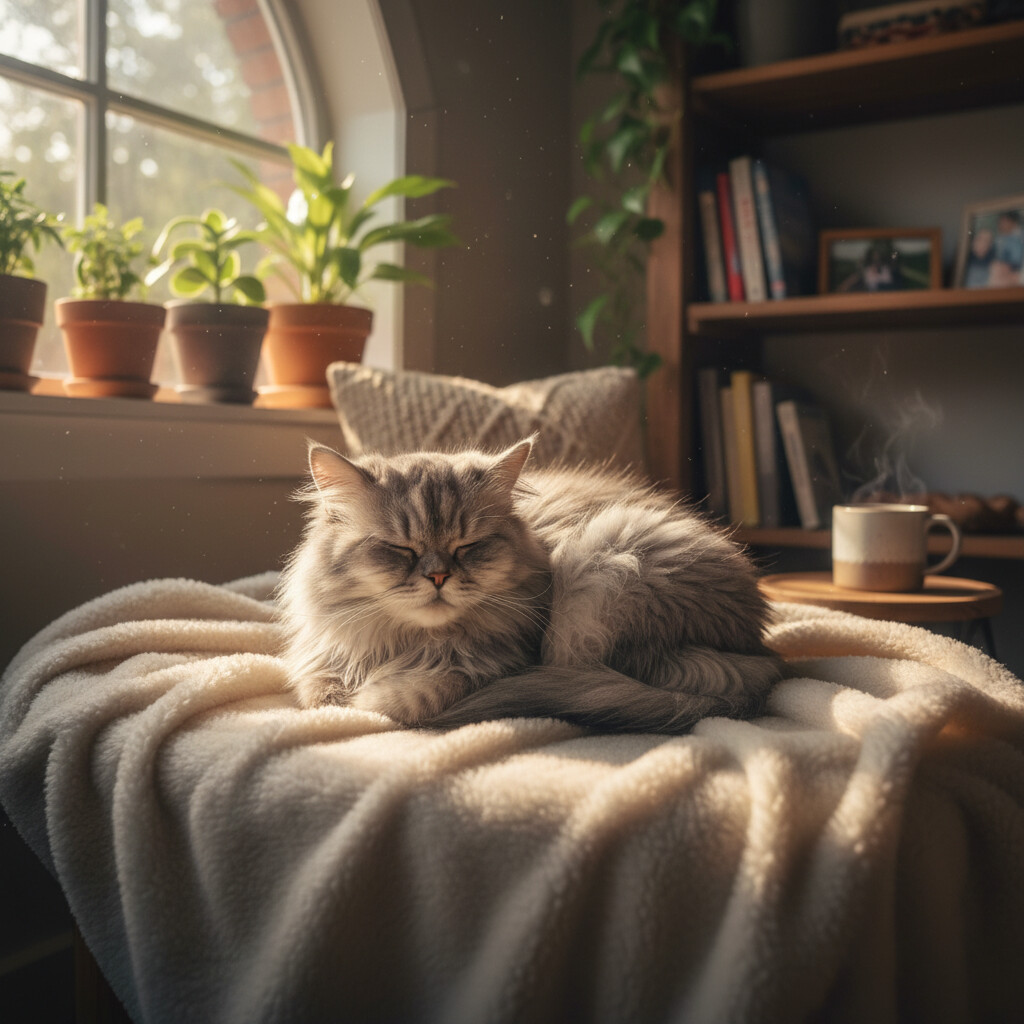
A cat is officially a senior at 11. That doesn’t mean decline is inevitable — most changes that come with age are predictable, manageable, and far more treatable when caught early. Here’s what actually shifts after age 11, and what you need to do differently as a result.
When Does a Cat Become “Senior”?
The AAFP (American Association of Feline Practitioners) classifies cats as mature/middle-aged from 7–10 years, senior from 11–14, and geriatric at 15+. These aren’t just labels — each bracket carries a different set of health monitoring priorities.
The analogy to human aging puts a 12-year-old cat at roughly equivalent to a 64-year-old human. A 15-year-old cat is closer to 76. That framing matters because it resets expectations: a condition that’s mild in a young cat can be serious in a senior, and what counts as “routine” monitoring changes substantially.
What Actually Changes Physically After Age 11
Several physiological shifts become significant in the senior years:
Metabolism slows — but unpredictably. Many senior cats need fewer calories. But some actually need more, because they absorb nutrients less efficiently even while eating the same amount. You can’t assume either direction without tracking body weight and condition score over time.
Kidney function declines. Chronic kidney disease (CKD) is the most common diagnosis in senior cats, present in an estimated 30–40% of cats over 12 (Journal of Feline Medicine and Surgery, 2016). Most cats show no symptoms until kidney function has dropped to around 25% of normal — which is exactly why twice-yearly bloodwork matters far more in seniors than in younger cats.
Thyroid regulation changes. Hyperthyroidism affects roughly 10% of cats over 10. Paradoxically, it often makes cats feel energetic and hungry while causing serious cardiovascular and kidney damage underneath. The disease masks itself.
Joint health deteriorates quietly. Osteoarthritis is consistently underdiagnosed in cats because cats don’t limp the way dogs do. A 2011 radiographic study in Veterinary Journal found degenerative joint changes in over 90% of cats over 12. The signs are subtle: less jumping, incomplete grooming of the lower back and base of tail, reluctance to use stairs.
Dental disease accumulates. By age 11, most cats have significant periodontal disease. The feline dental health concerns that were manageable at 5 can become genuinely painful by 12 if they haven’t been addressed — and dental pain in cats is notoriously hard to detect until it’s severe.
Cognition may shift. Feline cognitive dysfunction syndrome (FCDS) — broadly analogous to dementia — affects an estimated 28% of cats aged 11–14 and over 50% of cats aged 15+ (Journal of Veterinary Behavior, 2011). Early signs include increased vocalisation at night, confusion in familiar spaces, and altered sleep patterns. It’s progressive but manageable with the right environmental adjustments.
Nutrition for a Senior Cat
Protein requirements stay high or increase in senior cats. The outdated recommendation to reduce protein was based on research conducted on cats who already had kidney disease — healthy aging cats need adequate protein to maintain muscle mass. The AAFP’s current guidelines support maintaining protein intake and monitoring kidney function rather than pre-emptively restricting it.
What does change: some senior cats develop sarcopenia (muscle mass loss) even when they’re eating the same amount. Total body weight can stay stable while muscle quietly disappears. Your vet can show you how to assess muscle condition score at home — it’s worth learning.
Hydration matters more than ever at this stage. Senior cats are more prone to dehydration, and many already have subclinical kidney disease that worsens without adequate fluid intake. How much water a cat needs daily becomes a meaningful question once they’re past 11 — wet food, water fountains, or water added to dry food all help.
If your cat is carrying excess weight, senior age is when that starts compounding. Excess weight stresses joints that are already showing age, contributes to diabetes risk, and makes kidney disease harder to manage. A senior overweight cat is a cat with multiple compounding problems.
Home Modifications That Make a Real Difference
Most practical adjustments cost nothing:
Step stools or pet ramps. If your cat used to leap to the sofa easily and now hesitates, they may be experiencing joint pain. A step stool or ramp lets them continue accessing favourite spots without impact. This matters for quality of life — a cat who can no longer reach their preferred sleeping spots becomes visibly less settled.
Low-sided litter boxes. A high-sided box that was fine at 5 becomes a genuine barrier at 13 with arthritic hips. Switching to a box with a low entry point — or cutting one side of an existing box — prevents litter avoidance caused by pain. Inappropriate elimination in senior cats often has a physical cause that owners miss.
Consistent warmth. Senior cats thermoregulate less effectively. A self-heating mat or a designated warm sleeping spot matters more than it did in youth.
Reduced competition in multi-cat homes. Senior cats are more stressed by resource competition than younger cats. If you have multiple cats, make sure the senior has food, water, and litter access they don’t have to compete for — separate stations if needed.
When to See a Vet
Senior cats (11–14) should have a comprehensive exam every six months, including full bloodwork and urinalysis. This is the standard AAFP recommendation — not because something will necessarily be wrong, but because early detection of kidney disease, hyperthyroidism, and diabetes changes the treatment window and the outcome.
Call your vet promptly if you notice:
- Weight loss, even with a good appetite — this is a red flag in seniors
- Increased thirst or urination (cardinal signs of kidney disease, diabetes, or hyperthyroidism)
- Changes in litter box habits
- Decreased grooming, especially of the rear half
- Night-time vocalisation that’s new or escalating
- Confusion or disorientation in familiar spaces
- Decreased appetite lasting more than 24–48 hours
- Visible difficulty getting comfortable, or reluctance to settle
Most of these conditions, caught early, are very manageable. Caught late, the options narrow significantly. The twice-yearly vet visit for a senior cat isn’t a nice-to-have — it’s the main tool you have for staying ahead of the conditions that are genuinely common at this age.
The Practical Takeaway
Senior cats need more attentive monitoring, more frequent vet visits, and usually some minor practical modifications to their environment. They don’t need to be treated as fragile — most 12-year-old cats are still active, curious, and capable of a good quality of life.
The shift is from passive to active monitoring: notice what’s changing, get bloodwork done every six months, and stay ahead of the conditions that are statistically common in older cats. The cats who age well are almost always in households where the owners caught things early — not because they were lucky, but because they were paying attention.