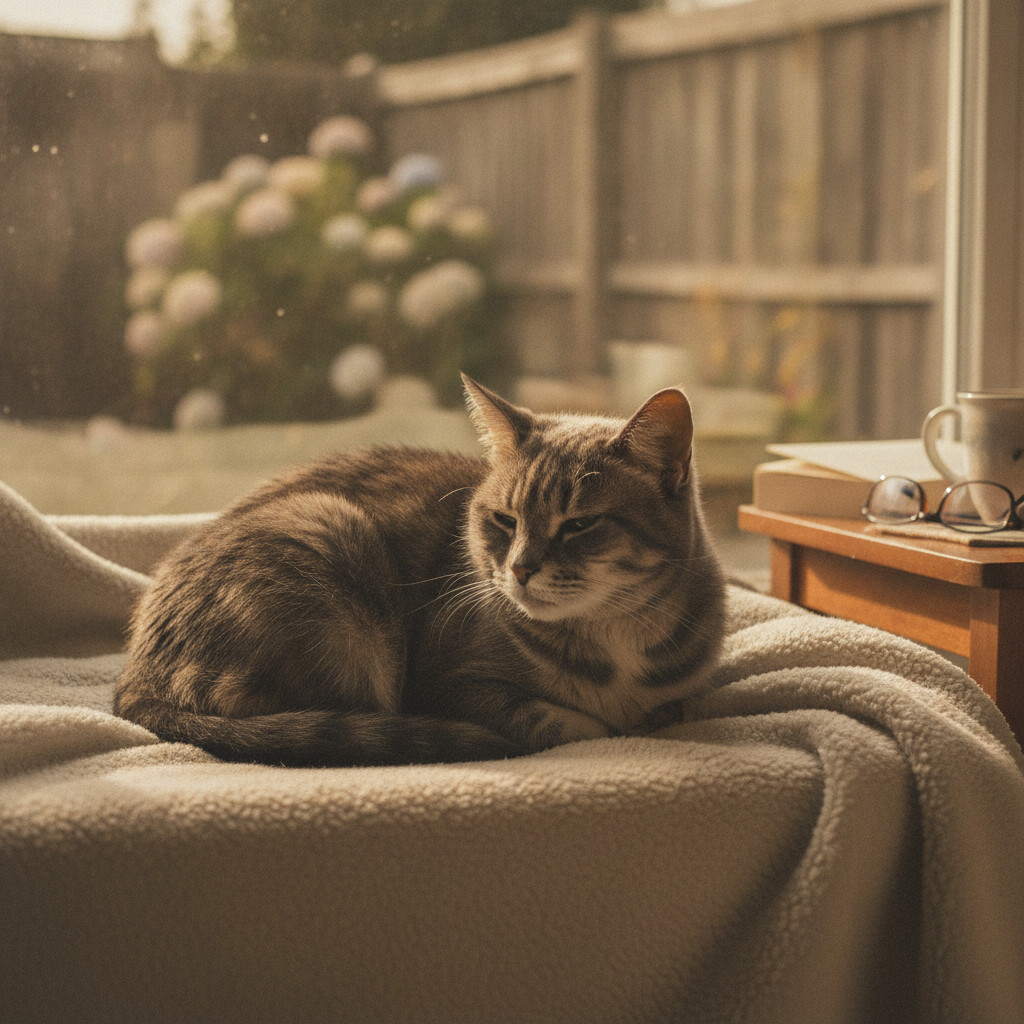
If your older cat seems confused, meows at odd hours, or stands in the middle of the room as if they’ve forgotten why they went there — they may not just be “getting old.” Feline cognitive dysfunction syndrome (CDS) is real, it affects an estimated 28% of cats aged 11–14 and over 50% of cats 15 and older according to research published in the Journal of Feline Medicine and Surgery, and it’s almost certainly underdiagnosed.
The good news: there’s no cure, but early recognition and targeted changes at home can meaningfully slow progression and improve quality of life.
What Is Feline Cognitive Dysfunction?
CDS is the feline equivalent of Alzheimer’s-type dementia. It’s caused by the accumulation of amyloid plaques, oxidative damage to brain tissue, and a progressive reduction in neuronal function — not unlike the mechanisms that drive human cognitive ageing.
It’s distinct from normal ageing. An old cat sleeping more and moving more slowly is not necessarily cognitively impaired. CDS involves specific behavioural changes that go beyond slowing down.
The DISHA Signs — What to Watch For
Veterinary neurologists use the acronym DISHA to summarise the key signs of cognitive dysfunction:
D — Disorientation. Staring into space, getting stuck in corners, failing to recognise familiar people, or seeming lost in a well-known room.
I — Interaction changes. Altered social behaviour: either unusually clingy (seeking constant reassurance) or unusually withdrawn. Some cats develop aggression with no apparent trigger.
S — Sleep-wake cycle disturbances. The most disruptive symptom for owners. Excessive nighttime vocalisation, sleeping through the day, and restlessness at 2am are hallmarks of CDS — and the cause isn’t pain or hunger, which owners often assume.
H — House soiling. Urinating or defecating outside the litter box in a cat that was reliably clean, with no urinary or lower GI cause identified.
A — Activity changes. Reduced interest in play, aimless wandering, repetitive behaviours (circling, compulsive grooming), or apparent forgetting mid-action.
A cat doesn’t need to show all five to have CDS. Two or more persistent signs in a cat aged 10 or older warrants a vet conversation.
How Feline CDS Is Diagnosed
CDS is a diagnosis of exclusion — your vet must rule out other conditions before the label fits. The differential diagnoses that mimic CDS are numerous, and many of them are treatable:
- Hyperthyroidism causes restlessness, vocalisation, and behaviour change in cats. A thyroid panel rules it in or out. See our guide on caring for a senior cat for more on senior screening tests.
- Hypertension causes acute disorientation and is common in cats with kidney disease or hyperthyroidism.
- Chronic pain often presents as behavioural change — a cat in persistent discomfort becomes withdrawn, aggressive, or restless. See signs of pain in older cats for what to watch for.
- Deafness or vision loss explains apparent disorientation and night-time vocalisation without any cognitive component.
- Brain tumour is rare but must be considered in rapidly progressing cases.
If medical causes are excluded and the DISHA profile fits, CDS is the appropriate working diagnosis. Some vets will use a validated feline CDS questionnaire; others rely on clinical history.
Managing CDS at Home
Environmental stability
Cats with CDS do poorly with change. Keep furniture arrangements, litter box locations, and feeding spots consistent. If you need to move something, do it gradually over days rather than all at once.
Night-time management
Nighttime vocalisation is among the most distressing symptoms for owners. Practical strategies:
- Increase daytime activity and play; this reduces daytime sleep and can reset the day-night cycle gradually.
- A Feliway (pheromone) diffuser near the cat’s sleeping area may reduce anxiety-driven vocalisation; evidence is mixed but worth trying.
- Ask your vet about gabapentin or melatonin for severe cases. There are no gold-standard protocols for cats, but individual responses vary.
- Ensure the cat can always find their litter box and water in dim conditions. Night lights near these spots help.
Cognitive enrichment
Mental stimulation doesn’t reverse CDS, but sustained engagement may slow progression. Puzzle feeders, gentle play sessions, and sensory enrichment (bird feeders visible from a window perch) maintain neural engagement without overwhelming an impaired cat. 7 cheap DIY enrichment ideas includes options well-suited to older, lower-energy cats.
Diet
Hill’s Prescription Diet b/d (brain aging diet) has the strongest published clinical evidence for cats with cognitive dysfunction. Its formulation includes antioxidants, EPA/DHA omega-3s, and mitochondrial support nutrients. Some vets also recommend medium-chain triglyceride (MCT) supplementation based on compelling canine dementia research, though feline-specific data remains limited. Discuss with your vet before adding supplements.
Accessibility modifications
A cognitively impaired cat is often also less physically capable. Lower the sides of litter boxes. Add ramps or steps to furniture they still use. Reduce environmental hazards — stairs, sharp-edged furniture, access to the outdoors unattended — in proportion to the degree of confusion.
When to See a Vet
Always get a vet assessment before attributing symptoms to CDS; the differential diagnoses include several urgent conditions. Consult a vet promptly if:
- Disorientation comes on suddenly rather than gradually (sudden onset suggests stroke, hypertensive crisis, or acute vestibular disease — all urgent)
- Your cat stops eating for more than 24–48 hours
- Behaviour changes are severe and rapid, progressing over days rather than weeks
- You observe sudden-onset aggression in a previously calm cat
For slowly progressive symptoms that fit the DISHA profile, a routine vet appointment within 1–2 weeks is appropriate. Request a full senior panel: thyroid, kidney function, blood pressure, and basic bloodwork if not done in the last six months.
Quality of Life — The Honest Conversation
Mild to moderate CDS doesn’t mean the end is imminent. Cats at this stage can still enjoy food, warmth, gentle interaction, and quiet comfort for months to years. Management focuses on reducing distressing symptoms — especially the nighttime vocalisation and confusion — rather than restoring the cat to their younger self.
When cognitive decline becomes severe — when a cat is chronically distressed, unable to find food or the litter box, or no longer responding to familiar people — quality of life assessments become the most important conversation. Your vet can help you work through this with the cat’s experience at the centre, not the owner’s grief. That is the harder and more important guidance they can offer.
There is no shame in asking the question before you feel ready to hear the answer.