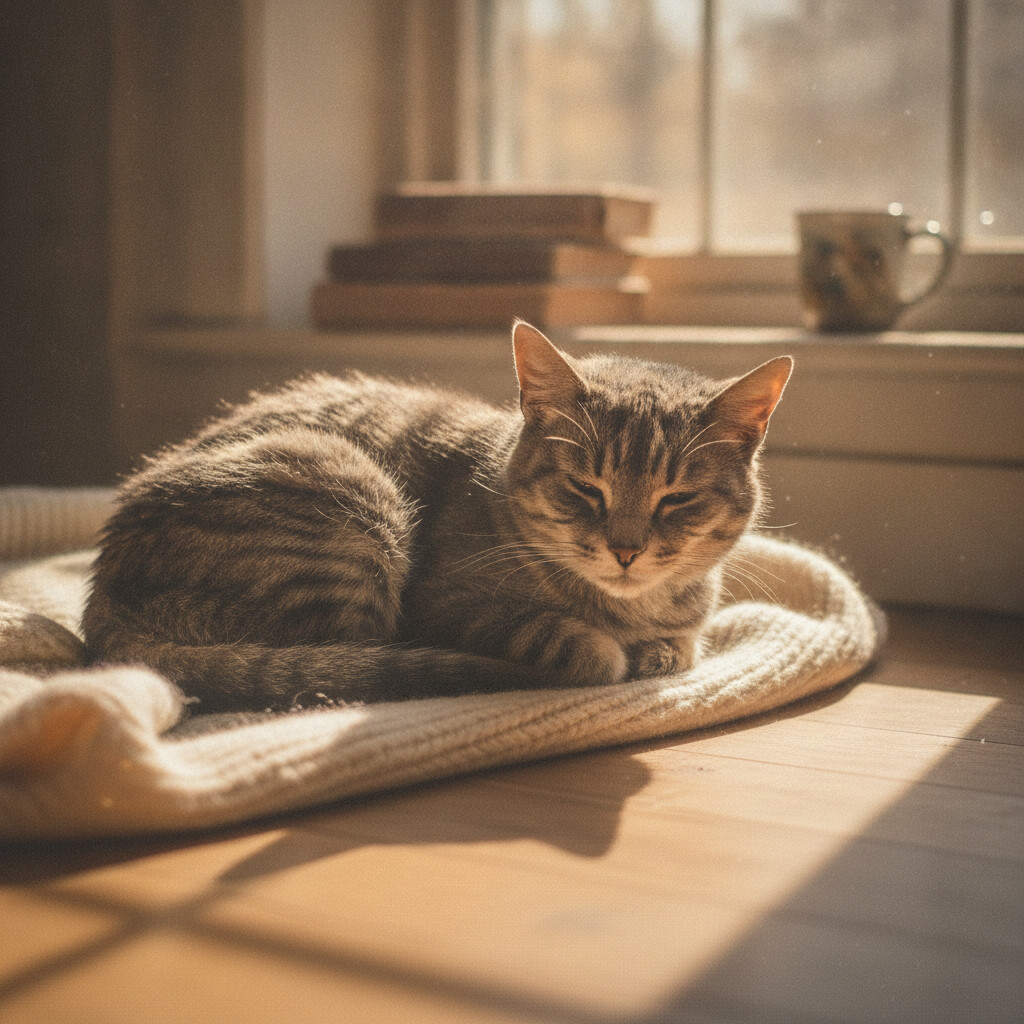
If your senior cat suddenly looks a little scruffier than usual — a greasy coat, flakes along the spine, mats forming near the tail base — the most common cause is arthritis, not laziness. Grooming takes flexibility and reach, and both decline with age. Here’s what’s normal, what isn’t, and when a scruffy coat is telling you something more serious.
Why Grooming Habits Change With Age
Cats spend a huge chunk of their waking hours grooming — self-grooming isn’t just about looking tidy, it regulates body temperature, distributes natural skin oils, and removes loose fur before it becomes a hairball problem. So when an older cat starts skipping sessions, it’s rarely random. Something is making the act of grooming harder, less comfortable, or less of a priority.
The areas cats struggle to reach first are usually the ones that require the most flexibility: the lower back, hips, and base of the tail. If you notice matting or greasiness concentrated in those spots specifically, that’s a strong clue the issue is physical rather than behavioral.
The Most Common Culprit: Arthritis and Joint Pain
Degenerative joint disease is extremely common in older cats — surveys using X-rays have found radiographic evidence of arthritis in a large majority of cats over 12, even when the cat shows no obvious limp. Cats are also very good at masking pain, so a change in grooming can be one of the earliest visible signs of joint disease, showing up well before a limp does.
Grooming the lower back and hindquarters requires a cat to twist, stretch, and hold an awkward position for several seconds. If that movement hurts, cats simply stop doing it — quietly, without complaint. We’ve covered the broader picture of feline arthritis, including other signs to watch for, in our guide to arthritis in senior cats.
Other Reasons a Senior Cat Might Stop Grooming
Arthritis is the most common explanation, but it isn’t the only one. Worth ruling out:
- Dental disease. A sore mouth makes the repetitive licking and nibbling of grooming uncomfortable. If bad breath, drooling, or reluctance to eat crunchy food accompanies the coat changes, the mouth is a likely starting point.
- Obesity. Cats carrying extra weight simply can’t reach their back half the way a leaner cat can — this is a mechanical problem, not a motivational one.
- Systemic illness. Conditions like kidney disease, hyperthyroidism, or diabetes can sap energy and appetite for self-care as a secondary effect, usually alongside other symptoms like weight loss, increased thirst, or changes in appetite.
- Cognitive decline. In some cats, grooming — like other established routines — falls off as part of broader confusion or disorientation. This is usually accompanied by other behavior changes, which we go into in our guide to cognitive decline in cats.
- Depression or chronic stress. Less common, but a real factor after a major household change, a lost companion, or prolonged pain from any source.
How to Help a Senior Cat Who’s Grooming Less
You can’t out-brush arthritis, but you can make a real difference:
- Take over the parts they can’t reach. A soft-bristle brush or grooming glove on the lower back, hips, and tail base — a few minutes, a few times a week — prevents mats before they form and feels good to a stiff cat. Our guide to grooming a cat that hates being groomed has techniques for cats who resist handling.
- Address pain directly, with your vet’s guidance. There are safe, cat-specific options for managing arthritis pain — never give a cat any human pain medication, including ibuprofen or acetaminophen, both of which are toxic to cats even in small doses.
- Make the litter box and food bowl easier to reach. Low-sided litter boxes and raised food dishes reduce the number of times a stiff cat has to stretch or climb in a day.
- Trim carefully around problem areas. If mats have already formed, a groomer or vet tech can clip them out safely — don’t attempt to cut out a tight mat yourself with scissors near the skin.
- Keep nails trimmed. Overgrown nails make it harder for a cat to groom effectively and can catch on fabric, adding another reason to avoid the motion altogether.
When to See a Vet
Book a vet visit if you notice any of the following alongside the grooming change:
- Mats you can’t gently work out with a brush
- Limping, stiffness after resting, or reluctance to jump
- Weight loss, increased thirst, or a change in appetite
- Bad breath, drooling, or dropping food while eating
- Any behavior change that seems sudden rather than gradual
A vet can distinguish between “just getting older” and a treatable condition — arthritis pain management, dental work, and thyroid or kidney treatment all meaningfully improve quality of life, and most are far easier to manage the earlier they’re caught.
The Takeaway
A scruffier coat in an older cat is a symptom, not a personality change. Most of the time it points to joint pain, and there’s a lot you can do about it — both by stepping in as a grooming assistant and by getting the underlying cause diagnosed. Don’t write it off as “just old age” without at least ruling out the treatable stuff first.