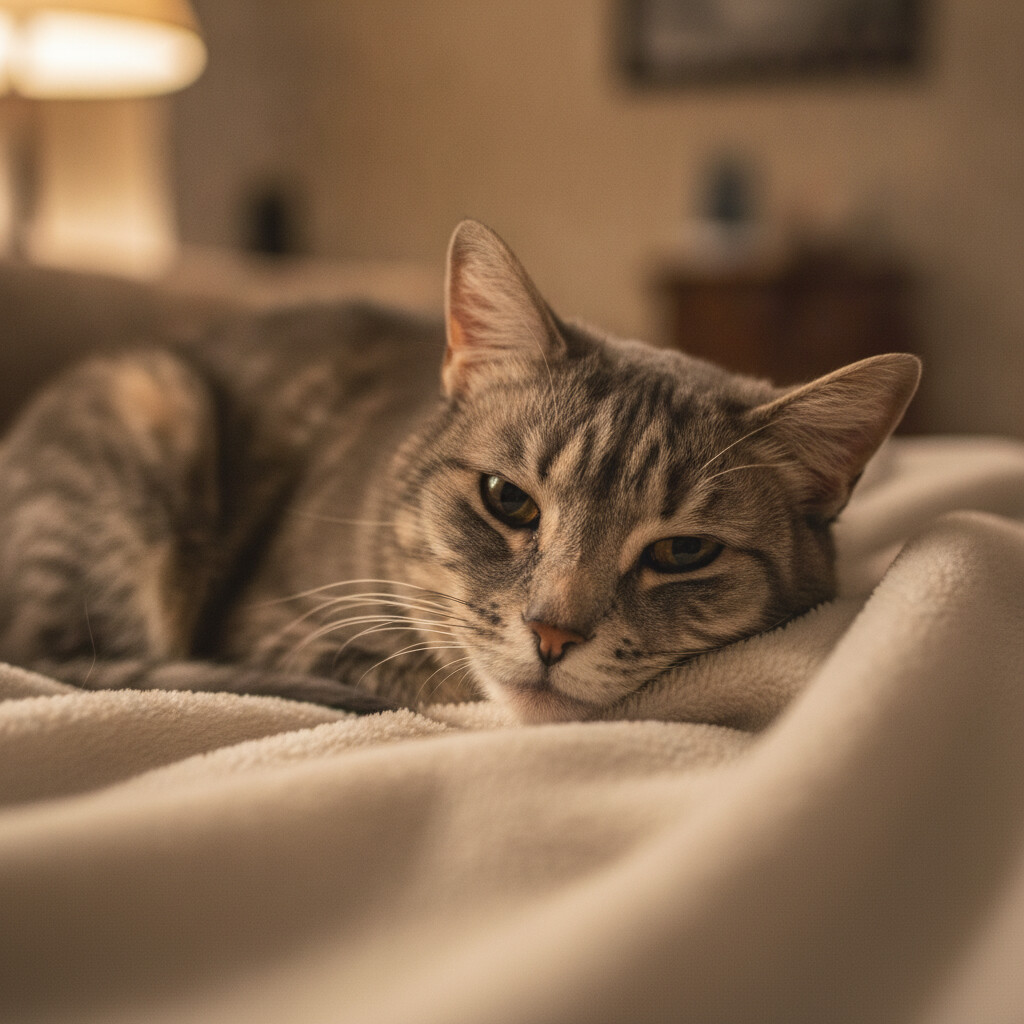
If your older cat hesitates before jumping onto the sofa they used to sail onto, or is suddenly reluctant to use the litter box, arthritis may be why. Feline osteoarthritis is far more common than most owners realise — research suggests it affects more than 90% of cats over age 12 — and because cats hide discomfort so well, it often goes unnoticed for months or years.
Here’s how to spot it and what you can actually do about it.
What Is Feline Osteoarthritis?
Arthritis in cats works the same way it does in humans: the cartilage that cushions joints gradually wears down, leading to bone-on-bone friction, inflammation, and pain. It most commonly affects the elbows, spine, hips, and stifle (knee) joints.
The prevalence data is striking. A 2011 study published in the Journal of Feline Medicine and Surgery (Lascelles et al.) found radiographic evidence of arthritis in 61% of cats over age 6, rising to 82% in cats over 14. Even younger cats can be affected, but it becomes increasingly likely the older your cat gets.
Unlike dogs, cats rarely limp outright. Their response to joint pain is more likely to be behavioural change — doing less of what they used to do — which is one reason the condition is so often missed.
Signs Your Senior Cat May Have Arthritis
Because cats don’t show pain in obvious ways, you need to look for subtle changes in how they move and behave. The most reliable indicators:
Hesitation or reluctance to jump. The cat that used to launch onto the windowsill effortlessly now pauses before trying, or skips it entirely. You might notice them choosing lower surfaces, or using objects as intermediate steps.
Stiffness — especially first thing in the morning. Just like humans with arthritis, cats often move more stiffly after rest. If your cat gets up slowly or moves awkwardly after sleeping, that’s worth noting.
Less grooming — particularly in hard-to-reach areas. Arthritis makes twisting and stretching painful. Cats with joint pain often have unkempt fur on their lower back, tail base, or hindquarters because it hurts to groom there. A previously meticulous cat whose coat is matting in specific spots is worth a vet check.
Avoiding the litter box or going outside it. High-sided litter boxes become obstacles when joints hurt. Some cats start eliminating nearby rather than making the effort to climb in. This is often mistaken for a behaviour problem, but in senior cats, it’s frequently physical.
Reduced activity and social withdrawal. An arthritic cat may stop playing, avoid climbing, spend more time alone, or sleep more than usual.
Irritability when touched. If your usually tolerant cat is snapping or flinching when you touch their back or hindquarters, that’s pain behaviour. Arthritis is a common cause in older cats — see our guide to signs of pain in older cats for a fuller picture of what to watch for.
How Arthritis Is Diagnosed
Diagnosis typically involves:
- Physical examination — your vet will assess your cat’s gait, check range of motion in each joint, and look for muscle loss (common in arthritic animals who reduce activity).
- X-rays — help confirm the diagnosis and identify which joints are affected, though severity on an X-ray doesn’t always match the severity of pain.
- Response to treatment — some vets will trial pain medication and observe if the cat’s mobility improves, which also serves as a diagnostic indicator.
Blood work is typically done alongside the arthritis workup — partly to rule out other causes of behaviour change (like hyperthyroidism), partly to check kidney function before prescribing certain pain medications.
Treatment Options
Feline arthritis isn’t curable, but it is very manageable. The goal is to reduce pain and slow further joint damage.
Medication is the cornerstone of management. Meloxicam (a non-steroidal anti-inflammatory, or NSAID) is the most commonly prescribed drug for feline arthritis. It’s generally effective, but cats are uniquely sensitive to NSAIDs — long-term use requires regular blood tests to monitor kidney function. Never give a cat human NSAIDs (ibuprofen, aspirin, naproxen) — they are toxic to cats at doses far lower than those that affect humans.
Newer options include grapiprant (another NSAID with a different mechanism) and monoclonal antibody injections — specifically solensia (frunevetmab) in markets where it’s available — which are designed for cats and have a strong safety profile for long-term use.
Supplements. Omega-3 fatty acids (EPA/DHA from fish oil) have some evidence for reducing joint inflammation in cats. Glucosamine and chondroitin are widely used, with more modest evidence. Neither replaces medication for moderate to severe arthritis, but they’re generally safe and worth discussing with your vet.
Weight management. Every extra gram a cat carries puts more load on inflamed joints. Even modest weight reduction — 10–15% of body weight — can meaningfully reduce pain in overweight arthritic cats.
Home Adjustments That Make a Real Difference
Environmental modifications are often the most impactful changes you can make for an arthritic cat, and most cost little or nothing:
Lower the litter box entry point. Cut down one side of a high-sided box, or switch to a shallow tray. Entry height should be no more than 2–3 inches for elderly cats.
Provide ramp or step access to favourite spots. Cat stairs, a stable stool, or a yoga mat ramp lets your cat access the sofa or bed without painful jumps. Many cats start using these immediately.
Heated sleeping spots. Warmth genuinely helps arthritic joints. A heated cat bed, or a covered bed with deep, soft bedding, lets cats rest with their joints supported and warm.
Move food and water to floor level. If your cat has been eating on an elevated surface, bring everything down to minimise unnecessary climbing.
Non-slip surfaces. Hardwood floors and tile are genuinely difficult for arthritic cats. Place yoga mats, rugs, or rubber-backed bath mats in areas where your cat walks most.
For a full guide to keeping your senior cat comfortable through physical changes, see how to keep an aging cat mobile and comfortable.
When to See a Vet
If your senior cat is showing any of the signs above — particularly litter box avoidance, reluctance to jump, or matted hindquarters — book a vet appointment rather than waiting. Arthritis is progressive, and earlier intervention generally means better outcomes.
Go sooner if your cat:
- Is vocalising pain, growling when touched in specific areas, or biting when handled around the hips or spine
- Has stopped eating or is losing weight noticeably
- Is unable to walk normally or is dragging their hindquarters
- Shows a sudden dramatic change in mobility (gradual decline is expected; sudden inability to walk is not)
Most arthritic cats, once properly managed with pain medication and home modifications, live comfortably for years after diagnosis. The condition is common in senior cats. It’s manageable — and most cats tolerate that management well.