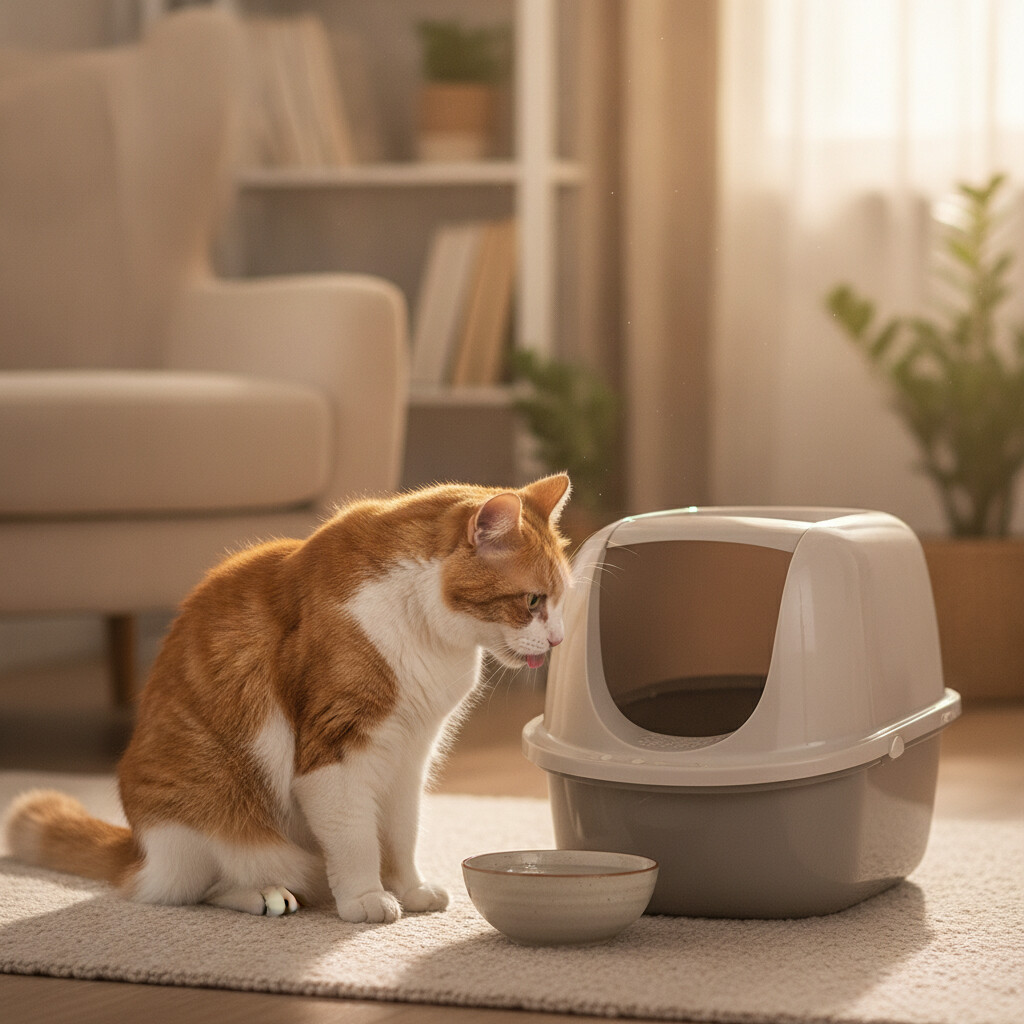
Most constipated cats are dealing with something mild — dehydration, a hairball backup, or a diet change — and they’re back to normal within a day or two once they’re drinking more and moving their bowels regularly again. But if your cat hasn’t produced stool in more than 48 hours, is straining repeatedly and getting nothing, or has stopped eating, that’s not a “wait and see” situation. Constipation can also be the first visible sign of something bigger, like kidney disease or a chronic motility disorder called megacolon.
How to Tell If Your Cat Is Actually Constipated
Constipated cats usually show a mix of these signs: small, hard, dry stools (sometimes with visible strain marks); repeated trips to the litter box with little or nothing to show for it; vocalizing or crying while trying to go; visible discomfort when you touch their abdomen; and, in more advanced cases, a drop in appetite and energy.
It’s easy to mistake constipation for a urinary problem, since both involve a cat straining in the litter box. The distinction matters — a urinary blockage, especially in male cats, is a same-day emergency. If you’re not sure which one you’re looking at, or if your cat is straining and nothing at all is coming out (urine or stool), treat it as urgent and call your vet or an emergency clinic rather than guessing.
What Causes Constipation in Cats
Dehydration is the single biggest driver. Cats descend from desert-dwelling ancestors and have a naturally low thirst drive, which means many pet cats run mildly, chronically underhydrated without anyone noticing. Less water in means harder, drier stool. If hydration is a recurring theme for your cat, how much water your cat actually needs is worth a read.
Other common causes:
- Hairballs — excess fur passing through the gut can bulk up stool and slow things down, especially in long-haired cats or heavy shedders.
- Low-fiber or inappropriate diet — sudden food changes or diets that don’t suit an individual cat’s gut can disrupt normal transit.
- Obesity and reduced mobility — carrying extra weight makes the physical act of posturing to defecate harder and less comfortable.
- Arthritis — older cats with joint pain often find the squatting position painful, so they hold it in rather than go. If your cat is a senior, arthritis is a surprisingly common hidden factor behind litter box changes.
- Stress or litter box aversion — a dirty box, the wrong litter texture, or competition from other cats in the household can make a cat delay going, and delayed stool becomes harder stool.
- Kidney disease — common in older cats, and dehydration from kidney disease compounds constipation risk.
- Rare but serious causes — pelvic injuries (like an old fracture that narrowed the pelvic canal), neurologic issues, or tumors can physically obstruct normal defecation.
Home Care You Can Try for Mild Cases
If your cat seems otherwise bright, is still eating, and this looks like a one-off, mild episode, a few things genuinely help:
- Add water, don’t just offer it. Switching to wet food, adding a splash of water or low-sodium broth to meals, or setting up a water fountain tends to work better than just topping off a bowl your cat may not be reaching for.
- Clean the litter box and make it easy. A dirty box is a common reason cats hold it. For arthritic or senior cats, a box with a lower entry point removes a real physical barrier.
- Ask your vet before giving anything. A vet may recommend a fiber supplement, a stool softener, or a therapeutic diet formulated for gut motility. Don’t reach for human laxatives, mineral oil, or enemas on your own — several are genuinely dangerous for cats, and dosing a cat safely isn’t something to guess at.
- Give it 24–48 hours of monitoring, not longer. If there’s no improvement, or things get worse, that’s your signal to call the vet rather than keep waiting.
When It’s More Than Simple Constipation: Megacolon
Some cats develop a chronic, more serious condition called megacolon — the colon becomes abnormally dilated and loses the muscle tone needed to move stool through effectively. It tends to show up as recurring, worsening constipation episodes rather than a single incident, and veterinarians generally diagnose it through physical exam, history, and imaging.
Mild and early megacolon can often be managed with diet, hydration support, and medication. Chronic, severe cases sometimes require surgery to remove the affected section of colon. This isn’t something to self-diagnose from a search result — but if your cat has had more than one or two constipation episodes in recent months, it’s worth raising directly with your vet rather than treating each episode as an isolated event.
When to See a Vet
Call your vet — or an emergency clinic if it’s after hours — if:
- Your cat hasn’t produced stool in 48–72 hours
- They’re straining for more than 10 minutes with nothing coming out
- You see blood in the stool or litter box
- They’re vomiting, lethargic, or have stopped eating
- This is a kitten, a senior cat, or a cat with a known health condition like kidney disease
- This is a repeat episode, even if each one seems to resolve on its own
Cats are excellent at hiding discomfort, which is exactly why constipation is worth taking seriously rather than assuming it’ll pass. A quick vet visit to rule out something more significant costs a lot less — in stress and in money — than waiting until a manageable problem becomes an emergency.
The practical takeaway: keep an eye on your cat’s litter box habits the way you’d track anything else routine. A single easy day of harder stool usually isn’t worth panicking over. Two or three days of straining, or a pattern that keeps repeating, is worth a phone call.