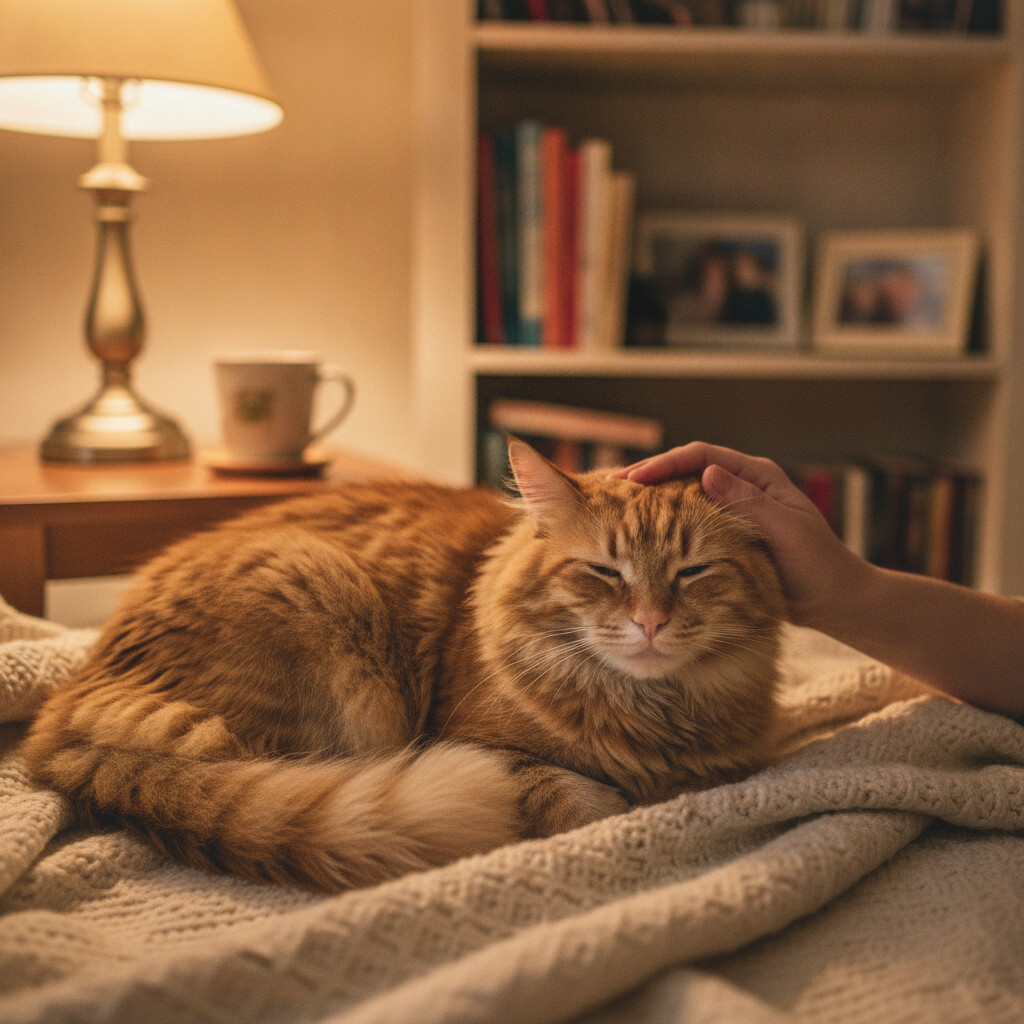
Our cat Milo spent a whole evening going in and out of the litter box, and we thought he was constipated. He wasn’t. His urethra was blocked, and by the time we got him to the emergency vet he was hours from a crisis. Here is what happened, what the signs actually looked like, and what we’d tell any owner of a male cat.
The evening we got it wrong
Milo was four, a big orange neutered male who ate dry food and spent most of his life asleep on the radiator shelf. On a Tuesday night he hopped into the litter box, squatted, stayed there for a long time, and climbed out. Ten minutes later he did it again. Then again.
We checked the box. No clumps of urine, nothing much at all. He looked like he was straining, so we did what a lot of people do: we decided he was constipated, added a spoonful of pumpkin to his dinner and planned to call the vet in the morning if it continued.
That was the mistake. Straining in the litter box looks the same whether a cat can’t pass stool or can’t pass urine, and the two are not equally urgent. Constipation is uncomfortable. A blocked urethra can kill. Our constipation guide makes the same point: if you can’t tell which one it is, treat it as urinary until a vet says otherwise.
The signs we missed (and the ones we finally saw)
Looking back, the warning signs were all there:
- Repeated trips to the litter box with little or nothing produced
- Long squats that looked like straining
- Licking at his genitals more than usual
- Crying in the box, which we’d put down to frustration
- Hiding under the bed afterwards, which isn’t like him
By around 11 pm he’d stopped eating, vomited once, and his belly felt tight and tender when I touched it. He yowled when I picked him up. That was when it clicked. A friend who works as a vet nurse had once told us that a male cat straining without producing urine is an emergency, full stop, and we were already hours behind.
This matches standard veterinary guidance. The Cornell Feline Health Center and the Merck Veterinary Manual both describe urethral obstruction as a life-threatening emergency. When urine can’t leave the body, potassium and waste products build up in the blood, and high potassium can disturb the heart’s rhythm. Without treatment, cats can die within a day or two, sometimes sooner. If you want the bigger picture of what’s going on in the bladder, our FLUTD explainer covers the full range of lower urinary tract problems.
What happened at the emergency vet
The ER team took Milo straight to the back. His bloodwork showed raised potassium and kidney values, and the vet confirmed what the bladder already told her: it was hard, swollen and he couldn’t empty it.
The treatment was what’s typical for a blocked cat. He was sedated, a urinary catheter was passed to clear the blockage, and he went on IV fluids to flush the waste out of his system and bring his potassium down. He stayed in hospital for three days with the catheter in place, then a day of watching to make sure he could pee on his own once it came out.
The vet was honest with us about two things. First, we’d caught it in time, but not by much. Second, the bill was going to be significant. Emergency unblocking with a few days of hospital care commonly runs into the low thousands of dollars in the US, and prices vary a lot by region and by how sick the cat is. If you’ve been on the fence about insurance or an emergency fund, our cost of owning a cat breakdown is worth reading before you need it.
Why it happened, and why it can happen again
What surprised us most was that nothing had “gone wrong” in an obvious way. Milo didn’t have a bacterial infection. His urine showed some crystals and inflammation, and the vet’s best explanation was a urethral plug (a soft mix of crystals, cells and mucus) on top of feline idiopathic cystitis, which simply means bladder inflammation with no single identifiable cause.
A few things she explained that I hadn’t known:
- Male cats are far more at risk because their urethra is long and very narrow at the tip. Females can get bladder inflammation too, but they rarely block.
- Low water intake is a big factor. Cats on dry-only diets tend to produce more concentrated urine. Our guide to why cats don’t drink enough goes into this.
- Stress plays a real role. Research on idiopathic cystitis, including work by Tony Buffington and colleagues at Ohio State, has linked flare-ups to stress and found that environmental changes can reduce recurrences.
- It often comes back. Studies of blocked cats have reported re-obstruction rates ranging from roughly one in seven to more than one in three, depending on the population and how long they were followed. The first weeks after going home carry the highest risk.
Thinking about the month before, there’d been a lot of disruption at home: renovation noise, a new neighbour’s cat staring through the glass door every evening, and his litter box moved to a busier spot. I can’t say for sure that caused it, and neither could the vet. But it’s the kind of thing that keeps coming up in the research.
What we changed at home
Milo has now gone eighteen months without another blockage. Here’s what changed, all of it on the vet’s advice:
- Wet food, almost entirely. He now eats mostly wet food with water added. His urine is visibly more dilute in the litter box.
- A prescription urinary diet for the first few months, to dissolve the crystals and keep the urine at the right balance. Our article on prescription cat food explains how these diets work and why they shouldn’t be used without a vet’s say-so.
- More water options. A fountain in the kitchen and extra bowls around the house. He uses the fountain far more than he ever used his bowl.
- Less stress, as far as we could manage it. The litter box went back to a quiet corner. We added a second one. We put frosted film on the bottom half of the glass door so he can’t see the neighbour’s cat, and we added a wall shelf so he has somewhere high to retreat.
- Daily litter box checks. We now look at clump size every single day. If the clumps get smaller or the trips get more frequent, we call the vet the same day.
Our vet also mentioned that some cats who block repeatedly end up having surgery (a perineal urethrostomy) to widen the opening. We haven’t needed it, but it was reassuring to know there is a next step.
When to see a vet
If you take one thing from this: a male cat straining in the litter box and producing little or no urine needs a vet now, not tomorrow. Go to an emergency clinic if your regular vet is closed.
Call your vet the same day if your cat of any sex is:
- Making frequent trips to the litter box with small amounts of urine
- Peeing outside the box, especially on cool surfaces like tile or the bathtub
- Passing urine with blood in it
- Licking their genitals more than usual
Treat it as an emergency if your cat is:
- Straining with no urine coming out
- Crying in the litter box
- Vomiting, lethargic or not eating alongside urinary signs
- Showing a tense, painful belly or hiding and resisting being touched
If you’re unsure whether your cat is in pain, our guide to signs of pain in cats lists what vets look for.
Milo is back on his radiator shelf. We are much more interested in his litter box than we ever expected to be.
A note on this story: it’s a composite, built from situations owners commonly describe and checked against published veterinary guidance. Names and personal details are illustrative. The medical information is not, so please don’t wait to call your vet.