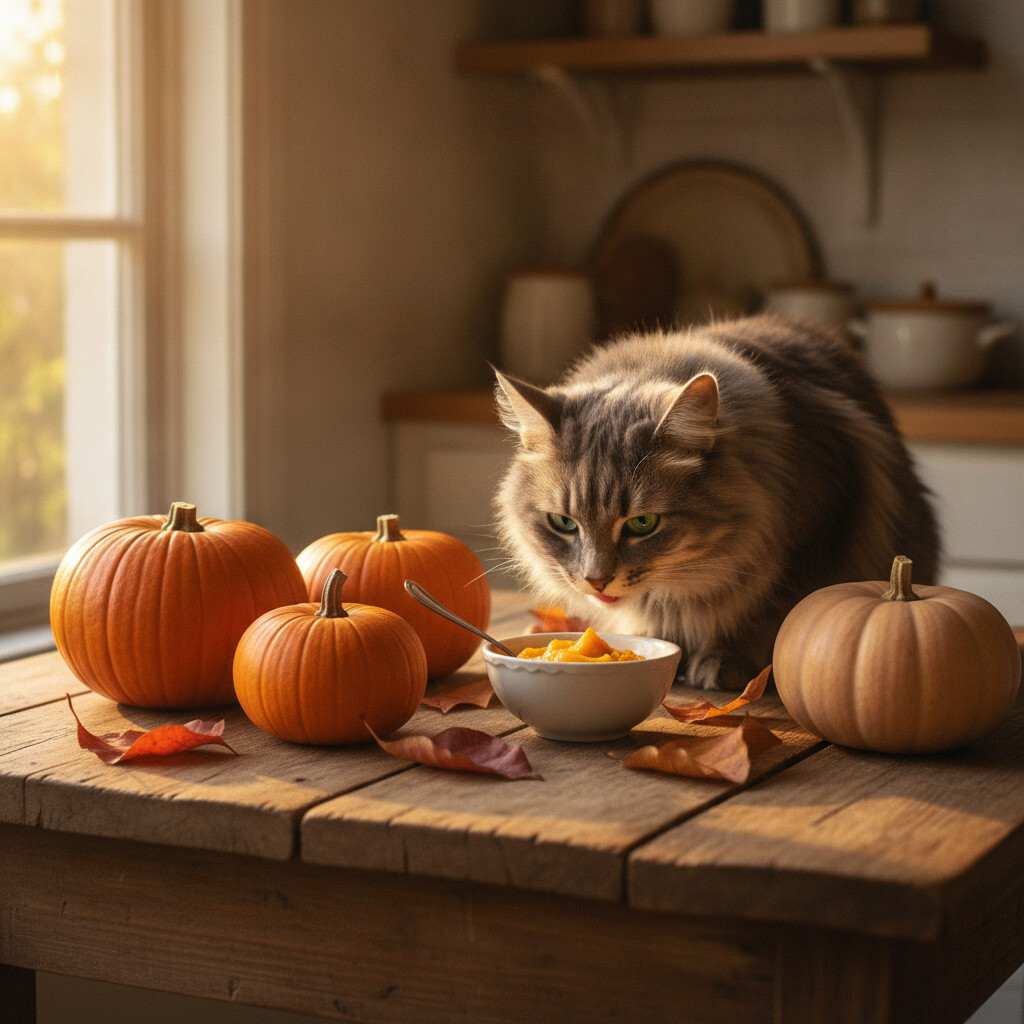
Yes, plain pumpkin is safe for most cats in small amounts, and it genuinely can help with mild digestive upset — but it’s not the cure-all the internet often makes it out to be. Here’s what pumpkin actually does inside a cat’s gut, how much to give, and when it’s the wrong tool for the problem.
What pumpkin actually does
Plain canned pumpkin (not pumpkin pie filling) is mostly water and fiber, with a modest amount of both soluble and insoluble fiber in the mix. That combination is why it shows up so often as a home remedy:
- Soluble fiber absorbs water and can help firm up loose stool.
- Insoluble fiber adds bulk, which can help move things along when a cat is mildly constipated.
It’s a genuinely useful fiber source for occasional digestive support — the issue is that “fiber helps regulate digestion” gets stretched into “pumpkin fixes diarrhea” and “pumpkin fixes constipation,” as if it works both ways for every cat, every time. It doesn’t. Fiber can help stool move more predictably in either direction, but it isn’t treating whatever is actually causing the problem underneath.
How much to actually give
For an average adult cat, vets who recommend pumpkin as a supportive measure generally suggest starting small: about half a teaspoon to one teaspoon of plain canned pumpkin, mixed into food, once a day. That’s it. This isn’t a food group cats need — it’s an occasional add-in, not a diet staple.
A few things matter more than the exact amount:
- Use plain, canned, 100% pumpkin puree — not pumpkin pie filling, which contains added sugar, spices (some of which, like nutmeg, aren’t good for cats in quantity), and sometimes xylitol-adjacent sweeteners in “sugar-free” versions.
- Fresh cooked pumpkin works too, plain and unseasoned, but canned is more consistent and easier to portion.
- Introduce it gradually. A cat who’s never had pumpkin before shouldn’t get a full teaspoon on day one — start with a quarter teaspoon and watch how they do.
When pumpkin actually helps
Pumpkin is most reasonably used for:
- Occasional mild, uncomplicated constipation — a cat who’s a little backed up but otherwise acting normal (eating, drinking, no vomiting, no visible pain).
- Occasional mild, uncomplicated loose stool — a one-off soft stool with no other symptoms, often after a diet change or a stressful event.
- As a fiber add-in for cats who need it long-term, under a vet’s guidance, for managing certain chronic GI conditions.
When pumpkin is the wrong tool
This is the part that gets skipped in a lot of “pumpkin for cats” content, and it’s the part that actually matters for your cat’s health:
- If diarrhea or constipation lasts more than 24-48 hours, pumpkin isn’t a substitute for figuring out why. Parasites, dietary intolerance, inflammatory bowel disease, and more serious conditions can all present as ongoing GI symptoms that fiber alone won’t resolve.
- If your cat is straining to defecate and producing little or nothing, that can be a sign of a genuine blockage or, in male cats particularly, a urinary obstruction being mistaken for constipation — both are emergencies, not pumpkin situations.
- If there’s blood in the stool, vomiting, lethargy, or appetite loss alongside the GI symptoms, pumpkin is not the plan. That combination needs a vet visit, not a kitchen-cabinet fix.
- If your cat has a diagnosed condition like pancreatitis or a fiber-sensitive GI disorder, don’t add pumpkin without checking with your vet first — more fiber isn’t automatically better for every gut.
When to see a vet
Treat pumpkin as something you might reach for once your vet has ruled out (or you’re confident it isn’t) anything more serious. Call your vet if:
- Constipation or diarrhea lasts longer than two days
- Your cat is straining in the litter box with little output — especially male cats, where this can signal a urinary blockage
- There’s blood in the stool or vomit
- Your cat stops eating, seems lethargic, or is clearly uncomfortable
- Symptoms are recurring rather than a one-off
None of these are pumpkin problems. They’re “call the vet” problems, and treating them with a home remedy first can cost valuable time.
The takeaway
Pumpkin isn’t a myth, but it isn’t magic either. A small amount of plain canned pumpkin can genuinely help settle an occasional, mild, uncomplicated digestive hiccup thanks to its fiber content. It’s not a treatment for anything persistent, severe, or paired with other symptoms — that’s a job for your vet, not your pantry. If you’re feeding pumpkin regularly rather than as an occasional support, or your cat needs it more often than not, that’s worth mentioning at your next check-up, since recurring GI symptoms usually point to something that needs an actual diagnosis.
For more on what’s actually going on when digestion misbehaves, see our guides on cat constipation: causes, home care, and when to see a vet and cat diarrhea: causes, home care, and when to see a vet.