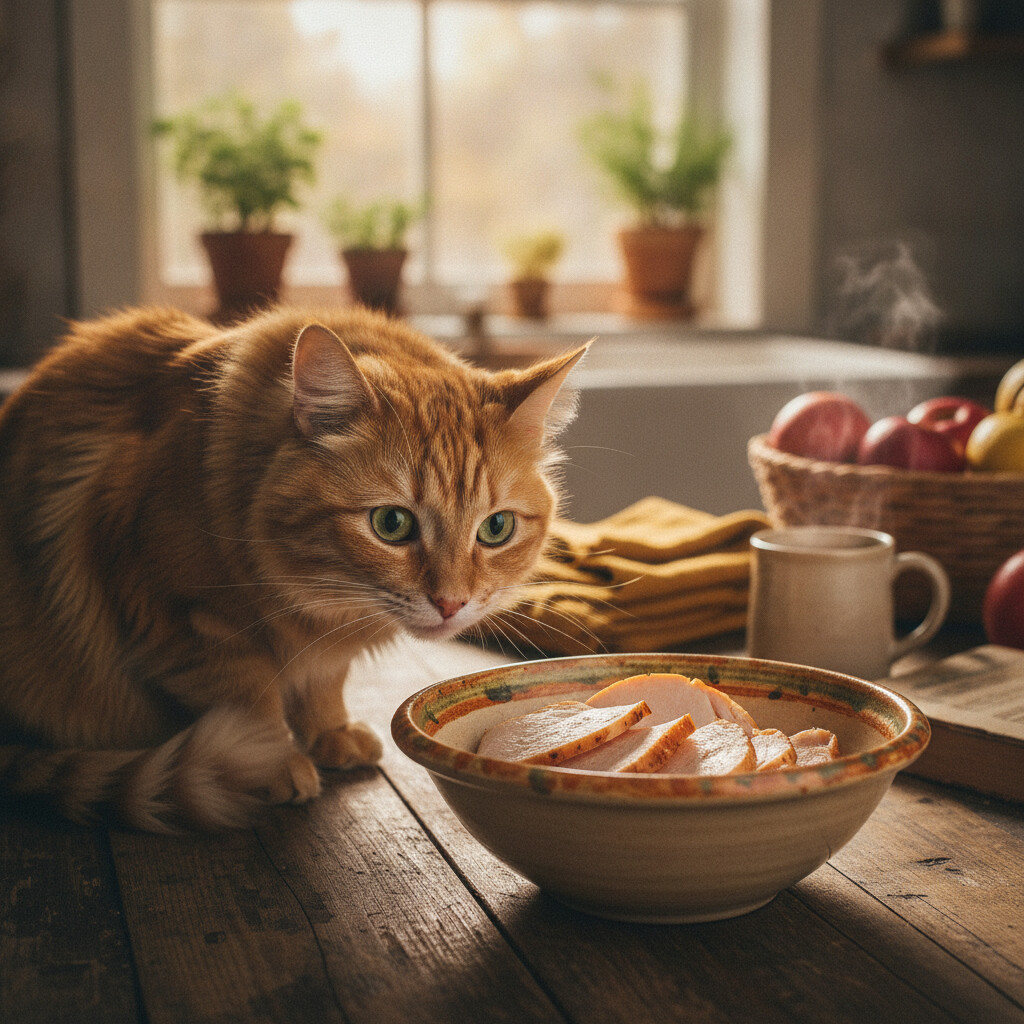
Yes, cats can eat turkey, as long as it’s plain, fully cooked, boneless and skinless. A few small pieces of white meat are a perfectly good treat. The problems at Thanksgiving are everything that comes with the turkey: skin, gravy, stuffing, bones, string and the rest of the table.
Here’s what’s fine, what isn’t, and how much is sensible.
Is Turkey Good for Cats?
Turkey is lean animal protein, and cats are obligate carnivores, so a bit of plain turkey fits their biology well. Many commercial cat foods already use turkey as a main ingredient. (Our explainer on why cats need so much protein covers the background.)
What turkey isn’t is a complete diet. Plain meat lacks the balance of vitamins, minerals and other nutrients that a complete cat food provides, which is why it works as a treat and not as a meal replacement.
The safe version:
- White or dark meat, fully cooked
- No skin, no bones
- No seasoning, butter, garlic, onion or gravy
- Cut into small, bite-sized pieces
The easiest way to manage this is to set a small plate aside for the cat before the bird gets brined, buttered or seasoned, or to cut a piece from the inside of the breast where seasoning hasn’t reached.
How Much Turkey Can a Cat Have?
Less than most people think. A common rule from vets (it appears in the AAHA’s 2021 Nutrition and Weight Management Guidelines) is that treats should make up no more than about 10% of a cat’s daily calories.
A typical 10-pound indoor adult cat needs roughly 200 calories a day, though individual needs vary quite a bit. According to USDA FoodData Central, roasted skinless turkey breast is about 40 calories per ounce. So that cat’s 10% treat allowance is around half an ounce of turkey, or a few thumbnail-sized pieces.
That’s not much, but it’s enough. Cats don’t measure treats by volume, and a couple of pieces on Thanksgiving is plenty to make it feel like a special day. If you want a more precise figure for your own cat, our calorie guide to how much to feed your cat walks through the maths.
The Parts of the Turkey to Keep Away From Your Cat
Skin and fatty drippings. Turkey skin is high in fat and is usually where the salt, butter and seasoning end up. Rich, fatty food is a common cause of vomiting and diarrhea in cats after holiday meals.
Gravy, stuffing and anything with onion or garlic. Onions, garlic, leeks, chives and shallots (the allium family) can damage cats’ red blood cells and cause anemia. The Merck Veterinary Manual notes that cats are more sensitive to these compounds than dogs. Powdered and dried forms are concentrated, so a gravy or stuffing made with onion powder or garlic salt can be a problem even if you can’t see any onion in it.
Cooked bones. Cooked poultry bones can splinter. The risk is choking, damage to the mouth or throat, or a bone fragment lodging in or injuring the gut. Wishbones and neck bones are the usual culprits when a cat raids the carcass.
Raw or undercooked turkey. Raw poultry can carry Salmonella and other bacteria, which can make cats sick and also spread to the people handling the cat or its bowls. If a cat licks a defrosting turkey or the raw-meat cutting board, it’s mostly a hygiene issue for the household, but it’s worth avoiding.
String, netting, foil and plastic. This one surprises people. Cooking twine and netting smell like meat, and cats will happily swallow them. String is a classic cause of what vets call a linear foreign body, which can cut into the intestines and usually needs surgery. If you want to see how quickly this goes wrong, read our story on the hair tie that nearly cost us our cat. Bin the twine in a lidded trash can as soon as it comes off the bird.
What About the Rest of the Thanksgiving Table?
A quick rundown of the side dishes:
- Mashed potatoes: Plain potato isn’t toxic, but mashed potatoes usually come with butter, cream, garlic and salt. Many adult cats are lactose intolerant (see is milk bad for cats?). Best skipped.
- Green bean casserole: Plain green beans are fine. The casserole often has onions, fried onions and creamy soup, so keep it away.
- Cranberry sauce: Not considered toxic, but it’s mostly sugar, which cats have no use for. Not worth it.
- Pumpkin pie: Plain canned pumpkin is fine in small amounts (our article on whether pumpkin is good for cats explains when it helps). Pie filling comes with sugar, spices and dairy, so no.
- Raw bread or roll dough: Keep it well away. Yeast dough can keep rising in the stomach and produce alcohol as it ferments, and both are dangerous.
- Chocolate desserts, alcohol, coffee and raisins: All on the ASPCA’s list of foods to keep away from pets.
Our broader guide to human foods that are safe for cats (and the ones to avoid) covers the year-round list, and holiday hazards for cats covers decorations and plants.
A Practical Plan for Thanksgiving Day
Most food emergencies at Thanksgiving happen because the kitchen is busy and nobody’s watching the cat. A few things make a big difference:
- Put the cat’s plate aside early. A few pieces of plain turkey in their own bowl, at their own mealtime, means fewer begging attempts at the table.
- Brief your guests. One sentence (“please don’t feed the cat, they’ve had their turkey”) saves a lot of trouble, especially with kids.
- Secure the carcass and the trash. Put the carcass straight into a lidded bin or a sealed bag in the garage. A turkey carcass on the counter is the most tempting thing a cat will see all year.
- Give your cat somewhere quiet. A spare room with water, a litter box and a bed lets a shy cat skip the crowd. It also keeps them away from the oven and the front door.
When to See a Vet
Call your vet or an emergency clinic promptly if your cat:
- Has eaten cooked bones, string, twine or netting, or foil or plastic wrapping, even if they seem fine for now
- Has eaten a dish containing onion or garlic in any amount you’re unsure about, or a lot of it
- Has eaten raw yeast dough, chocolate or anything containing alcohol
- Is vomiting repeatedly, has diarrhea lasting more than a day, or is straining, drooling or pawing at their mouth
- Seems lethargic, has pale gums, or hasn’t eaten for 24 hours
If you think your cat has eaten something toxic, the ASPCA Animal Poison Control Center (888-426-4435) and Pet Poison Helpline (855-764-7661) are available 24/7 (a consultation fee applies). Have the packaging or recipe handy if you can.
The Bottom Line
A few small pieces of plain, cooked, boneless turkey are a safe Thanksgiving treat for most cats. Skip the skin, gravy and stuffing, bin the bones and twine quickly, and keep the treat to about half an ounce. Your cat gets a share of the holiday without a trip to the emergency vet.
Does your cat get a little Thanksgiving turkey, and do they actually care, or are they just there for the attention?