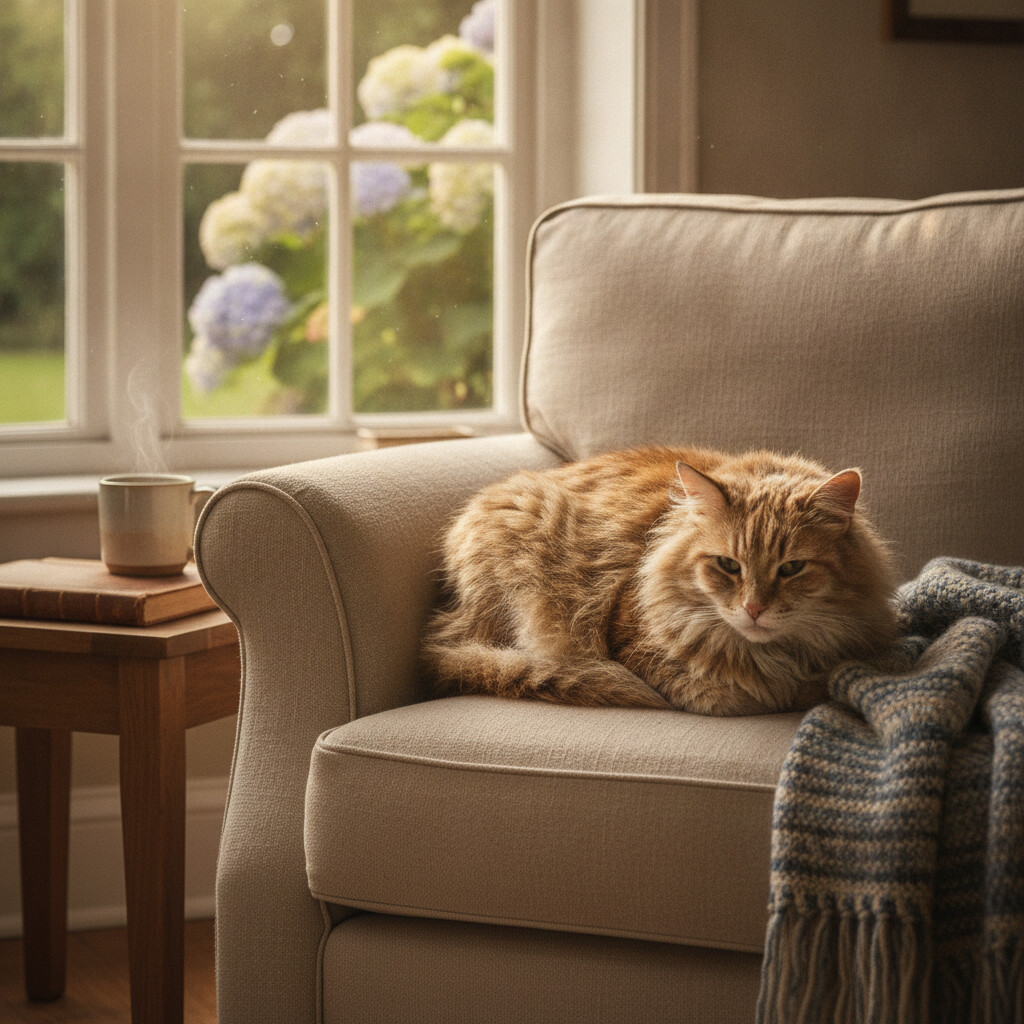
Short answer: some weight gain in senior cats is normal — slower metabolism and less activity mean the same food that maintained their weight at five can pack on pounds at twelve. But new or accelerating weight gain in an older cat isn’t automatically “just aging.” It can point to arthritis limiting movement, insulin resistance, or simply overfeeding a cat who no longer needs as many calories. Here’s how to tell which one you’re dealing with.
Why Older Cats Gain Weight More Easily
Feline metabolic rate declines with age, particularly after around 10-12 years, according to feline life-stage guidelines from the American Association of Feline Practitioners (AAFP). A cat eating the exact same portion she’s had for years can gradually gain weight simply because she’s burning less of it — she’s sleeping more, hunting nothing, and playing less than she did as a younger adult.
This is the most common driver of senior weight gain, and it’s manageable: it usually means a modest calorie reduction or a switch to a lower-calorie senior formula, not a medical workup. The distinction that matters is whether the gain is gradual and modest (normal aging) or new, rapid, or accompanied by other changes (worth investigating).
When Weight Gain Signals Something Else
Reduced mobility from arthritis. Osteoarthritis is extremely common in senior cats — some studies estimate it affects a majority of cats over 10, though it’s frequently missed because cats hide pain well. A cat who’s quietly sore will jump less, play less, and move around the house less, which reduces calorie burn independent of diet. If your cat has gained weight and also seems reluctant to jump onto furniture, takes stairs more slowly, or grooms less (because reaching is uncomfortable), arthritis is worth ruling out. Our guide on arthritis in senior cats covers the signs in more detail.
Insulin resistance and prediabetes. Weight gain and diabetes risk feed each other in cats, similarly to humans — excess weight increases insulin resistance, and insulin resistance makes weight easier to gain and harder to lose. If weight gain is paired with increased thirst, more frequent urination, or a ravenous appetite despite gaining weight, that combination needs a vet visit and bloodwork, not a diet change on your own.
Fluid retention or abdominal swelling. Occasionally what looks like “weight gain” is actually fluid buildup from heart disease or organ dysfunction, which reads differently on a body condition check — the weight gain is concentrated in the belly rather than distributed as a general layer of fat. This is less common than the first two causes but important to rule out if the change is fast (weeks, not months).
Medication side effects. Some medications, including certain steroids, can increase appetite and promote weight gain as a side effect. If your cat started a new medication around the time weight gain began, mention it to your vet rather than assuming it’s unrelated.
How to Tell If It’s a Problem: The Body Condition Check
Weight in pounds matters less than body condition. Run your hands along your cat’s ribs: you should be able to feel them easily under a thin layer of fat, without heavy pressure. Look from above — there should be a visible waist behind the ribs, not a straight line or outward bulge. A visible, hanging lower belly pouch (not to be confused with the loose “primordial pouch” many healthy cats have) combined with rounded flanks is a clearer sign of excess weight than the number on a scale alone.
If you can’t easily feel ribs, or your vet’s chart shows a steady upward trend over two or three visits, that’s a body condition worth addressing regardless of what’s causing it.
Managing Weight Gain Without Stressing an Older Cat
- Don’t crash-diet a senior cat. Rapid weight loss in cats — especially from severely restricting food — carries a real risk of hepatic lipidosis, a serious and potentially fatal liver condition. Weight loss in seniors should be gradual and vet-guided, not a sudden diet change.
- Ask about a senior-specific or weight-management formula. These are typically lower-calorie per volume, so your cat can eat a satisfying portion without excess calories. Our guide to choosing food for senior cats covers what to look for beyond just “senior” on the label.
- Reintroduce movement gently. Short, low-impact play sessions (wand toys your cat can bat at from a sitting position work well for stiff joints) help offset reduced activity without demanding the agility of a younger cat.
- Split meals into smaller, more frequent portions rather than one or two large meals — this can reduce the “empty bowl begging” cycle that leads to overfeeding.
- Weigh at home between vet visits if your cat tolerates it. A kitchen scale plus your own weight, or a pet-specific scale, catches trends faster than annual checkups alone.
When to See a Vet
Book a visit rather than adjusting food on your own if you notice:
- Weight gain that’s new, rapid, or doesn’t match a clear increase in food or decrease in activity.
- Increased thirst or urination alongside weight gain.
- Reduced mobility, reluctance to jump, or signs of joint pain.
- Abdominal swelling or a belly that feels tense or distended rather than soft.
- Any weight change — gain or loss — in a cat with an existing health condition like kidney disease or hyperthyroidism, since these can shift how weight should be managed.
A vet visit at this stage is about getting bloodwork and a real body condition score, not just being told to “feed less.” What looks like simple weight gain sometimes has a treatable medical driver underneath it, and catching that early matters more with a senior cat than a younger one.
The Practical Takeaway
Gradual weight gain in an older cat, with steady mobility and normal thirst and appetite, is usually just a slower metabolism catching up with an unchanged diet — a modest calorie adjustment fixes it. Weight gain that’s sudden, paired with reduced mobility, or paired with increased thirst or appetite is a signal to get bloodwork before changing anything at home. Either way, the body condition check with your hands tells you more than the number on a scale.