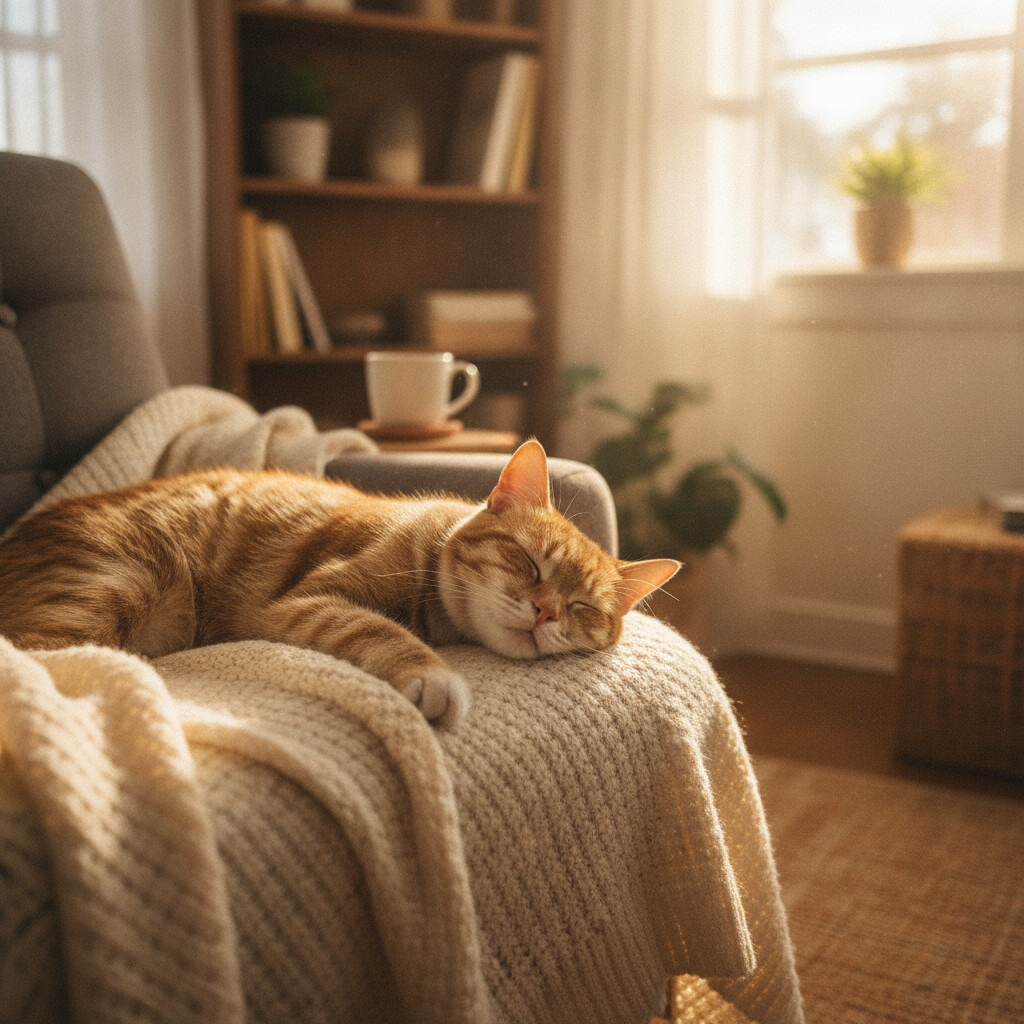
For two years, the story around our cat was simple: she was just grumpy. She hissed if you reached for her too fast, she’d swat if you tried to pick her up, and she’d disappeared under the bed the moment guests arrived. We joked about her “attitude” the way people do — like it was a fixed personality trait, not a symptom of anything. It took a routine dental cleaning, and a vet who asked one good question, to find out we’d had it backwards the whole time.
The Cat Everyone Learned to Work Around
She came to us as an adult, already a few years old, and the hissing started almost immediately whenever anyone tried to handle her back half — picking her up under the belly, brushing near her hips, even just squeezing past her on the stairs if she was curled up wrong. We adjusted. We picked her up differently. We stopped brushing past her tail. Visitors got a warning: “she’s just not that kind of cat.”
What we didn’t clock, because it built up so gradually, was that she’d also gotten quieter. Less interested in jumping onto the counter to supervise cooking. Sleeping in lower, easier-to-reach spots instead of her old favorite perch on top of the bookshelf. We told ourselves she was “just getting older” and “settling into being an indoor cat.” Both of those were technically true. Neither was the actual explanation.
The Question That Changed Things
At a routine vet visit for a dental cleaning, the vet watched her walk across the exam room and asked, almost offhand: “Has she always moved like that, or is that new?” We genuinely didn’t know. We’d never watched her walk with that specific question in mind.
That one question led to a fuller orthopedic exam, and it turned up moderate osteoarthritis in both hips — significant enough to explain a lot of what we’d been calling personality. Cats are exceptionally good at hiding pain and mobility issues; it’s an evolutionary holdover from being both predator and prey, where looking vulnerable is a liability. According to the American Association of Feline Practitioners (AAFP), degenerative joint disease is dramatically underdiagnosed in cats precisely because the signs are subtle and easy to misattribute to aging, laziness, or temperament rather than pain.
Once we knew what to look for, it was obvious in hindsight. The hissing when picked up “wrong” wasn’t attitude — it was us putting pressure directly on inflamed hip joints. The disappearing under the bed wasn’t antisocial behavior — jumping down from furniture had started to hurt, and hiding was easier than navigating a house full of height changes. The quieter, lower-key cat we’d gotten used to over two years wasn’t a personality shift. It was a cat managing chronic pain the only way she knew how: by doing less, and by warning us away from the things that hurt.
What Changed After Treatment
Her vet started her on a multimodal pain management plan — an anti-inflammatory suited for long-term feline use, a joint supplement, and some practical changes at home: ramps to her favorite high spots, a heated bed, and litter boxes with lower entry sides so she didn’t have to climb in.
The change wasn’t overnight, but within a few weeks it was unmistakable. She started using the bookshelf perch again. The hissing when picked up dropped to almost nothing, because we’d also learned to support her hindquarters properly instead of scooping her the way that used to work fine. She got more social — not a different cat, just a considerably more comfortable one.
The hardest part to sit with afterward wasn’t the vet bill. It was realizing how long “she’s just grumpy” had functioned as a story that let us stop asking questions.
Why This Is Easy to Miss
Cats don’t limp the obvious way dogs do, and they rarely vocalize pain the way you’d expect. Vets and behaviorists increasingly point to a specific list of subtler signs: reduced jumping or hesitating before jumping, matted or ungroomed fur in spots a cat can’t comfortably reach anymore, changes in litter box habits (especially if the box has high sides), increased irritability when touched in specific areas, and a general drop in activity that gets written off as “settling down” or “just aging.” None of these individually scream pain. Together, over months, they tell a clear story — if you’re looking for it.
When to See a Vet
If your cat has started avoiding being picked up or touched in specific spots, is jumping less or hesitating before jumps they used to make easily, has gotten noticeably quieter or more withdrawn over weeks or months, or has any new grooming gaps or litter box changes, it’s worth a vet visit specifically framed around mobility and comfort — not just a general checkup. Mention the behavior changes explicitly; a vet who knows you’re asking about possible pain will look differently than one doing a routine once-over. Sudden changes, obvious limping, or a cat that stops eating or hiding constantly warrant a same-day visit, not a wait-and-see approach.
The Takeaway
“Personality” is one of the easiest explanations to reach for with a difficult cat, because it doesn’t require doing anything. But cats are quietly, remarkably good at disguising pain as attitude. If your cat has a well-established reputation for being grumpy, standoffish, or hands-off about certain kinds of touch, it’s worth asking — the way our vet asked us — whether that’s really who she is, or whether it’s the best way she’s found to tell you something hurts.
If any of this sounds familiar, our guide on how to tell if your cat is in pain breaks down the specific signs vets watch for, and arthritis in senior cats goes deeper into joint disease specifically, including what treatment and home adjustments typically look like.