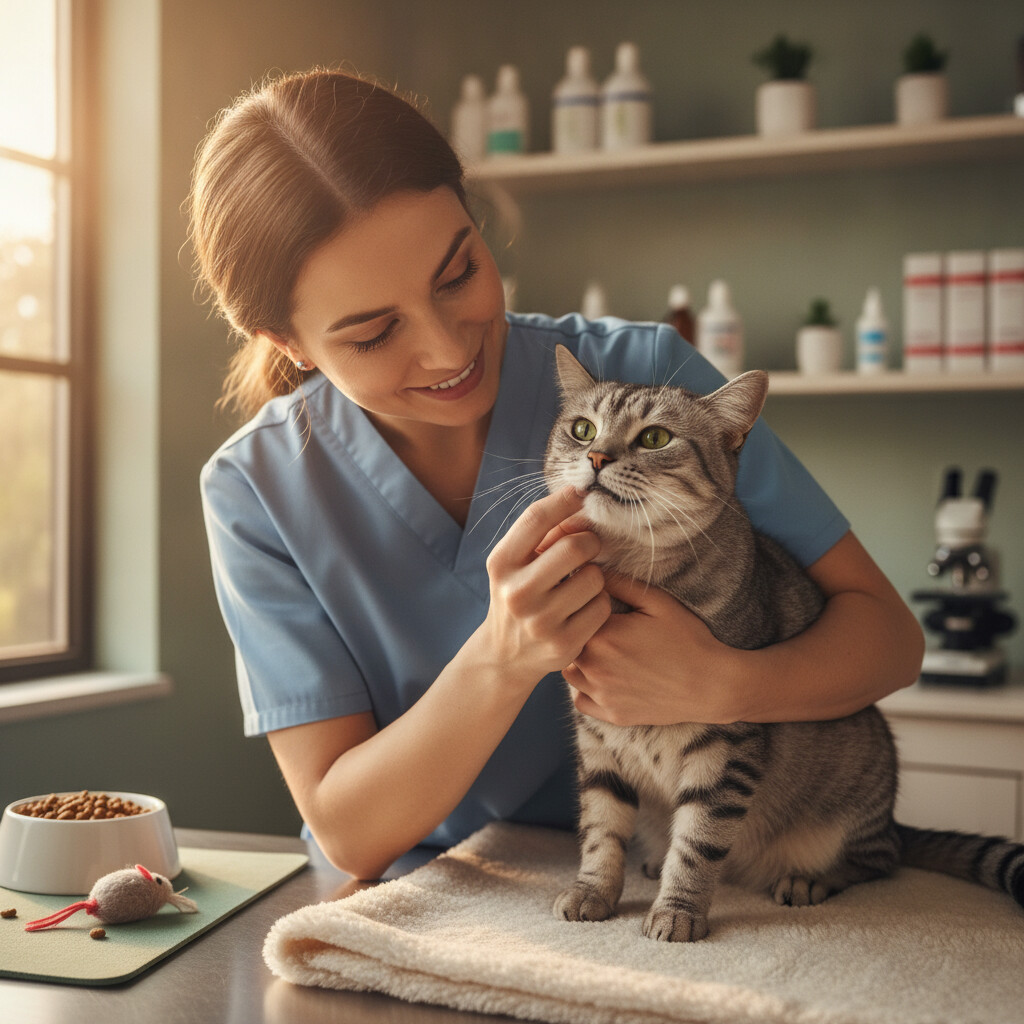
By age 10, most cats already have some degree of dental disease — and in senior cats specifically, the stakes around treating it go up, because the standard fix (a dental cleaning under general anesthesia) carries more risk and needs more pre-planning than it does in a younger cat. The teeth aren’t fundamentally different with age. The math around treating them is.
Why Dental Disease Gets More Common — and More Serious — With Age
Periodontal disease is cumulative: plaque hardens into tartar, tartar irritates the gumline, and years of that cycle eventually breaks down the bone and ligament holding teeth in place. By the time most cats reach their senior years, that process has had a decade or more to run, which is why veterinary estimates suggest a large majority of cats over 10 have measurable periodontal disease, often with no obvious outward sign until it’s advanced.
Older cats are also more prone to tooth resorption — a painful condition where the tooth’s own structure starts breaking down from within, often below the gumline where it isn’t visible without dental X-rays. It’s one of the most common dental findings in senior cats and is frequently missed on a visual exam alone.
Why the Usual Treatment Gets More Complicated
A professional dental cleaning requires general anesthesia — there’s no way to safely scale below the gumline or take diagnostic X-rays in an awake cat. That’s manageable in a healthy adult, but senior cats have a higher chance of also carrying kidney disease, heart disease, or hyperthyroidism, any of which changes how anesthesia needs to be handled. This doesn’t mean anesthesia is off the table for older cats — modern veterinary anesthesia protocols are built around exactly this kind of risk management — but it does mean a senior cat should have bloodwork and often a physical exam focused on heart and kidney function before a dental procedure is scheduled, not after.
This is also why “just wait and see” tends to backfire specifically in seniors: dental disease doesn’t reverse on its own, and the longer it’s left, the more likely the eventual procedure involves extractions rather than a straightforward cleaning — a bigger procedure, not a smaller one.
Signs of Dental Pain Cats Hide Well
Cats are notorious for masking mouth pain, and senior cats especially may show subtle behavior changes rather than obvious ones:
- Preferring wet food or avoiding dry kibble they used to eat fine
- Dropping food while eating, or chewing only on one side
- Reduced grooming (a sore mouth makes self-grooming uncomfortable) — something we cover more broadly in why senior cats groom less
- Bad breath beyond the normal baseline
- Pawing at the face or reluctance to be touched near the mouth
- Weight loss despite normal-seeming interest in food
None of these are exclusive to dental disease, which is exactly why they’re easy to write off as “just getting older.” A vet exam is the only reliable way to tell the difference.
What You Can Actually Do at Home
Daily brushing remains the single most effective thing an owner can do, and it’s never too late to start — even a cat who’s never had their teeth brushed can often be trained onto it gradually with patience and the right technique, covered in our general guide to feline dental health and brushing. Dental-specific diets and VOHC-approved dental treats can help reduce plaque buildup between cleanings, though they supplement professional care rather than replace it. Water additives and oral gels have more mixed evidence behind them — worth discussing with your vet rather than assuming they’re equivalent to brushing.
When to See a Vet
Don’t wait for a visible problem. Any senior cat should have their mouth checked at every wellness visit, and any of the following warrants a dedicated appointment rather than waiting for the next annual exam: bad breath that’s noticeably worse than usual, visible red or bleeding gums, a cat that stops eating dry food or drops food repeatedly, pawing at the mouth, or any swelling on the face or jawline. If a dental cleaning is recommended, ask specifically what pre-anesthetic bloodwork is planned and how your cat’s individual health history (kidney values, heart status, thyroid) factors into the anesthesia plan — a good vet will have a clear answer, not a generic one.
The Practical Takeaway
Treat dental checks as a standing item at every senior wellness visit, not something you bring up only when you notice bad breath. Start or maintain brushing regardless of your cat’s age — it’s never purely cosmetic. And if a cleaning is recommended, ask about the anesthesia plan specifically rather than treating it as a routine, one-size-fits-all procedure — for a senior cat, it isn’t.