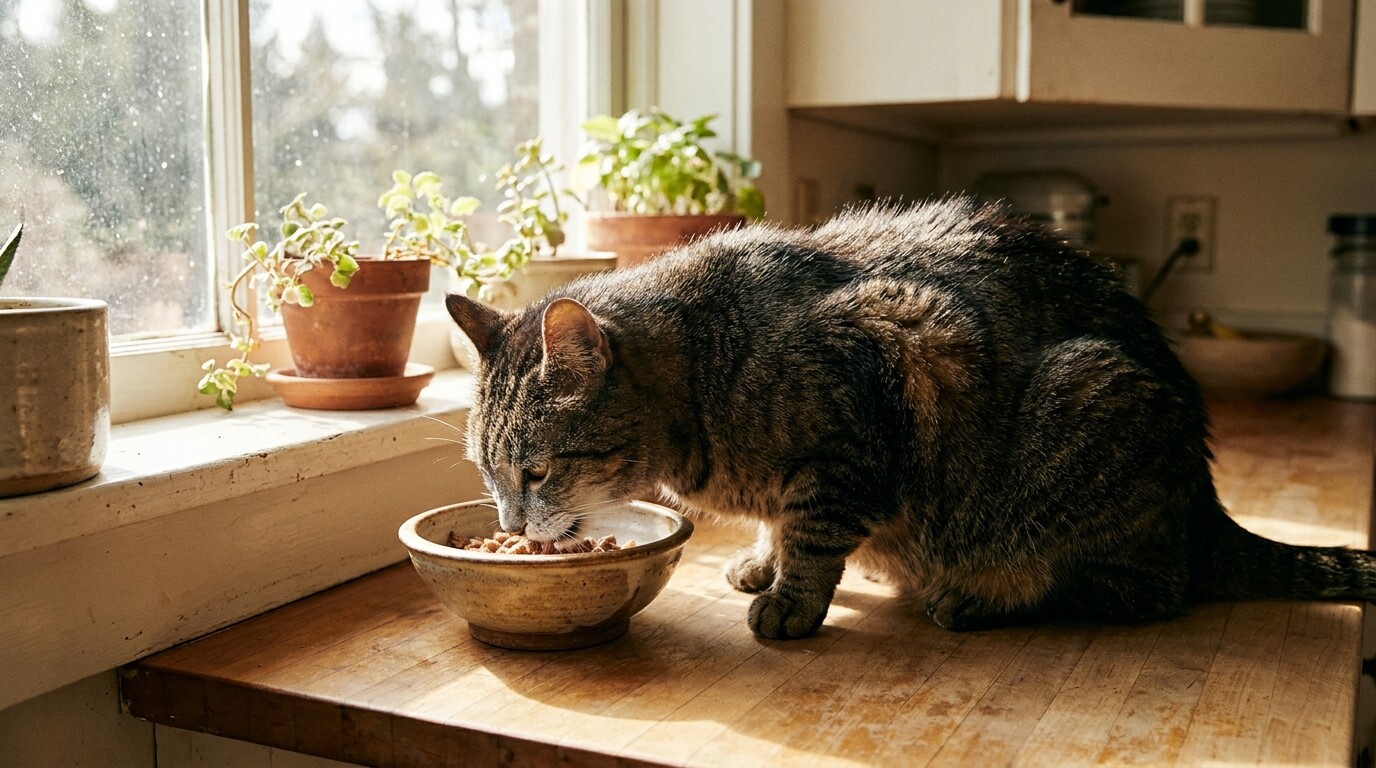
After around age 10, your cat’s body processes food differently. Muscle mass drops faster, the kidneys become less efficient, and joints that were once effortless start showing wear. The right diet won’t stop aging — but it can slow some of these changes, and the wrong one can accelerate them.
How a Senior Cat’s Nutritional Needs Change
Cats are generally considered “senior” from around age 10–11 and “geriatric” from 15 onward (the American Association of Feline Practitioners classifies senior cats as age 11+). The changes that matter most for diet:
- Reduced kidney filtration. Older kidneys clear waste products less efficiently. Chronic kidney disease (CKD) affects an estimated 30–40% of cats over age 12, making it the leading health concern in senior cats.
- Decreased muscle mass. Sarcopenia — age-related muscle loss — is real in cats and often starts earlier than owners notice, from around age 8–9.
- Reduced nutrient absorption. Some cats aged 12+ absorb fat and protein less efficiently, meaning they may actually need more calories to maintain weight, not fewer.
- Lower thirst drive. Senior cats often drink less than they should, increasing risk of dehydration, urinary issues, and kidney stress.
Protein: Don’t Cut Back — Quality Matters More
One of the most persistent myths in senior cat nutrition is that you should restrict protein to protect the kidneys. The evidence doesn’t support this for cats without a confirmed kidney diagnosis.
Cats are obligate carnivores who require high protein at every life stage. The WSAVA (World Small Animal Veterinary Association) guidelines make this clear: protein restriction is appropriate only once kidney disease is diagnosed, and even then it’s managed carefully, not used as a blanket rule.
For healthy senior cats, adequate protein is critical to counteracting muscle loss. What changes with age is the need for higher-quality protein — animal-sourced, highly digestible proteins. Look for named meat sources (chicken, turkey, salmon) at the top of the ingredient list rather than plant proteins like corn gluten or soy.
Kidney Health and Phosphorus
Where diet genuinely helps — even before a CKD diagnosis — is phosphorus intake. In cats with early, subclinical kidney damage (which can develop without obvious symptoms), high dietary phosphorus accelerates further decline. Senior-specific formulas are commonly designed with reduced phosphorus for this reason.
For healthy senior cats, choosing a lower-phosphorus food is a reasonable preventive measure. For cats with confirmed CKD, phosphorus restriction becomes a medical priority based on specific bloodwork targets.
If you’re not sure whether your senior cat’s kidneys are healthy, this is a strong reason to run a baseline renal panel at their annual checkup. Early CKD is typically silent — by the time symptoms appear, significant function is already lost. For a fuller picture of what to watch for, our article on kidney disease in cats covers the stages and signs in plain language.
Joint Support Through Diet
Arthritis is seriously underdiagnosed in cats — partly because cats hide pain well, and partly because owners often attribute slowing down to “just getting older.” Studies suggest up to 90% of cats over 12 have some degree of arthritic joint change on X-ray.
Diet won’t reverse this, but specific nutrients can help:
Omega-3 fatty acids (EPA and DHA) have the strongest evidence base for reducing joint inflammation in cats and dogs. These come primarily from marine sources — fish oil is the most concentrated supplement form. Many senior-specific foods include added omega-3s; if yours doesn’t, a small daily supplement is an option (ask your vet about dosing, since fish oil can have anticoagulant effects in excess).
Weight management has more impact on joint pain than any supplement. Every extra pound on a 10-pound cat places proportionally enormous stress on aging joints. If your senior cat is overweight, gradual weight loss is one of the most effective interventions available without medication.
Practical Feeding Tips for Senior Cats
Wet food over dry. Hydration is critical for older cats — for kidney function, digestion, and urinary tract health. Wet food is 70–80% water; dry food is around 10%. If your cat will eat wet food, this is the stage of life to prioritise it.
Smaller, more frequent meals. Senior cats often do better with 3–4 small meals rather than 2 larger ones. Appetite can be variable, and smaller volumes are gentler on digestion.
Warm it slightly. Older cats often have a reduced sense of smell, which affects appetite. Warming wet food to just above room temperature makes it more aromatic and significantly more appealing.
Monitor weight monthly. Weigh your senior cat at home using a baby scale or by weighing yourself holding your cat and then alone. Even gradual, unintended weight loss (0.5–1 lb over 2–3 months) is a warning sign that warrants a vet visit.
For a broader overview of what changes as your cat ages, see our guide to caring for a senior cat after age 11.
When to See a Vet
Senior diet decisions are best made in partnership with your vet — ideally with bloodwork, not just a label change. Book a vet visit if you notice:
- Unexplained weight loss, even if gradual — this warrants investigation
- Increased thirst or urination — often the first sign of CKD or diabetes
- Reduced appetite or difficulty eating — may indicate dental pain, nausea, or systemic disease
- Visible muscle wasting, especially along the spine or hindquarters
- Vomiting more than once a week — not normal in senior cats
Annual bloodwork (or every 6 months for cats over 12) gives you a baseline and catches kidney, thyroid, and liver changes while they’re still manageable. The best diet for your senior cat is the one tailored to their individual bloodwork and health profile. Generic “senior” formulas are a reasonable starting point — but once your cat is over 12 or has any diagnosed condition, a targeted conversation with your vet about nutritional goals is worth the appointment.