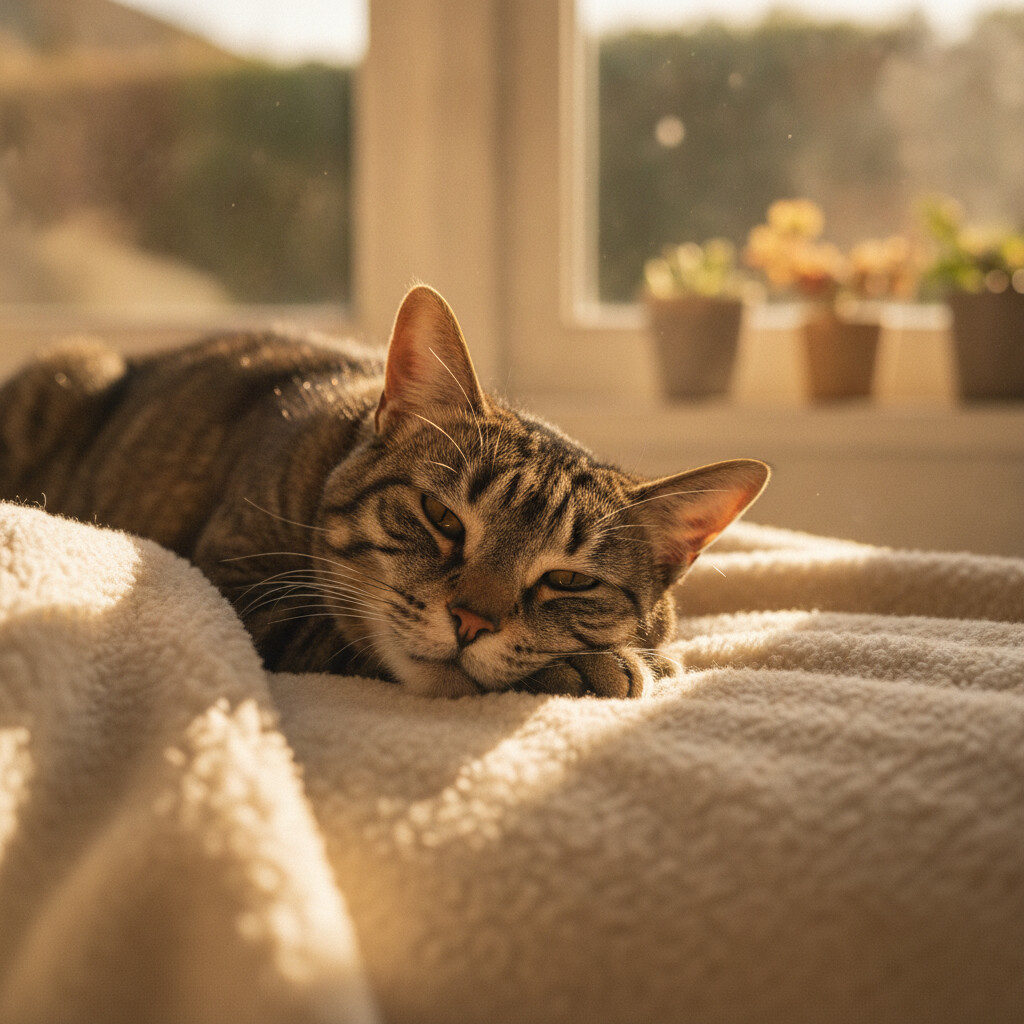
Most vets start using the word “senior” when your cat hits 10 or 11. But what does that actually mean for day-to-day care? The short answer: it means more monitoring, not necessarily more crisis. Understanding feline life stages helps you anticipate what’s coming rather than react to it.
The Feline Life Stage Framework
The American Association of Feline Practitioners (AAFP) defines cat life stages as:
- Kitten: 0–6 months
- Junior: 6 months–2 years
- Prime: 3–6 years
- Mature: 7–10 years
- Senior: 11–14 years
- Geriatric: 15 years and older
A few things worth noting: the “mature” stage (7–10 years) is often overlooked. Cats in this window are sometimes still treated like young adults, but it’s the phase where early-stage chronic diseases — particularly kidney disease and hyperthyroidism — most commonly begin to develop. Annual vet checks should become non-negotiable starting at age 7.
The jump to “senior” at 11 doesn’t mean your cat is suddenly old. Many cats at 11 are vigorous, playful, and a long way from their end-of-life phase. But it’s the point where the veterinary approach shifts: more frequent screening, routine bloodwork, and closer attention to weight changes and behaviour.
What Happens to a Cat’s Body as It Ages
Metabolism slows, but protein requirements don’t drop.
There’s a widespread misconception that senior cats should eat less protein. Research says otherwise. Older cats are actually less efficient at metabolising protein, which means they need more dietary protein per calorie to maintain muscle mass — not less. Switching an older cat to a low-protein “senior” food without a specific medical reason (like advanced kidney disease) can accelerate muscle wasting. This is covered in detail in our Best Diet for Senior Cats guide.
Calorie needs do drop slightly in the mature and early senior phase (roughly 10–20% below prime-adult levels), then may increase again in geriatric cats as absorption efficiency further declines.
The senses change gradually.
Hearing and vision often decline in older cats, but this typically happens slowly enough that cats compensate well. Behavioural shifts — reluctance to jump, reduced interest in play, sleeping more — can signal declining senses, joint pain, or cognitive changes rather than simple laziness.
Joint health becomes more significant.
A 2010 study in the Journal of Feline Medicine and Surgery found degenerative joint disease in over 90% of cats over 12 years old when assessed radiographically. Most of these cats showed no overt limping. The signs are subtler: hesitating before a jump they used to take easily, choosing lower perches, grooming less thoroughly around the hips and tail base.
Cognitive function can decline.
Feline cognitive dysfunction syndrome (FCDS) is the cat equivalent of dementia. Signs include disorientation, altered sleep-wake cycles, excessive vocalisation (especially at night), changes in litter habits, and decreased interaction. It’s underdiagnosed because owners often attribute these signs to “just getting old.” FCDS isn’t curable but is manageable with environmental modifications and, in some cases, medication your vet can prescribe.
The Geriatric Stage: 15 and Older
The AAFP categorises cats 15 and older as geriatric — a distinct phase with its own care requirements.
At this point:
- Vet visits should be every 6 months, not annually
- Bloodwork at every visit (kidney function, thyroid, liver values, complete blood count)
- Home weight monitoring — a kitchen scale works fine; weekly weighing catches loss early
- Close attention to litter box output, since both increased and decreased urination signal common age-related conditions
The geriatric phase is not a countdown. Plenty of cats live actively and comfortably into their late teens and early twenties. But it requires closer attention and a vet who’s proactive rather than reactive.
Practical Adjustments for Senior Life
You don’t need to overhaul your cat’s environment. A few targeted changes make a meaningful difference:
- Lower litter box sides — or cut an entry opening in the side of a standard box. Arthritis makes high sides a genuine obstacle.
- Ramps or steps to favourite perches — cats with joint pain will stop jumping rather than cry out about it. Give them an alternative.
- Heated beds — older cats regulate body temperature less efficiently.
- Night lights — helpful for cats with declining vision who navigate familiar spaces in the dark.
- Multiple food and water stations in a multi-level home — reduces the need to travel, which matters when mobility starts to decline.
When to Call a Vet
For cats aged 10+, don’t wait for the next annual appointment if you notice:
- Weight loss of more than half a pound without a dietary change
- Increased thirst or urination — hallmarks of kidney disease, diabetes, and hyperthyroidism, all of which are common in older cats
- Any new lumps or swellings
- Sudden changes in appetite (either direction)
- Confusion, disorientation, or marked changes in routine behaviour
- Difficulty using the litter box or any sign of painful urination
Pain in older cats is often subtle and easy to miss — they don’t vocalise it the way dogs do. The article on signs of pain in older cats covers exactly what vets look for, and it’s worth reading before your senior cat’s next checkup.
The Bigger Picture
The senior years, managed well, are often some of the most rewarding. These cats know you. They’ve worked out their preferences and communicate them clearly. The monitoring asks more of you, but the relationship generally gives back just as much.
The threshold for action should be lower as cats age — not because old cats are fragile, but because early detection on the conditions common to this life stage (kidney disease, hyperthyroidism, dental disease, arthritis) dramatically improves outcomes. A cat whose CKD is caught at stage 1 has years more quality life than one caught at stage 3.
Know the framework. Watch the signs. When in doubt, call your vet early.