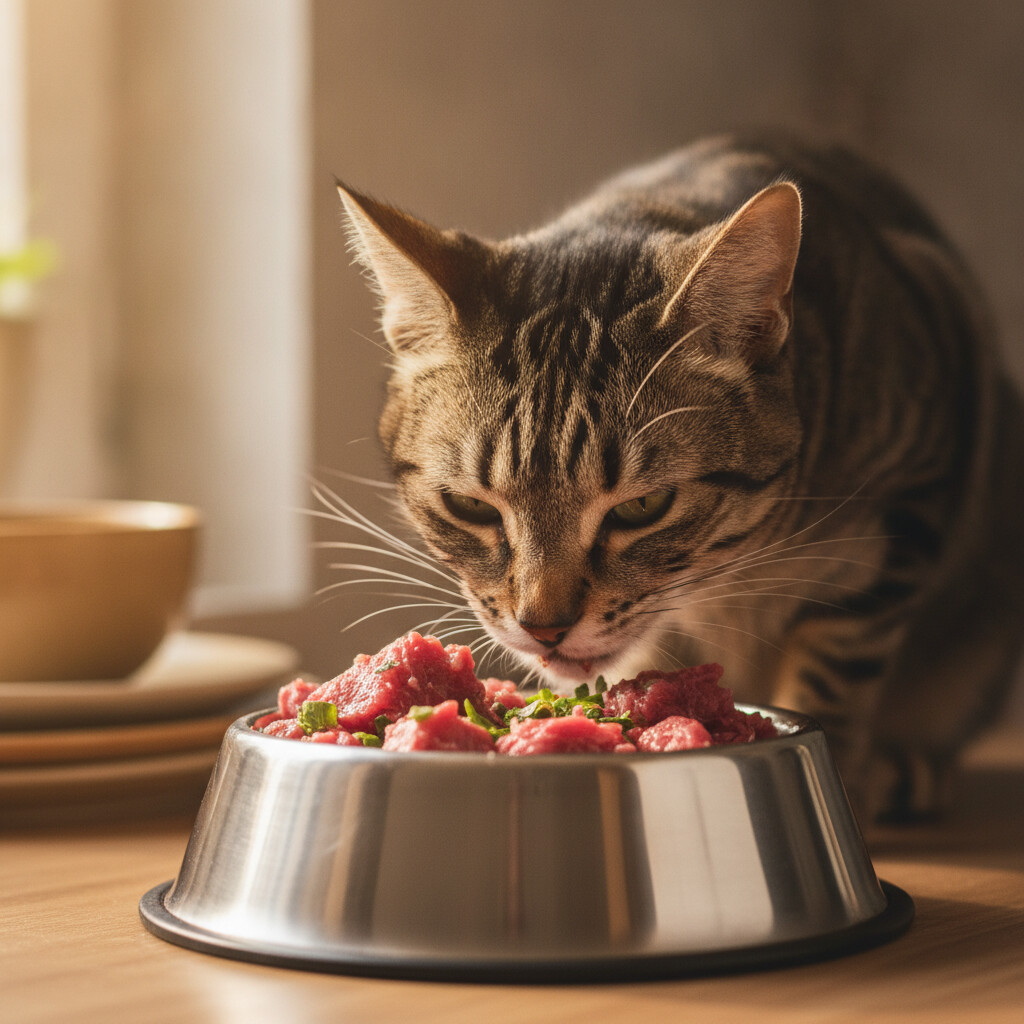
Most cat foods advertise “high protein” as a selling point, and for good reason — cats have a genuinely unusual relationship with protein that sets them apart from almost every other common pet. Here’s why they need so much of it, and what it means for how you feed them.
What “Obligate Carnivore” Actually Means
Cats are obligate carnivores — meaning they must eat animal flesh to survive. Unlike omnivores (dogs, humans), cats cannot synthesize certain essential nutrients from plant-based precursors. They need preformed animal-sourced compounds, or they develop deficiencies.
This is not a preference or a phase. It’s physiology.
Three key examples:
Taurine — an amino acid found almost exclusively in animal tissue. Dogs can synthesize taurine from other amino acids. Cats cannot. Without adequate dietary taurine, cats develop dilated cardiomyopathy (a fatal heart condition) and central retinal degeneration leading to blindness. Before taurine became a mandated ingredient in commercial cat food in the 1980s, these conditions were common. They resurfaced in the 2000s when some exotic-ingredient diets were found to be taurine-deficient.
Arachidonic acid — an omega-6 fatty acid that dogs and humans can synthesize from linoleic acid. Cats cannot. Deficiency affects immune function, skin integrity, and reproduction.
Vitamin A (retinol) — dogs and humans convert beta-carotene from plants into vitamin A. Cats essentially cannot. They need preformed vitamin A from animal liver or fortified food.
This pattern repeats across more than a dozen essential nutrients. The biological machinery that lets omnivores create what they need from plant precursors is simply absent or minimal in cats.
Why Cats Use Protein Differently from Dogs
Here’s the part most owners don’t know: cats use protein not just for building muscle and tissue repair, but as a primary energy source. Their liver enzymes for protein metabolism are permanently “on” — they can’t be downregulated the way a dog’s or human’s can when dietary protein is low.
Practically, this means: if your cat doesn’t eat enough protein, their body begins catabolizing muscle to meet the metabolic demand. This is why cats on low-protein diets lose muscle mass faster than dogs do — and why a cat that stops eating for even 24–48 hours is at risk of developing hepatic lipidosis (fatty liver disease), partly because the liver can’t efficiently process fat stores without adequate protein.
A 2011 study published in the Journal of Animal Science confirmed that cats have a higher protein requirement than dogs at all life stages, not just during growth or pregnancy. Adult cats require a minimum of approximately 26% protein on a dry matter basis (per AAFP nutritional guidelines) — substantially more than adult dogs, which require around 18%.
What This Means for Choosing Cat Food
The obligate carnivore biology has direct implications for what you buy:
Animal protein should be the primary ingredient. “Chicken,” “turkey,” “salmon,” or “beef” — named animal proteins should come before plant-based fillers. Meat meal is not inherently inferior (it’s a concentrated protein source), but plant proteins like corn gluten meal, soy protein, or pea protein don’t provide the complete amino acid profile cats need.
Plant-based or vegan cat diets carry real risk. Despite some commercial marketing, feeding cats a plant-based diet requires extensive supplementation of taurine, arachidonic acid, preformed vitamin A, and other compounds — and even well-intentioned supplementation doesn’t always reach the mark. The World Small Animal Veterinary Association (WSAVA) recommends caution and regular veterinary monitoring for any cat fed a non-animal-based diet.
Life stage changes the protein requirement. Kittens need more protein (and more calories generally) than adults. Senior cats may need even more protein than adults — not less — to maintain muscle mass. The AAFP/ISFM Senior Care Guidelines are clear on this: older cats have reduced protein digestibility and need higher dietary protein to prevent muscle wasting. If you’re feeding a senior cat a “light” or “weight control” formula that cuts protein alongside fat, that’s worth discussing with your vet.
Hydration interacts with protein. High-protein diets are typically meat-based, which tends to mean higher moisture content. This matters because cats have a low thirst drive and are prone to chronic mild dehydration. Our guide on transitioning your cat to a new food can help if you’re thinking about moving toward a higher-protein wet diet.
Does “High Protein” Mean Any Protein?
Not quite. Quantity matters, but so does biological value — how efficiently the cat’s body can actually use the protein provided.
Animal proteins have higher biological value for cats than plant proteins because their amino acid profiles more closely match what cats need. A food with 38% protein from chicken will serve your cat better than a food with 38% protein from pea protein and corn gluten, even though the label shows the same percentage.
This is why reading an ingredient list matters as much as reading the protein percentage. Our guide on how much to feed your cat also covers how to interpret the guaranteed analysis panel to compare products meaningfully.
The Practical Takeaway
You don’t need a biochemistry degree to feed your cat well. The key points:
- Choose foods where named animal protein is the primary ingredient — chicken, turkey, fish, beef, or named meat meals.
- Be skeptical of plant-based protein sources appearing high on the ingredient list.
- Wet food is generally better for obligate carnivores — it mirrors the moisture content of whole prey and reduces chronic dehydration risk.
- Don’t cut protein to cut calories. If your cat needs to lose weight, reducing total calories (including fat) while maintaining adequate protein is the safer approach. Ask your vet for a specific plan.
Cats’ nutritional needs are the result of millions of years of evolution as hypercarnivores. The food you choose either works with that biology or against it. Most commercial cat foods are formulated to meet minimum requirements — knowing why those requirements exist helps you make better choices.