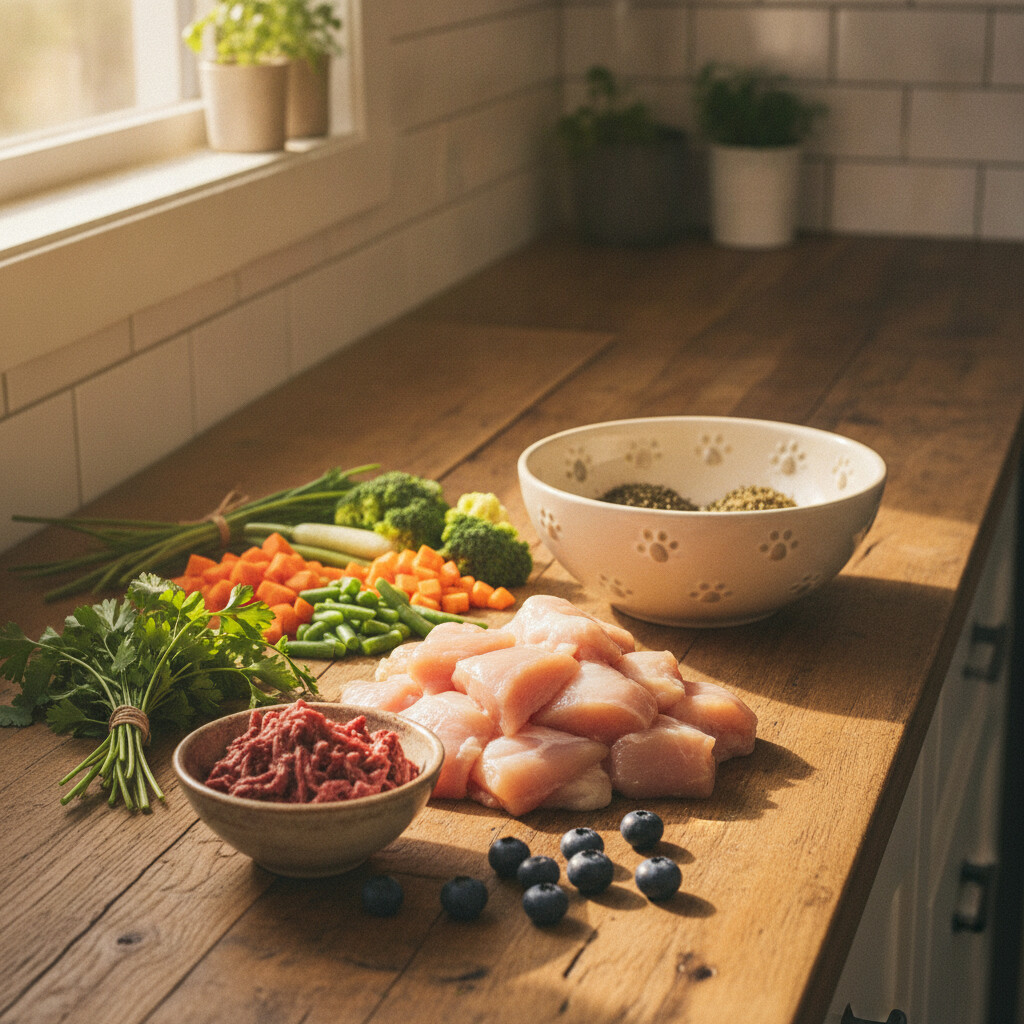
You can make your own cat food. Whether you should — and how much work it actually takes to do safely — is a different question. Most homemade cat diets that owners put together independently turn out to be nutritionally incomplete, and the deficiencies don’t show up quickly. They take months or years to manifest, usually as muscle wasting, heart disease, or skeletal problems.
That’s not a reason to dismiss homemade feeding entirely. It’s a reason to approach it carefully.
Why Homemade Cat Diets Often Fall Short
Cats are obligate carnivores with tightly specific nutritional requirements — more specific than most owners realise. They cannot convert plant-based precursors to taurine or arachidonic acid the way dogs or humans can. They need these compounds preformed in their food.
A study published in the Journal of Nutritional Science evaluated 114 homemade dog and cat diets sourced from veterinary resources and cookbooks. Over 83% were deficient in at least one essential nutrient; many had multiple deficiencies. Zinc, iron, manganese, and choline were the most common gaps. In cats specifically, taurine deficiency (which causes dilated cardiomyopathy — an often fatal heart condition) and thiamine deficiency (causing neurological damage) are the most serious risks.
The problem isn’t the ingredients. Chicken, beef, fish, and organ meat are nutritious whole foods. The problem is that muscle meat alone, even the highest-quality cuts, doesn’t contain a complete nutrient profile for cats. Bones, organ meats, and targeted supplements are required — and the proportions matter.
The Non-Negotiables for Cats
WSAVA (World Small Animal Veterinary Association) guidelines for homemade cat diets require balancing for:
- Taurine — not naturally present in sufficient quantities in many common meat cuts; must be supplemented or sourced from specific organ meats
- Calcium and phosphorus — in approximately the correct ratio (1.1–1.4:1); muscle meat is high in phosphorus but low in calcium, creating an imbalance unless bone or a calcium supplement is included
- Arachidonic acid — sourced from animal fat
- Vitamin A — from liver (cats cannot synthesize it from beta-carotene the way humans can)
- Vitamin E — at risk of deficiency in high-fish diets without supplementation
- Iodine, zinc, and B vitamins — frequently missing in DIY recipes
The AVMA’s formal position is that homemade diets can be appropriate when formulated by a board-certified veterinary nutritionist, but they explicitly caution against recipes found online, in pet books, or on social media — including recipes from ostensibly reliable sources.
If You’re Going to Do It: What’s Actually Required
If you’re committed to a homemade diet, here’s what the minimum viable approach looks like:
1. Get a recipe from a board-certified veterinary nutritionist. The AAFP and WSAVA both recommend this as the baseline. Board-certified veterinary nutritionists (DACVN in the US) can be found through the ACVN directory. Expect to pay for a consultation — typically $200–$500 for a custom recipe. This is the only reliable way to get a nutritionally complete homemade diet.
2. Use the required supplements. Most properly designed homemade recipes include taurine, calcium (if not using ground bone), vitamin E, and a full mineral mix. Do not skip supplements because you believe fresh food is inherently complete — it isn’t.
3. Include organ meat in controlled proportions. Liver is nutrient-dense but also toxic in excess due to vitamin A concentration. A general guideline: organ meat should make up no more than 5–10% of the total diet. Heart, kidney, and liver are the most nutritionally useful.
4. Rotate proteins. Different meats provide different amino acid profiles. Chicken, beef, turkey, and rabbit together give better coverage than a single-protein diet.
5. Monitor your cat. Regular vet visits (every 6 months for homemade-fed cats) and annual bloodwork are essential. The nutritional deficiencies that develop from an incomplete diet are often silent until they’ve been building for months.
Cooked vs. Raw Homemade
Both approaches can work, and both carry specific risks.
Raw homemade adds the concern of bacterial contamination — Salmonella, Listeria, E. coli — which is a real consideration if your household includes immunocompromised people, children under 5, or elderly family members. The AVMA and WSAVA both recommend against raw diets on public health grounds, though they acknowledge many owners will feed them regardless. The raw feeding article covers the safety protocols in detail if that’s the direction you’re taking.
Cooked homemade removes the bacterial risk but doesn’t eliminate the nutritional challenge. Heat also degrades some vitamins, making supplementation even more important.
Commercial Alternatives Worth Knowing
If your interest in homemade feeding is really about controlling ingredients, avoiding ultra-processed food, or knowing exactly what your cat is eating — commercial options exist that address these concerns without the DIY nutritional risk:
- Fresh-cooked commercial diets (JustCats, Smalls, Nom Nom Cat): gently cooked, AAFCO-compliant, formulated by veterinary nutritionists, and delivered fresh. More expensive than standard wet food, but they solve the completeness problem entirely.
- High-quality wet food: Many premium wet foods use recognisable whole-meat ingredients with minimal processing. Reading the label carefully tells you far more than the marketing does.
- Freeze-dried complete diets: Formulated to AAFCO standards, use whole ingredients, and are closer to a minimally-processed food than kibble. Still commercially balanced.
These aren’t the same as cooking your cat’s food from scratch, but they address the underlying concern — high-quality ingredients, known sourcing, less processing — without the risk of nutritional gaps.
When to See a Vet
Get a veterinary check-up before switching to homemade and every 6 months after. Warning signs that something may be missing from the diet:
- Unexplained weight loss or gain
- Visible muscle loss (run your hand along the spine — muscle should be palpable on either side)
- Coat becoming dull, dry, or patchy
- Persistent lethargy
- Neurological symptoms: wobbling, disorientation, head tremors — these can indicate thiamine deficiency and need urgent attention, not watchful waiting
Homemade cat food can be done safely. But the cats that end up with nutritional disease from DIY diets are almost always those whose owners believed that high-quality ingredients alone were enough. They aren’t. A recipe from a veterinary nutritionist, the right supplements, and regular monitoring make the difference between a healthy diet and a slow-building deficiency.