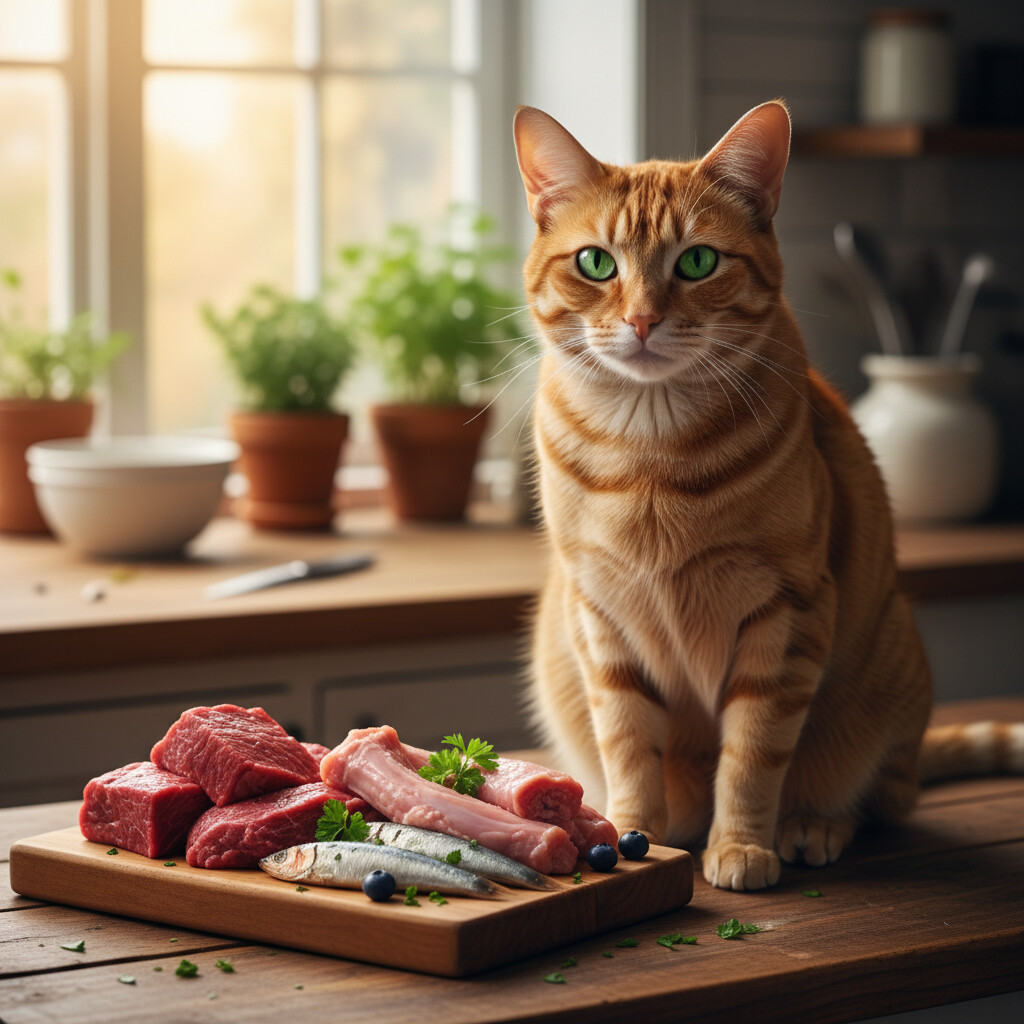
Raw feeding is one of the most debated topics in cat nutrition. The honest answer: there are genuine benefits, real risks, and a spectrum of vet opinion — and you deserve a clear breakdown rather than a tribal war. Here’s what the research and veterinary consensus actually say so you can make an informed decision.
What Is a Raw Cat Food Diet?
Raw cat food (often called BARF — Biologically Appropriate Raw Food — or Prey Model Raw) consists of uncooked meat, organs, and sometimes raw meaty bones. Commercial raw diets come frozen or freeze-dried; homemade versions require careful formulation.
The basic premise: cats are obligate carnivores who evolved eating whole prey, and cooking changes the nutritional profile of meat. Proponents argue that raw food more closely mirrors what cats ate before domestication.
What the Research Actually Says
The evidence is genuinely mixed — and that’s not fence-sitting, that’s accuracy.
Potential benefits with meaningful evidence:
- Improved digestibility. A 2020 study in PLOS ONE found cats fed raw diets had higher nutrient digestibility and smaller stool volume than those on dry food. Less undigested material means the gut is absorbing more of what goes in.
- Coat condition. Higher fat content and minimal processing are frequently cited as improving coat shine — controlled trials on this are limited, but the mechanism makes biological sense given cats’ fat-soluble nutrient needs.
- Weight management. High-protein, low-carbohydrate diets support lean muscle mass. This tracks with what we know about feline metabolism — cats have a limited ability to regulate carbohydrate use as an energy source and are metabolically adapted to derive energy from protein and fat.
The risks vets consistently flag:
- Bacterial contamination. The American Veterinary Medical Association (AVMA) formally opposes raw pet food diets citing documented risks from Salmonella, E. coli, Listeria, and Campylobacter. A 2012 study in the Canadian Veterinary Journal found 21% of commercial raw pet food samples tested positive for Salmonella. The risk isn’t only to the cat — it’s to the people in the household handling the food.
- Nutritional imbalance in homemade diets. Homemade raw is extremely hard to formulate correctly. Without precise supplementation, deficiencies in calcium, taurine, and key vitamins are common — some causing irreversible damage before symptoms appear. A 2019 study in JAVMA found the majority of homemade raw diets evaluated didn’t meet AAFCO minimum nutritional standards.
- Parasites. Freezing kills some but not all parasites. Toxoplasma gondii and Trichinella can survive standard home freezing temperatures.
What Vets Actually Think
The AVMA, WSAVA, and American College of Veterinary Nutrition all formally advise against raw feeding, with the pathogen risk as the primary concern.
That said, not every vet is categorically against it. Board-certified veterinary nutritionists distinguish between: (a) poorly formulated homemade raw diets — universally problematic; and (b) commercially prepared raw from reputable manufacturers with third-party pathogen testing — a more nuanced conversation. Some integrative vets actively recommend commercial raw, particularly for cats with chronic food sensitivities who haven’t responded well to conventional options.
Where there’s broad agreement: if you feed raw, use a commercial diet formulated to AAFCO nutritional standards, not a homemade recipe. And if you go homemade, it should only be with direct guidance from a board-certified veterinary nutritionist.
Commercial Raw vs. Homemade: The Practical Breakdown
| Factor | Commercial Raw | Homemade Raw |
|---|---|---|
| Nutritional completeness | Varies by brand — look for AAFCO statement | Almost always incomplete without expert help |
| Pathogen risk | Lower if HPP-treated | Higher |
| Cost | High | Medium to high |
| Convenience | Moderate | Low |
| Control over ingredients | Moderate | High |
High-pressure processing (HPP) kills most pathogens without cooking. If you choose a commercial raw diet, look for HPP on the label.
Who Raw Feeding Makes the Most Sense For
Raw diets aren’t inherently right or wrong — they’re a better fit for some cats and households than others.
Worth considering if:
- Your cat has multiple food sensitivities and hasn’t responded to hydrolyzed or limited-ingredient diets
- You’re using a commercially prepared formula with HPP and an AAFCO nutritional adequacy statement
- There are no immunocompromised people (young children, elderly, immunosuppressed individuals) in the household
Not recommended if:
- Anyone in the household has a compromised immune system
- You’re planning a homemade diet without a veterinary nutritionist’s involvement
- Your cat has a condition requiring careful dietary management (chronic kidney disease, pancreatitis, IBD)
If your cat is already managing weight issues, it’s worth reading about the signs of overweight in cats and how to address it before making any significant diet change — high-protein diets can trigger faster weight loss than expected in some cats.
How to Transition Safely If You Decide to Try It
Cats are notoriously resistant to dietary changes. Switch gradually over 2–4 weeks:
- Week 1: 10% raw, 90% current food
- Week 2: 25–30% raw
- Week 3: 50/50
- Week 4: 75% raw, then 100%
Some cats plateau at 50/50. That’s a valid outcome — a partial raw diet is still a legitimate approach, not a failure.
One thing to watch during the switch: hydration. Dry food contributes moisture to cats’ diet; a fully raw diet made from fresh meat is naturally higher in moisture, but freeze-dried raw is not. Keep an eye on water intake and consider adding a water fountain — cats that don’t drink enough are at higher risk for urinary tract issues. For more on feline hydration, see How Much Water Should a Cat Drink Per Day?.
When to See a Vet
Before starting raw feeding, talk to your vet if your cat has:
- Chronic kidney disease (raw diets are typically high-protein, which may need adjustment)
- Pancreatitis (high-fat raw can trigger flares)
- IBD or persistent GI issues
- A history of urinary tract disease
See a vet promptly if, after switching, your cat shows:
- Vomiting or diarrhoea lasting more than 48 hours
- Refusing food for more than 24–36 hours (cats that don’t eat for 48+ hours are at risk for hepatic lipidosis)
- Lethargy or significant changes in litter box habits
The Bottom Line
Raw feeding has legitimate potential benefits, particularly around digestibility and protein density. The risks — bacterial contamination and nutritional imbalance — are real but manageable if you choose a commercial, HPP-treated formula from a reputable brand and handle it with the same kitchen hygiene you’d apply to raw meat you’re cooking for yourself.
What raw feeding is not: a universal upgrade, a magic fix for most cats, or something to attempt at home without expert nutritional guidance. If you’re seriously considering it, the first step is a conversation with your vet — not a forum search.