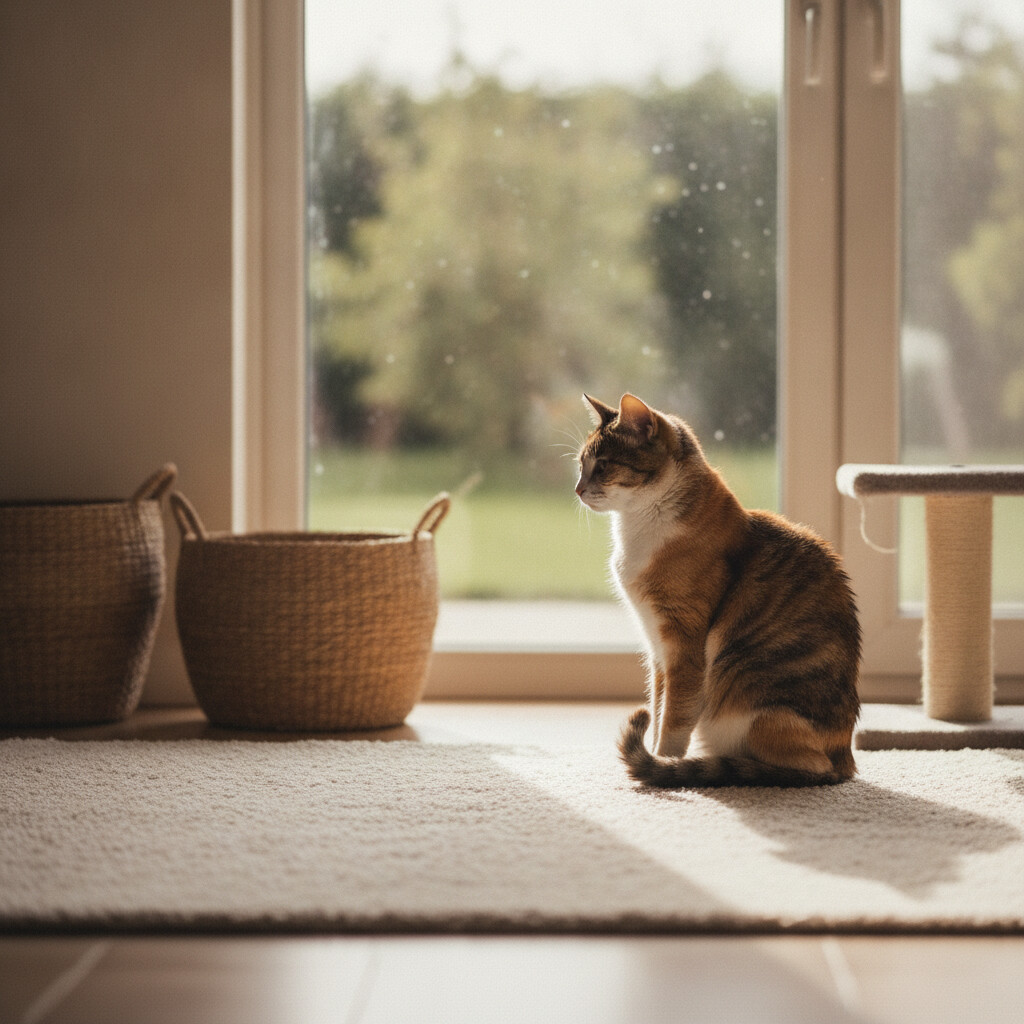
Yes — cats get bored, and it’s a bigger deal than the word suggests. “Boredom” in a cat isn’t just idle downtime; left unaddressed, chronic understimulation is linked to real behavior problems and measurable stress, not just a cat who seems a little flat.
The tricky part is that bored-cat behavior doesn’t always look like what you’d expect. It rarely looks like a human moping around. It usually looks like a problem you’re trying to solve some other way.
What “Bored” Actually Means for a Cat
Cats are built to hunt, and a huge amount of their instinctive behavior — stalking, pouncing, chasing, catching, “killing,” then eating — is a full behavioral sequence that evolved around getting food. A bowl of kibble that appears twice a day skips essentially the entire sequence. The 2021 AAFP/ISFM feline environmental needs guidelines identify the opportunity to express normal predatory behavior as one of the core pillars of a cat’s wellbeing, alongside safe space, resources spread apart, and positive human interaction. When that outlet is missing for long stretches, the underlying drive doesn’t switch off — it tends to leak out somewhere else.
That “somewhere else” is what most owners actually notice first, long before they’d think to label it as boredom.
The Telltale Signs
Overgrooming. Cats groom to self-soothe. When it becomes excessive — bald patches, red or irritated skin, grooming sessions that go on well past a normal cleanup — understimulation and stress are common (though not the only) causes. This is also a symptom that overlaps with allergies and pain, so it’s worth a vet check before assuming it’s purely behavioral.
Overeating or begging constantly. Food is one of the few forms of stimulation always available to an indoor cat, and some cats substitute eating for the predatory outlet they’re missing. If a cat’s calorie intake hasn’t changed but they’re suddenly acting “hungry” all the time, understimulation is worth considering alongside the usual medical suspects.
3am zoomies and nighttime destruction. A cat who sleeps most of the day because there’s nothing else to do will often make up for it with a burst of pent-up energy overnight — running laps, knocking things over, attacking your feet under the blanket. It’s not spite. It’s energy that had nowhere to go during the day.
Destructive scratching or knocking things off surfaces. Scratching is a normal marking and stretching behavior, but a cat who’s shredding furniture well beyond an appropriate scratching post, or who seems to be knocking objects off shelves specifically to watch you react, is often looking for any interaction or stimulation — even a negative one. Our piece on why cats knock things off tables covers the mechanics of this in more detail.
Excessive sleep beyond a cat’s normal 12–16 hours a day, especially paired with disinterest in toys, people, or windows, can be a sign there’s genuinely nothing in the environment worth staying awake for.
Why Indoor Cats Are Especially at Risk
An outdoor or indoor-outdoor cat gets a rotating cast of novel smells, sounds, and small prey encounters without anyone having to plan for it. An indoor-only cat’s environment is, by comparison, static — the same rooms, the same furniture, the same routine, day after day. Indoor-only living is still the safer option overall (outdoor cats face materially higher risks from traffic, disease, and injury), but it does shift the responsibility for novelty onto the owner. Multi-cat households can help, but a second cat isn’t a substitute for enrichment on its own — two under-stimulated cats can just as easily become two bored cats who occasionally squabble.
What Actually Fixes It (Not Just More Toys)
A pile of toys the cat never touches after day one isn’t enrichment — it’s clutter. What tends to actually move the needle:
- Rotating toys rather than leaving all of them out permanently. Novelty matters more than quantity; a toy that’s been reintroduced after two weeks off gets far more attention than one that’s been sitting out the whole time.
- Food-based problem solving. Puzzle feeders and scatter feeding turn a mindless meal into the hunting sequence cats are wired for. Our guide to DIY puzzle feeders has several options you can build in an afternoon.
- Vertical space. Cats are naturally drawn to elevated vantage points, and a cat tree or shelf near a window adds a whole new dimension to a room they’ve otherwise fully mapped out. We cover the reasoning and setup in why cats need vertical space.
- Short, active play sessions — two to three 10-minute wand-toy sessions a day that end with the cat actually “catching” the toy tend to be more effective than one long session, because it lets the cat complete the hunt-catch-eat cycle instead of just chasing indefinitely. For more on reading whether play is landing right, see what’s normal (and what’s too rough) in cat play.
- A window with a view, ideally one that overlooks some activity — birds, foot traffic, a bit of the outside world happening without any of the risk.
The overall goal isn’t constant activity. Cats sleep most of the day by design. It’s making sure the awake hours include at least a little unpredictability and a chance to use their body the way it’s built to be used.
When It Might Be Something Else
Boredom signs and medical signs overlap a lot, which is exactly why they’re easy to misread in either direction. Sudden overgrooming, appetite changes, or a real shift in activity level that shows up abruptly rather than gradually is worth a vet visit before you assume it’s purely a stimulation problem — thyroid issues, pain, and GI conditions can all produce behavior that looks a lot like a bored cat on the surface. If enrichment changes don’t shift the behavior within a couple of weeks, that’s also a reasonable point to loop in your vet rather than continuing to guess.
The honest takeaway: a bored cat is usually telling you something through behavior rather than words, and most of the fixes cost very little — it’s more about consistency and novelty than about buying more stuff.