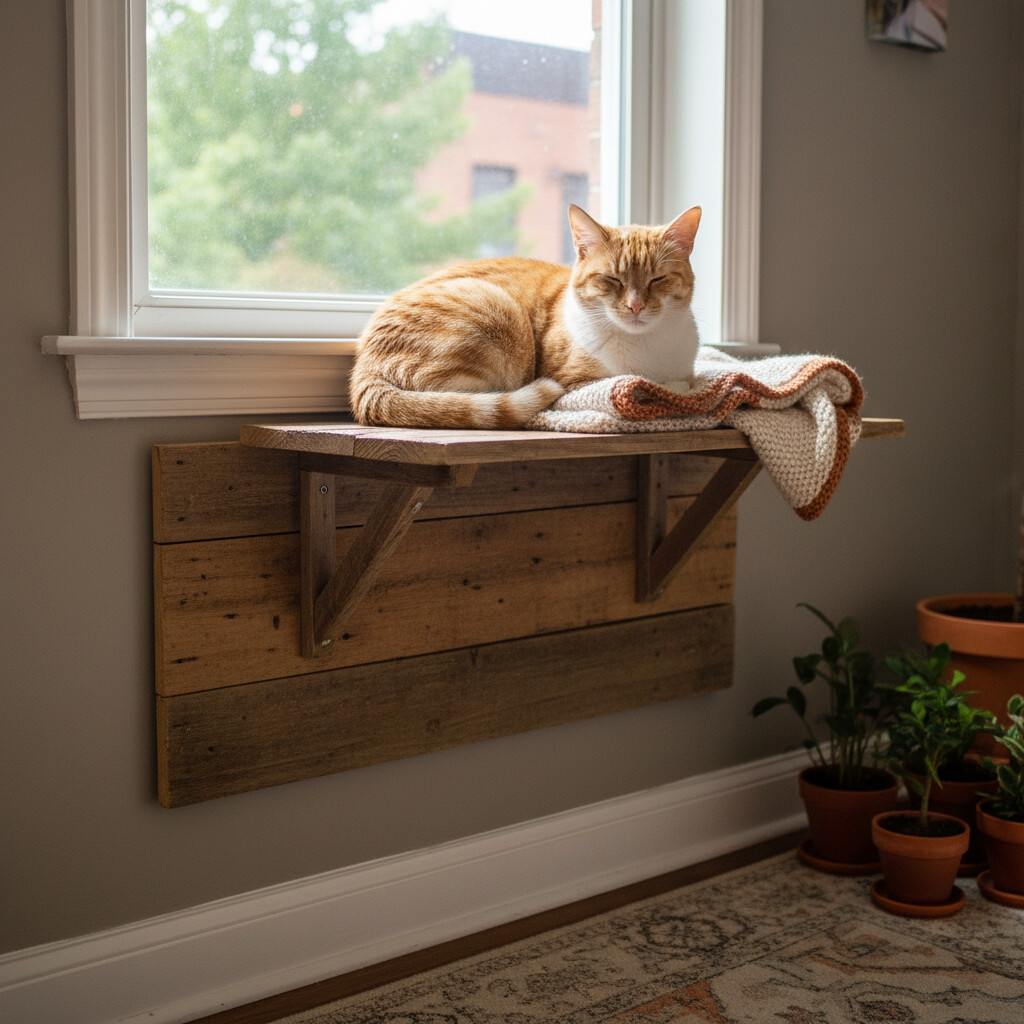
Cats need vertical territory for the same reason they need a litter box — it’s not optional enrichment, it’s a core biological need. A cat with no high places is a cat operating under constant low-grade stress. Here’s what that means in practice, and what you can actually do about it.
Why Cats Are Hardwired to Climb
Cats evolved as both predator and prey. From above, they can survey territory, spot threats, and feel genuinely safe. At ground level, they’re exposed. This isn’t learned behaviour — it’s baked in.
In a multi-cat household, vertical space also acts as a social pressure valve. When cats can separate vertically — one high, one low — they can share a space without triggering a confrontation. Flat environments with no vertical options force cats into the same “elevation tier,” which can escalate tension over time, even between cats that generally get along.
The research supports this. A study published in Applied Animal Behaviour Science found that environmental enrichment including vertical space significantly reduced stress-related behaviours in shelter cats. Cats with access to elevated resting spots showed lower rates of sickness behaviour and hiding — two reliable stress indicators in felines.
Signs Your Cat Needs More Vertical Space
You might not notice the deficit until you correct it. But these are the signals:
- Persistent hiding at floor level — not occasional withdrawal, but a consistent preference for low, dark spaces even when the house is calm
- Inter-cat conflict that seems to come from nowhere — especially if cats are resting near each other at the same height
- Disengagement from the household — a cat in a high spot can observe from safety; one stuck at floor level often disengages entirely
- Monopoly of any existing high spot — if your cat claims every windowsill and chair back, they’re telling you they want more
None of these signals are definitive alone. But if you recognise two or more, your home almost certainly needs a vertical upgrade.
The Options: What Actually Works
Cat trees and towers
The classic solution, and a good one — if you buy a stable one. Wobbling under a jumping cat is one experience away from permanent abandonment. Look for:
- A wide, heavy base (the wider, the better)
- Solid construction at all joints
- Multiple platforms at different heights, with at least one enclosed cube for hiding
A tall cat tree placed near a window gives you two enrichment wins at once: height and visual stimulation.
Wall-mounted cat shelves
Wall shelves give cats a dedicated highway through the room — up, across, and down — without eating floor space. This is the right solution for small apartments, and when done well it looks like intentional interior design rather than a cat necessity.
Key installation points:
- Space shelves no more than 35–40cm apart vertically (cats can jump wider gaps, but won’t choose to)
- Mix open shelves with enclosed lounging spots — not every cat wants to be visible at height
- Anchor to studs, not drywall plugs alone. A falling shelf destroys trust immediately
The How to Build a Window Perch Your Cat Will Actually Use guide covers the construction detail if you want to go the wall-mounted route.
Window perches and hammocks
Simple, cheap, and surprisingly effective. A window perch adds one vantage point with the bonus of a view. Hammock-style perches that attach with suction cups are particularly useful in rental situations where you can’t drill.
The limitation: they add one spot, not a system. In a multi-cat household, one perch adds one spot — which can create competition rather than relieve it. Multiple perches in different rooms, or a perch plus a cat tree, works better.
Standard floating shelves
Regular shelves from any hardware store work perfectly with the addition of carpet samples or grip mats (so cats land without sliding). At $15–30 each, this is the most cost-effective route to a full vertical system. The 7 Cheap DIY Cat Enrichment Ideas That Actually Work article includes a full walkthrough of the floating shelf approach.
Setting Up Vertical Space in a Small Apartment
Space constraints don’t change the need — they just change the approach.
Use corners. Corners give cats two walls to read from. A corner-mounted shelf at ceiling height, with stepped shelves down one wall, creates a full vertical range in under a square metre of floor space.
Go tall, not wide. A single tall cat tree uses less floor space than a wide, squat one while giving more vertical range. Look for trees that reach 150cm or more.
Integrate with existing furniture. Cats will use shelves that run above bookshelves or kitchen cabinets. You don’t need to build a dedicated structure — create a pathway using existing furniture with a few added steps.
One sturdy high spot per cat is the minimum. Two cats need at least two high spots that aren’t in direct line-of-sight of each other. Cats can’t relax if they’re watching a rival from across the room.
The “Cat Highway” Concept
The most enriching vertical setups aren’t a single perch — they’re a connected system. The goal: a cat should be able to travel from one side of the room to the other without touching the floor.
A cat tree in one corner, a wall shelf at the same height in another corner, and a bridge or close-spaced steps between them creates a complete circuit. Cats in homes with this kind of setup tend to be more active, more visible, and more relaxed — all at once.
Start with one section, see how it gets used, and expand. Most cats adopt new vertical space within a few days if it’s positioned near a window or near where household activity happens.
Practical Takeaway
If your cat spends most of their time at floor level — or if you have inter-cat tension that seems location-based — vertical space is the most immediate improvement you can make. A single tall cat tree costs less than most cat enrichment products and will get more consistent daily use than almost anything else you buy.
For a small apartment: start with wall-mounted shelves and one stable perch near your main window. Build from there. Any improvement in vertical access is an improvement in your cat’s sense of security.