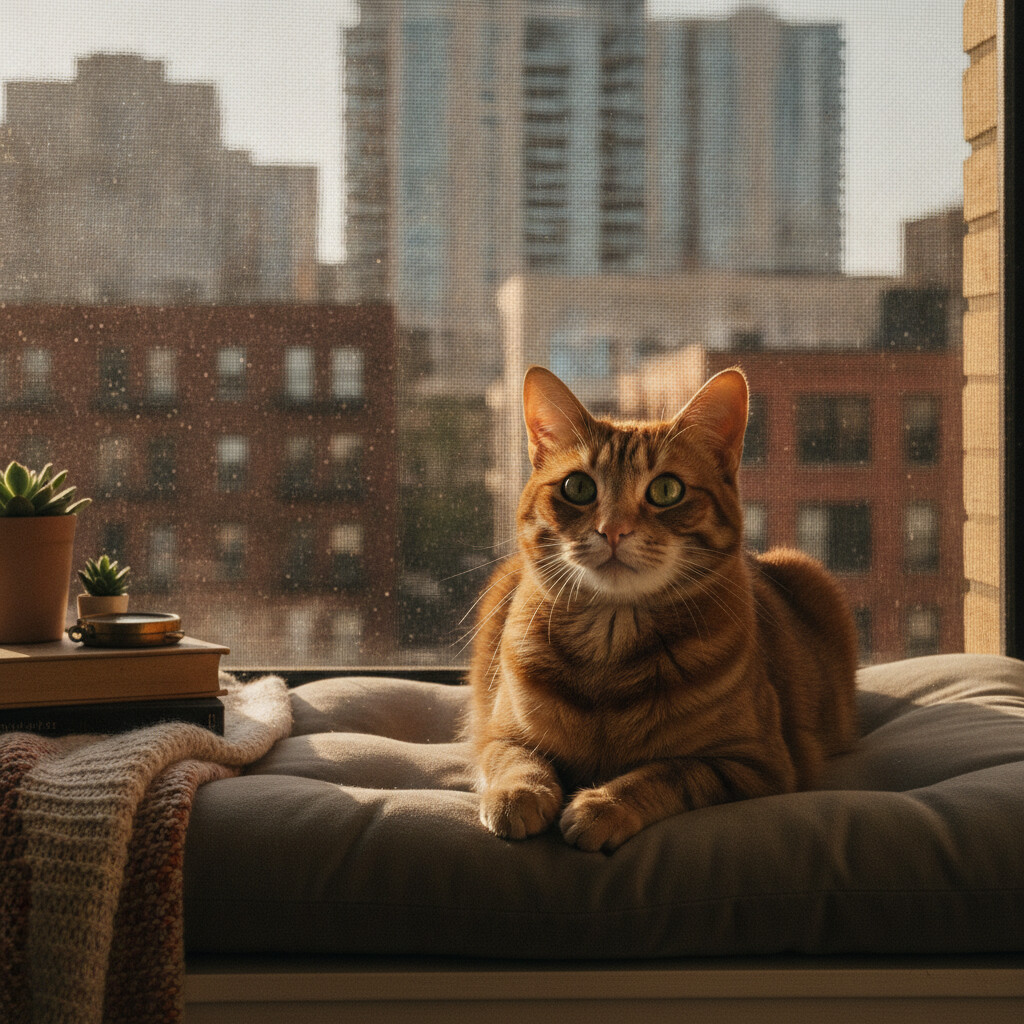
Cats can survive falls from surprising heights, but “can” is doing a lot of work in that sentence — and the physics behind it explains why a fall from the 3rd floor can be more dangerous than one from the 12th. If you have an open window, a balcony, or a cat who treats the windowsill like a diving board, here’s what actually happens when a cat falls, and how to make sure you never have to find out.
What Is “High-Rise Syndrome”?
Vets use the term “high-rise syndrome” to describe the pattern of injuries cats sustain from falling out of windows or off balconies — it became a recognized clinical category after a landmark 1987 study by veterinarians Wayne Whitney and Cheryl Mehlhaff, published in the Journal of the American Veterinary Medical Association, which reviewed over 100 cases of cats brought to a New York emergency clinic after falls. It remains one of the most-cited pieces of research on the subject, and later studies have generally supported its core findings.
The Counterintuitive Part: Higher Falls Aren’t Always Worse
The Whitney and Mehlhaff study found something that surprised a lot of vets at the time: cats that fell from higher floors (above 7 stories) had, on average, lower rates of serious injury than cats that fell from moderate heights. The proposed explanation involves a cat’s righting reflex and terminal velocity:
- A falling cat instinctively rights itself so it lands feet-first, usually within the first couple of feet of falling.
- As the fall continues, the cat reaches terminal velocity — the point where air resistance balances gravity and the fall stops accelerating. For a cat, this happens at a relatively low speed compared to a human, in part because of their light body mass relative to surface area.
- Once a cat senses it’s no longer accelerating, researchers believe it can relax and spread its body out horizontally, similar to a flying squirrel, increasing drag and distributing the impact more evenly across the body instead of concentrating it on the legs and chest.
A cat falling from a 4th or 5th floor may not have had time to reach that relaxed, spread-out state before impact — meaning the “short” fall can involve more concentrated force on the legs and jaw than the “long” one. This is genuinely counterintuitive, and it’s not a reason to treat upper floors as safe — it’s a reason to treat every floor above ground level as a real risk.
Common Injuries From Falls
Even with the terminal-velocity effect, falls routinely cause serious injuries: fractured limbs, pelvic fractures, jaw and dental fractures (from the chin taking impact), and chest trauma including pneumothorax (air trapped outside the lungs) and pulmonary contusions. Some cats show no obvious external injury but are in shock internally — which is exactly why a fall should always be treated as a vet visit, not a wait-and-watch situation.
How to Actually Prevent It
Prevention isn’t complicated, but it does need to be deliberate:
- Install secure window screens — not the flimsy kind that pops out under pressure. Cats leaning or jumping against a screen need something rated to hold their weight, not just keep bugs out. Hardware stores sell pet-specific screen mesh that’s worth the upgrade.
- Treat balconies as off-limits or fully enclosed. A railing gap a human would call “fine” is often wide enough for a cat, and cats misjudge jumps onto railings more often than owners expect.
- Be extra cautious with tilt-and-turn windows, which can create a narrow gap a cat can squeeze into and get trapped or fall through — this is common enough in Europe that it has its own name (“tilt-turn window syndrome”) in veterinary literature.
- Don’t assume screens alone solve it for cats who want more space. A secure window screen stops falls, but it doesn’t give a cat anything to do. Pairing it with a stable window perch gives an indoor cat a legitimate outdoor view without the risk — see our guide on building a window perch your cat will actually use.
Why This Matters More in Summer
Falls spike in warm months, and it’s not a coincidence — more open windows, more screens propped out for airflow, more cats drawn to windowsills by birds and insects outside. If your cat is one of the many who seeks out height and window perches as part of normal behavior, that’s worth working with rather than against. Vertical space is a real feline need, and giving cats a secure way to get it — cat trees, shelving, sturdy perches — reduces the temptation to treat an open window as the only interesting real estate in the house. Our piece on why cats need vertical space covers how to set that up safely.
When to See a Vet
Any fall from a height — even one that looks “fine” — warrants a same-day vet check. Cats are stoic by nature and can mask pain or shock well enough that owners miss internal injuries until they become critical. Watch for limping, reluctance to jump or move, rapid or labored breathing, pale gums, or a cat who hides and won’t eat in the hours after a fall — all are reasons to go in immediately rather than waiting to see if things improve on their own.
The takeaway: window screens and enclosed balconies aren’t overprotective — they’re the single most effective thing you can do to prevent one of the more common, and more preventable, causes of emergency vet visits for indoor cats.