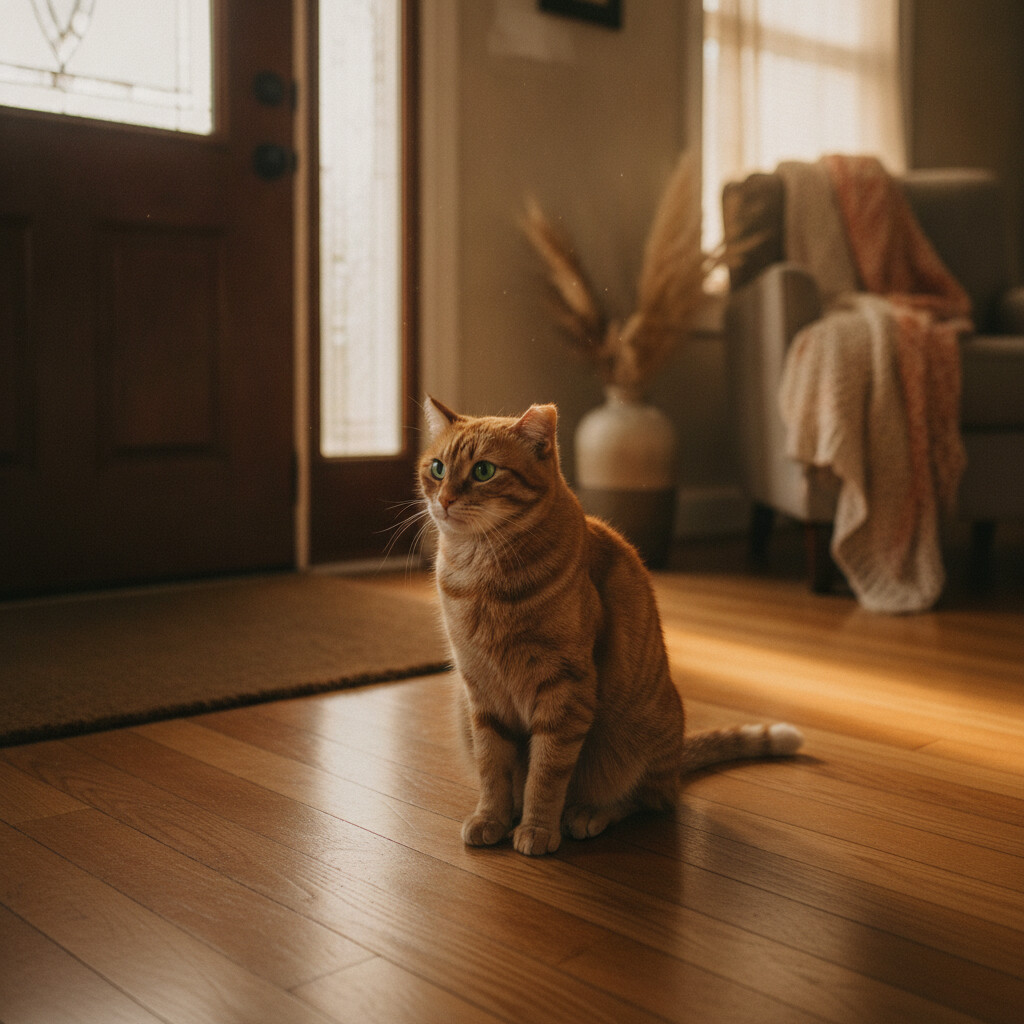
Cats are independent. Everyone says so. Which makes it confusing when your cat won’t stop crying the moment you leave, destroys things while you’re away, or starts eliminating outside the litter box — behaviors that look like protest but are actually something closer to panic.
Separation anxiety in cats is real, documented in veterinary behavioral literature, and more common than most owners expect. The challenge is that the signs are easy to misread — or, since many happen when you’re gone, easy to miss entirely.
What Separation Anxiety Actually Is
Separation anxiety (SA) is an exaggerated stress response to being apart from a specific person or people. It’s not general misbehavior. A cat with SA isn’t punishing you for leaving — it’s experiencing genuine distress triggered by the anticipation or reality of separation.
The AAFP (American Association of Feline Practitioners) behavioral guidelines recognize SA as a diagnosable condition in cats. Research published in PLOS ONE has documented it across domestic cat populations, including cats with strong social bonds to their owners. This matters because the treatment for SA is different from the approach for boredom or territorial marking. Misidentify it and you treat the wrong thing.
Signs That Point to Separation Anxiety
Unlike dogs, cats with SA often go unnoticed because the obvious behaviors happen while no one is home. Many owners installing cameras for other reasons have discovered their “independent” cat visibly distressed in the hour after they leave.
Signs that occur when you’re away:
- Continuous vocalizing, especially near the door or window where you left
- Destructive behavior that’s limited to your absence (chewing, knocking things over, scratching)
- Inappropriate elimination that stops when you’re home — a pattern that rules out medical causes
Signs that appear when you’re present:
- Excessive following — the always-in-the-same-room behavior can be a companion to SA, especially if it intensifies before you leave
- Distress if you close a door between you
- Obsessive grooming of you, or constant demand for contact
- Pre-departure anxiety: recognizing your leaving routine and becoming visibly stressed before you’ve even picked up your keys — this is one of the clearest behavioral markers
Physical symptoms:
- Vomiting or diarrhea with no dietary cause that resolves when you’re home
- Over-grooming leading to hair loss, typically on the belly or inner legs
- Reduced eating or drinking while alone
Why Some Cats Develop It
SA is more common in:
- Single-cat households — the owner becomes the cat’s entire social world
- Cats who bonded intensely to one person in a quiet, low-stimulation environment
- Cats with early disruption — orphaned kittens, early weaning, multiple shelter stays
- Cats with a history of rehoming — they’ve learned that people leaving doesn’t always mean people coming back
There’s also a reinforcement element. Owners who return home to a distressed cat and immediately soothe it are — without meaning to — confirming that distress gets results. This doesn’t make SA the owner’s fault; it’s just a mechanism worth knowing so you don’t accidentally reinforce what you’re trying to fix.
What to Do About It
Start with environmental enrichment
Enrichment is a first-line intervention but works better for mild cases than severe ones. Puzzle feeders timed to activate after you leave, window bird stations, and rotating novel toys can reduce distress intensity. If the anxious behavior starts immediately and resolves within an hour, enrichment often helps — if it persists the entire time you’re out, you likely need more than enrichment alone. See our guide to night zoomies and anxiety-driven behavior for related behavioral context.
Disrupt the pre-departure routine
SA-prone cats learn your leaving cues: picking up keys, putting on shoes, grabbing a bag. They begin feeling anxious before you’ve gone anywhere. You can disrupt this by practicing the routines without actually leaving — put on your shoes, sit for 20 minutes, then take them off. Do this enough times and the shoes lose their predictive power.
Consider a companion cat carefully
Adding a second cat sounds like a natural solution and sometimes helps — but a poorly matched pair creates new stress rather than solving the existing kind. If you’re considering this, plan the introduction properly and get professional input first. Some SA cats do better alone with more owner interaction than they do with an unwanted housemate.
Medication when needed
If SA is causing physical symptoms — significant over-grooming, GI upset, or house soiling — see a vet before trying to manage it behaviorally. Some cats benefit from anti-anxiety medication (fluoxetine is commonly used in cats) alongside behavioral modification. Medication alone won’t fix SA, but it can reduce the emotional intensity enough that behavioral work has a chance to stick.
A board-certified veterinary behaviorist (DACVB) is the most specialized option for cases that don’t respond to initial interventions.
When to See a Vet
Make an appointment if:
- SA is causing physical symptoms (over-grooming, GI upset, weight loss)
- Behaviors are escalating rather than stable
- No improvement after 4–6 weeks of environmental modification
- You’re seeing behaviors that could have a medical explanation — some over-grooming is dermatological, not behavioral, and some house soiling has a urinary cause
SA is treatable. It takes a layered approach and time, but most cats improve significantly with the right interventions. The most important first step is identifying what you’re actually dealing with — which puts you ahead of most people whose cats quietly struggle while they assume it’s “just a cat thing.”