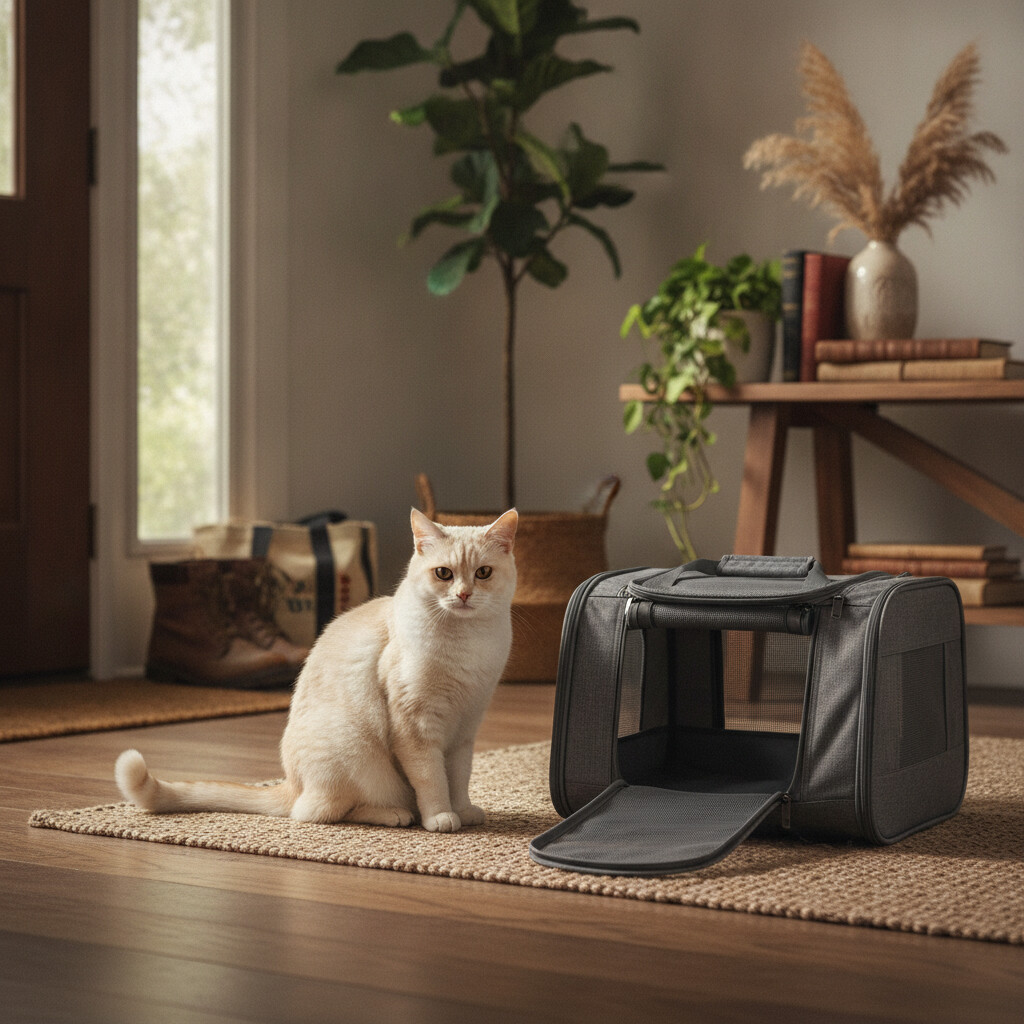
The right cat carrier isn’t the one that looks nicest in photos — it’s the one your cat doesn’t fight you to get into, and that actually protects them if you’re in a car accident. Here’s what separates a genuinely good carrier from the ones gathering dust in a closet after one bad vet trip.
What Actually Matters in a Carrier
Skip the “top-rated on Amazon” shortcut and check these first:
- Top-loading or a wide front-and-top opening. A carrier you can only load from the front turns every vet visit into a wrestling match. Top-loading carriers let you lower a stressed cat straight down instead of shoving them through a small front door — vets consistently point to this as the single biggest usability factor.
- Solid, washable base. Accidents happen when cats are anxious. A carrier with a removable, wipeable liner or pad saves you from replacing the whole thing after one bad ride.
- Secure latches, not just zippers. Panicked cats are strong. A carrier that relies solely on a zipper that can be nosed open from inside is a real escape risk — look for zippers with a separate clip, plus reinforced stitching for actual crash-test scenarios.
- Ventilation on multiple sides, not just the front. Cats read airflow and visibility as safety cues. Mesh panels on the sides and top help reduce the “trapped box” feeling that drives a lot of carrier panic.
- Right-sized, not oversized. It’s tempting to buy a bigger carrier “for comfort,” but cats generally feel safer in a snugger space they can brace against — enough room to turn around and lie down, not a roaming enclosure.
Hard-Sided vs. Soft-Sided: The Honest Tradeoff
Hard-sided carriers (usually plastic, airline-style) are the sturdiest option and the only type most airlines and some vet clinics accept without question. They hold their shape under a cat’s full weight and panic-driven movement, and they’re easiest to hose out after an accident. The downside is bulk — they take up real trunk space and aren’t easy to store flat.
Soft-sided carriers are lighter, foldable, and generally more comfortable to carry over a shoulder for longer trips. The tradeoff is structural: a cheap soft carrier can collapse or bow out under a determined cat, and mesh panels can be clawed or chewed through over time. If you go soft-sided, look for ones with a rigid internal frame and reinforced mesh, not just fabric mesh sewn to fabric walls.
For crash safety specifically: independent testing organizations that crash-test pet carriers (the Center for Pet Safety among them) have found that very few carriers on the market — hard or soft — meet crash-protection standards when properly secured with a seatbelt. If you drive frequently with your cat, it’s worth checking whether a specific carrier model has been independently crash-tested rather than assuming “sturdy-looking” equals “safe in a collision.”
Getting a Carrier-Avoidant Cat to Actually Use One
This matters more than the carrier model itself. A cat who associates the carrier with “the vet is about to happen” will fight every single time, regardless of how good the carrier is. The fix is de-linking the carrier from stressful events:
- Leave the carrier out full-time, not stashed in a closet and only produced on travel day. Turn it into furniture — a bed, a hiding spot, a place treats occasionally appear.
- Feed near or inside it. Associating the carrier with food is one of the most reliable ways to build positive associations over a few weeks.
- Practice short, low-stakes carrier trips — a five-minute drive around the block that ends in nothing scary, so “carrier” doesn’t always predict “the vet.”
- Use a carrier with a top opening during the actual anxious moments — lowering a cat in from above is far less confrontational than pushing them through a front door while they brace all four legs against the frame.
Airline Travel: What to Check Before You Buy
If you’re flying, don’t assume any “airline-approved” label means universal approval — each airline sets its own maximum carrier dimensions and whether it must fit fully under the seat in front of you. Check the specific airline’s pet policy page before buying, since dimensions that are compliant with one carrier will vary a few inches from another. Soft-sided carriers are generally preferred for cabin travel because they can compress slightly to fit under different seat configurations; hard-sided carriers are safer for cargo travel (though flying cats in cargo carries its own risks worth researching separately).
When a Carrier Isn’t Enough
A good carrier reduces stress, but it doesn’t eliminate it. If your cat is still screaming, panting, drooling, or hiding for hours after every carrier trip despite consistent positive-association training, talk to your vet about short-term anti-anxiety options for travel days — there are vet-prescribed options that are far safer and more effective than sedating a cat with over-the-counter products, which should never be given without veterinary guidance.
The Takeaway
Buy for function first: top-loading access, a washable base, and secure latches beat aesthetics every time. Then spend a few weeks turning the carrier into a neutral (or even positive) object in your cat’s daily environment, rather than something that only appears on the worst days. If you’re also working through a broader vet-visit routine, how to find a good vet is a useful next read, and if carrier stress is part of a wider pattern of anxiety, separation anxiety in cats covers overlapping signs worth knowing.