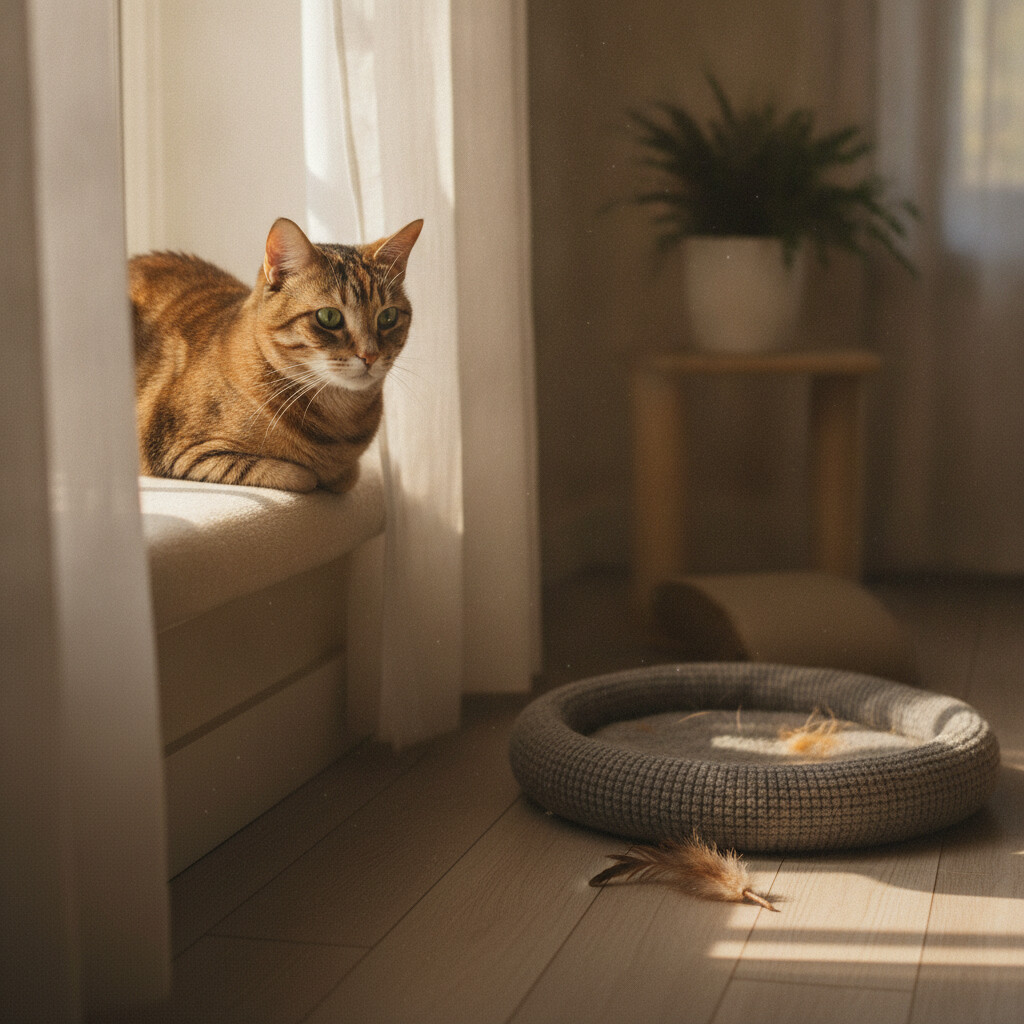
Cats do grieve. Not in the way humans do — they don’t understand death conceptually — but they respond to absence in ways that look unmistakably like mourning: searching the house, eating less, becoming withdrawn or unusually clingy. Understanding what’s happening, and what actually helps, makes the difference between weeks of concern and months of it.
What the Research Actually Shows
The idea that cats don’t form deep social bonds is a cultural myth the science has thoroughly debunked. Cats form strong attachments — to other cats, dogs, and their human household members — and the disruption of those bonds produces measurable behavioural changes.
A landmark ASPCA study surveyed over 160 cat owners who had experienced the loss of a companion cat. The results were striking: 46% reported their surviving cat ate less; 70% showed changes in vocalisation (meowing more or less than usual); 35% became clingier with their owners; 65% changed their sleeping patterns; and half of the cats actively searched for their missing companion.
This isn’t grief in the philosophical sense. A cat doesn’t know their companion is dead — they know they’re absent. The disruption to social structure, routine, and a relationship that provided comfort produces real distress. For practical purposes, the distinction barely matters.
The Signs of Feline Grief
The signs overlap significantly with feline stress and anxiety — which makes sense, because grief is a form of stress:
- Reduced appetite or refusing food entirely — one of the most consistent signs
- Searching behaviour — patrolling their companion’s usual sleeping spots, sniffing their bedding
- Increased or decreased vocalisation — some cats become silent; others cry more than they ever did
- Lethargy and withdrawal — sleeping more, engaging with toys less, losing interest in play
- Clinginess — following owners from room to room, needing to be near someone at all times
- Restlessness — difficulty settling, especially at the times they used to spend with their companion
- Grooming changes — either over-grooming (a stress response) or neglecting their coat
These behaviours typically resolve within a few weeks, though they can last longer depending on how close the relationship was. If you’re not sure whether what you’re seeing is grief or something else, the overlap with stress signs is significant — 10 Signs Your Cat Is Stressed covers those signals in detail.
Does Your Cat Know What Happened?
Probably not in any meaningful way. Cats appear to lack the abstract understanding of death as a permanent, universal end-state. What they notice is absence — and the disruption to their social and physical world that absence creates.
This is why some grief researchers suggest that, where possible, allowing a surviving pet to be present shortly after the death of their companion — seeing or sniffing the body — may help. Anecdotal accounts and clinical observation suggest cats who have this opportunity sometimes settle faster than those who simply find their companion has vanished. The research is limited, but the reasoning is sound: the absence becomes somewhat explicable rather than a mysterious disappearance.
That said, don’t distress yourself if circumstances didn’t allow this. There’s no evidence that cats who didn’t see their companion grieve longer or harder.
What Actually Helps
Maintain routine. Grief disrupts routine, and cats find disruption stressful on top of stressful. Keep feeding times, play sessions, and your own schedule as consistent as possible. Predictability is genuinely stabilising for a cat navigating loss.
Increase quality interaction — but follow their lead. Some cats want to be close and touched; others need quiet company rather than active fussing. Sit near them. Let them initiate contact.
Keep food accessible and appealing. A cat who won’t eat is at risk of hepatic lipidosis (fatty liver disease) if the fast extends too long — see the “When to See a Vet” section below. Try warming wet food, offering something more aromatic, or hand-feeding if necessary.
Don’t rush getting another pet. The instinct to fill the gap is understandable, but introducing a new cat to a grieving cat adds new stress on top of existing stress. Give your cat several weeks to stabilise before considering adding to the household. The new cat should be introduced gradually regardless — How to Introduce Two Cats for the First Time covers that process.
Don’t force cheerfulness. A grieving cat who needs space will find forced attention distressing. Let them grieve at their own pace.
Keep familiar scents in place. Keep the lost cat’s bed or toys where they were for a while. The familiar scent may be comforting rather than distressing, and you’ll sense when your cat has stopped investigating it.
If Your Cat Seems Anxious Rather Than Sad
Some cats respond to loss with anxiety rather than quiet withdrawal — pacing, restlessness, clinginess, or heightened startle responses. This can look a lot like separation anxiety, which shares underlying mechanisms. Separation Anxiety in Cats: Yes, It’s Real covers the signs and the practical approaches that help.
For cats with significant anxiety, calming pheromone diffusers (Feliway), calming supplements, or in more pronounced cases short-term medication from a vet are all options worth discussing.
When to See a Vet
Grief itself isn’t a medical emergency, but some of its effects can become one:
- Not eating for more than 48 hours — risk of hepatic lipidosis, especially in overweight cats. This is a genuine emergency; call your vet.
- Significant weight loss — any loss of more than 10% of body weight in a few weeks warrants a check.
- Extreme lethargy or disconnection — if your cat won’t get up, isn’t responding to you, or seems entirely shut down, see a vet. Physical illness can look like grief.
- Grief behaviours persisting beyond 4–6 weeks without improvement — worth investigating to rule out underlying health conditions, particularly in older cats.
A vet who knows your cat can also advise on whether short-term pharmacological support makes sense for a cat struggling significantly.
The Takeaway
Give your cat time, maintain their routine, and let them lead the pace of recovery. Most cats return to their normal behaviour within a few weeks. The ones who don’t typically have underlying anxiety or health factors that deserve attention.
Feline grief is real — well-documented and genuinely distressing for the cat experiencing it. Treat it accordingly: with patience, consistency, and the same attention you’d give any other sign of sustained distress.
If you’re navigating the broader decisions around a sick or elderly cat, End of Life Care for Cats: Making the Hard Decisions addresses those questions with the same honesty this topic deserves.