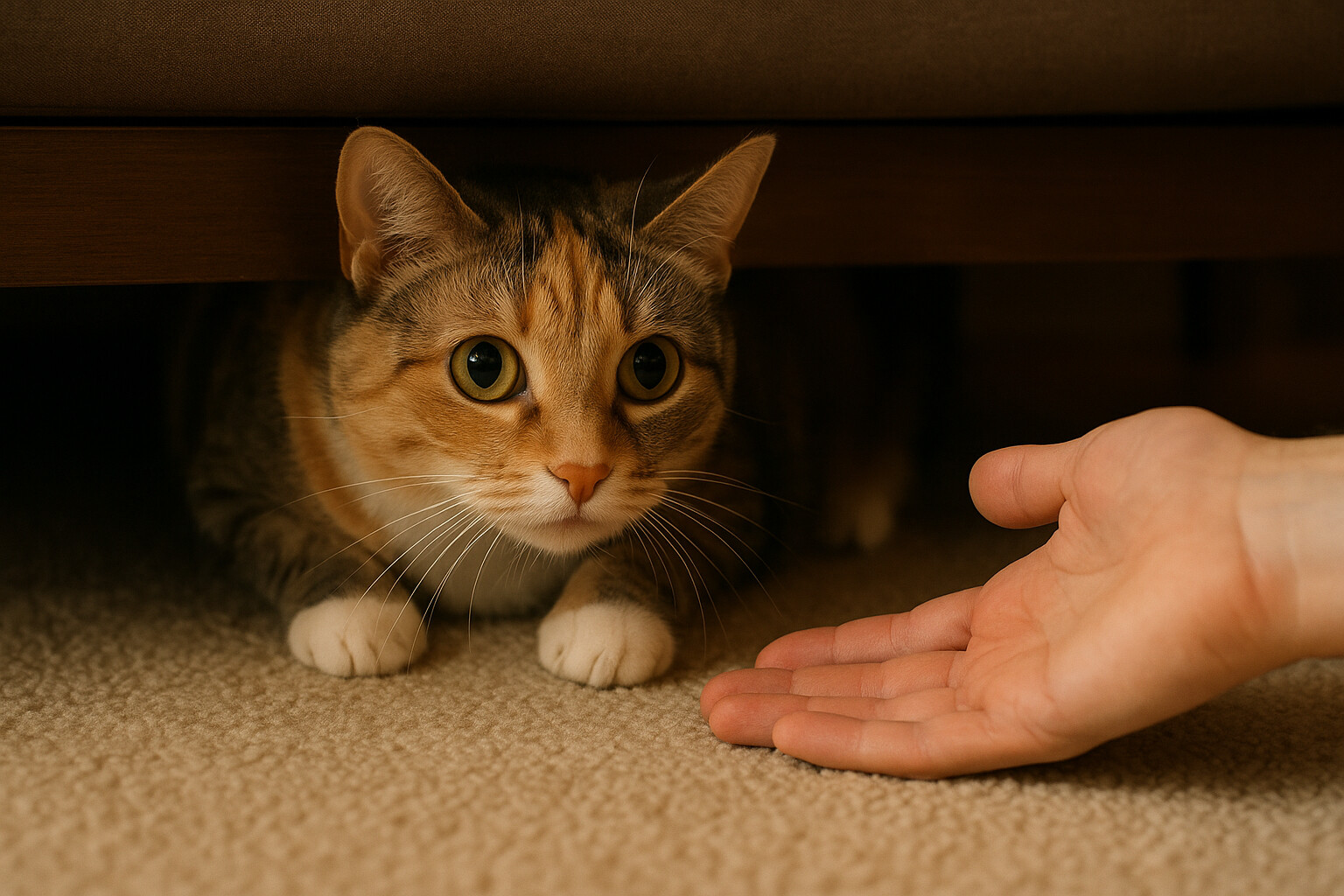
Cats are masters of hiding discomfort. Unlike dogs, they rarely show stress in obvious ways - which means by the time most owners notice something is wrong, the cat has often been struggling for a while.
Here are 10 signs that your cat may be stressed, and what you can do about each one.
1. Hiding More Than Usual
All cats like their alone time. But if your cat is suddenly spending most of the day tucked behind the washing machine or under the bed and avoiding you entirely, that is a red flag. Cats hide when they feel unsafe or overwhelmed.
What to do: Give them space, but also look for what changed. New pet, new person, furniture rearrangement, construction noise - cats notice everything.
2. Overgrooming or Hair Loss
Excessive licking, especially in patterns (belly, inner legs, base of tail), can be a stress response. Some cats lick themselves raw. This is called psychogenic alopecia - stress-induced hair loss.
What to do: Rule out skin conditions or allergies with your vet first. If it is behavioral, environmental enrichment and reducing stressors helps significantly.
3. Changes in Litter Box Habits
Going outside the litter box, going more or less frequently, or straining are all potential stress signals - though they can also indicate medical issues like UTIs or kidney problems.
What to do: Vet visit first, always. If medical causes are ruled out, stress management is the next step.
4. Aggression or Sudden Biting
If a normally gentle cat starts hissing, swatting, or biting unprovoked, they are telling you something is wrong. This is especially common after major life changes - a move, a new baby, or a new pet.
What to do: Do not punish aggression - it makes things worse. Identify and reduce the trigger. Give your cat safe spaces they can retreat to.
5. Loss of Appetite
A stressed cat may eat less or stop eating altogether. Even skipping one or two meals is worth paying attention to in cats, as they can develop hepatic lipidosis (fatty liver disease) surprisingly quickly if they stop eating.
What to do: If your cat has not eaten in 24 hours, call your vet.
6. Increased Vocalization
Some cats become unusually vocal when stressed - meowing more, yowling at night, or making sounds they do not normally make. This is especially common in older cats, who may also be experiencing cognitive decline.
What to do: A vet checkup can rule out medical causes like hyperthyroidism or pain. For behavioral causes, routine and predictability are your best tools.
7. Spraying or Urine Marking
Spayed and neutered cats can still spray when they are stressed, particularly if they feel their territory is threatened - by a new pet, outdoor cats visible through windows, or even changes to their space.
What to do: Feliway diffusers (synthetic feline pheromones) can help. Also block sight lines to outdoor cats if that seems to be the trigger.
8. Diarrhea or Vomiting
Stress directly affects the gut in cats, just like it does in humans. Occasional vomiting is common in cats, but frequent vomiting or diarrhea - especially alongside other signs on this list - warrants a closer look.
What to do: Keep a diary of when it happens and what preceded it. This helps your vet enormously.
9. Excessive Scratching
Cats scratch to mark territory and to maintain their claws. But ramping up scratching behavior - especially in new or unusual locations - can signal territorial anxiety.
What to do: Make sure you have enough scratching posts in enough locations. Tall, sturdy posts placed near sleeping and eating areas are most effective.
10. Crouching, Flattened Ears, Dilated Pupils
This is your cat in active stress mode. Flattened ears, wide pupils, a low crouched body, and a tucked tail all indicate fear or high anxiety in the moment.
What to do: Give them an immediate escape route and do not try to pick them up or comfort them physically - this can escalate things. Let them retreat and settle on their own terms.
What Helps Most?
For most stressed cats, the answer is some combination of:
- Routine - cats are creatures of habit. Consistent feeding times, play times, and sleep spots reduce anxiety significantly.
- Safe spaces - every cat needs at least one place that is completely theirs, high up if possible.
- Environmental enrichment - puzzle feeders, window perches, and regular interactive play sessions make a big difference.
- Pheromone products - Feliway is not magic, but many cat owners find it genuinely helpful during transitions.
If you have tried all of the above and your cat is still struggling, talk to your vet about a referral to a feline behaviorist. It is more common than people think, and it works.