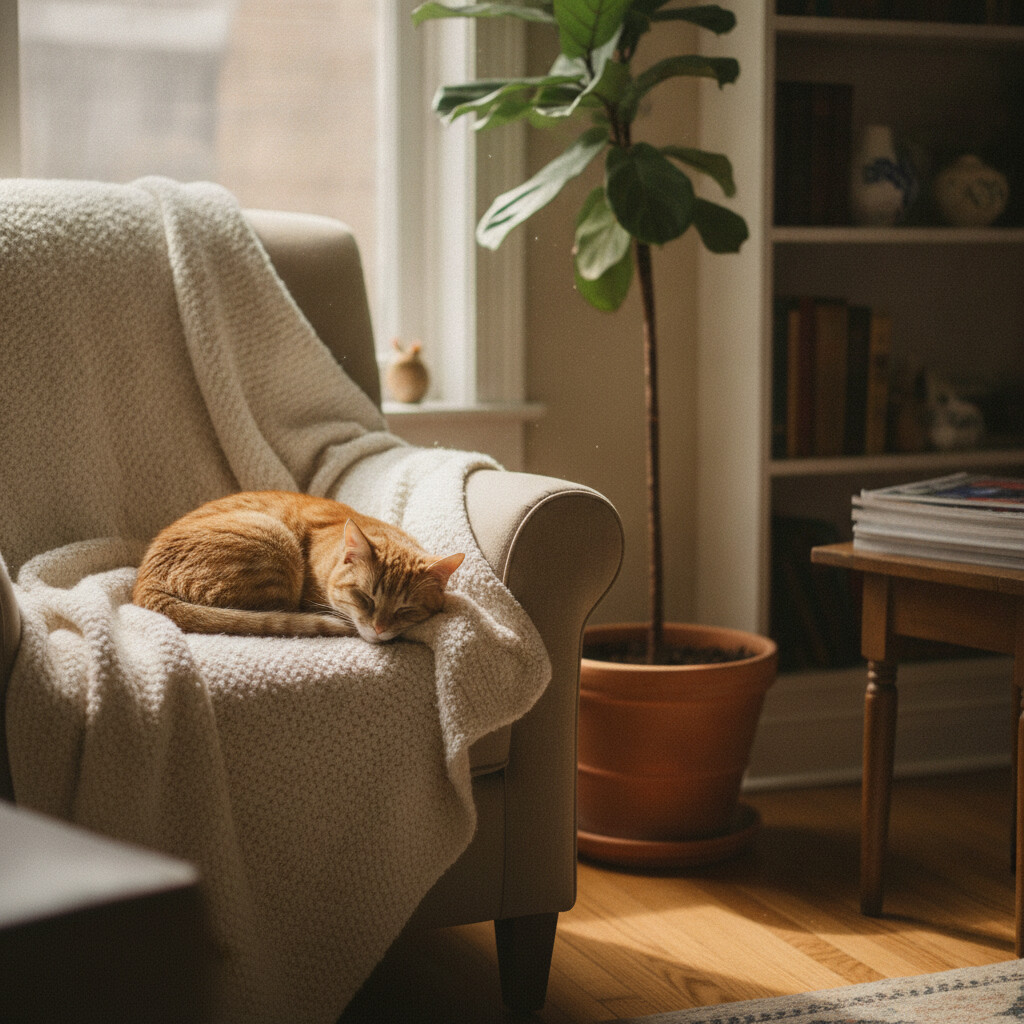
Short answer: some calming products for cats have real evidence behind them, and some are expensive placebo. Synthetic pheromone diffusers have the best data. Calming collars are hit-or-miss. Supplements sit somewhere in between — plausible mechanism, thinner research. None of them fix a stressor you haven’t addressed.
If your cat is spraying before the vet visit, hiding when guests arrive, or pacing during a move, it’s tempting to reach for whatever product promises “calm cat in 30 days.” Here’s what the evidence actually supports, and where your money is better spent elsewhere.
Pheromone Diffusers: The Best-Studied Option
Feliway and similar products are synthetic copies of the facial pheromone cats deposit when they rub against furniture, doorframes, and people — a scent marker associated with safety and familiarity. The theory is that flooding a room with this signal tells a cat’s nervous system “this territory is already claimed and secure,” which should reduce marking and stress behaviors.
The research is genuinely mixed but leans positive for specific use cases. A study in the Journal of Feline Medicine and Surgery found reduced urine spraying in a majority of cats using a pheromone diffuser compared with placebo, and veterinary behaviorists commonly recommend them as a low-risk first step for spraying, inter-cat tension, and situational stress (vet visits, moving, new pets). They’re less consistently effective for generalized anxiety that isn’t tied to territory or marking.
Realistic expectations matter here: diffusers are not a cure, they’re a nudge. They work best combined with actually addressing the stressor — more litter boxes, separate feeding stations, vertical space, reduced forced interaction between cats who don’t like each other.
Calming Collars: What They Actually Contain
Calming collars typically use the same synthetic pheromone as diffusers, released gradually against the skin instead of into the air. In theory that means portable, continuous exposure. In practice, effectiveness is harder to verify — pheromone concentration on a worn collar varies by brand, cats often try to remove or scratch at collars (which itself is stressful), and there’s less independent research on collars specifically compared with diffusers.
If you try one, watch for the cat fixating on or scratching at the collar, which defeats the purpose and can create a new source of irritation. A properly fitted breakaway collar is a baseline safety requirement regardless of what’s marketed on it.
Calming Supplements and Chews
This category includes L-theanine (an amino acid found in tea), alpha-casozepine (a milk protein derivative, sold under the brand Zylkene), and various “calming” blends with chamomile, valerian, or CBD.
Alpha-casozepine has the most credible evidence among cat-specific supplements — a handful of veterinary studies have shown reduced stress-related behaviors in cats during vet visits or environmental changes, with a good safety profile. L-theanine research in cats is thinner, mostly extrapolated from dog and human studies, though it’s generally considered low-risk. CBD for cats is popular but under-researched; the FDA has not approved CBD products for pets, and dosing and quality control vary wildly between brands, so treat claims skeptically.
None of these supplements are a substitute for a vet visit if anxiety is severe, sudden, or paired with other symptoms (see below). They’re best thought of as one small piece of a broader plan, not a fix on their own.
What Actually Reduces Stress in Most Cats
Before spending on any product, the highest-yield changes are usually free or cheap:
- One litter box per cat, plus one extra, in quiet, accessible locations — not clustered together.
- Vertical space and hiding spots so a stressed cat has somewhere to retreat that isn’t under a bed. If you want a deeper dive on this, see our guide on indoor cat enrichment.
- Predictable routines — feeding, play, and attention at consistent times reduce baseline anxiety more than any product will.
- Slow, controlled introductions for new pets or people, rather than forcing contact.
If your cat’s stress is tied to specific triggers — another cat in the household, a recent move, separation from you — read up on the specific pattern before treating it generically. Our articles on separation anxiety in cats and signs your cat is stressed walk through how to identify what you’re actually dealing with, which matters more than which product you buy.
When to See a Vet or Behaviorist
Calming products are appropriate for mild, situational stress. They are not appropriate as the first response to:
- Sudden onset of anxiety or aggression with no clear trigger — this can indicate pain or an underlying medical condition, not a behavior problem.
- Spraying or inappropriate urination that doesn’t improve after basic environmental fixes — this needs a vet visit to rule out a urinary tract issue before it’s treated as purely behavioral.
- Self-injurious behavior like over-grooming to the point of bald patches or skin damage.
- Anxiety severe enough to affect eating, hiding for days at a time, or significant weight loss.
A veterinary behaviorist can also prescribe actual anti-anxiety medication for cases where pheromones and supplements aren’t enough — that’s a legitimate and sometimes necessary step, not a failure.
The Practical Takeaway
Start with the free changes: litter box access, vertical space, predictable routine, and slow introductions. Add a pheromone diffuser if the stress is territorial or marking-related — it’s the best-evidenced product option and low-risk to try. Treat collars and supplements as optional add-ons, not primary solutions, and skip anything promising instant results. If stress is sudden, severe, or tied to physical symptoms, that’s a vet visit, not a shopping trip.