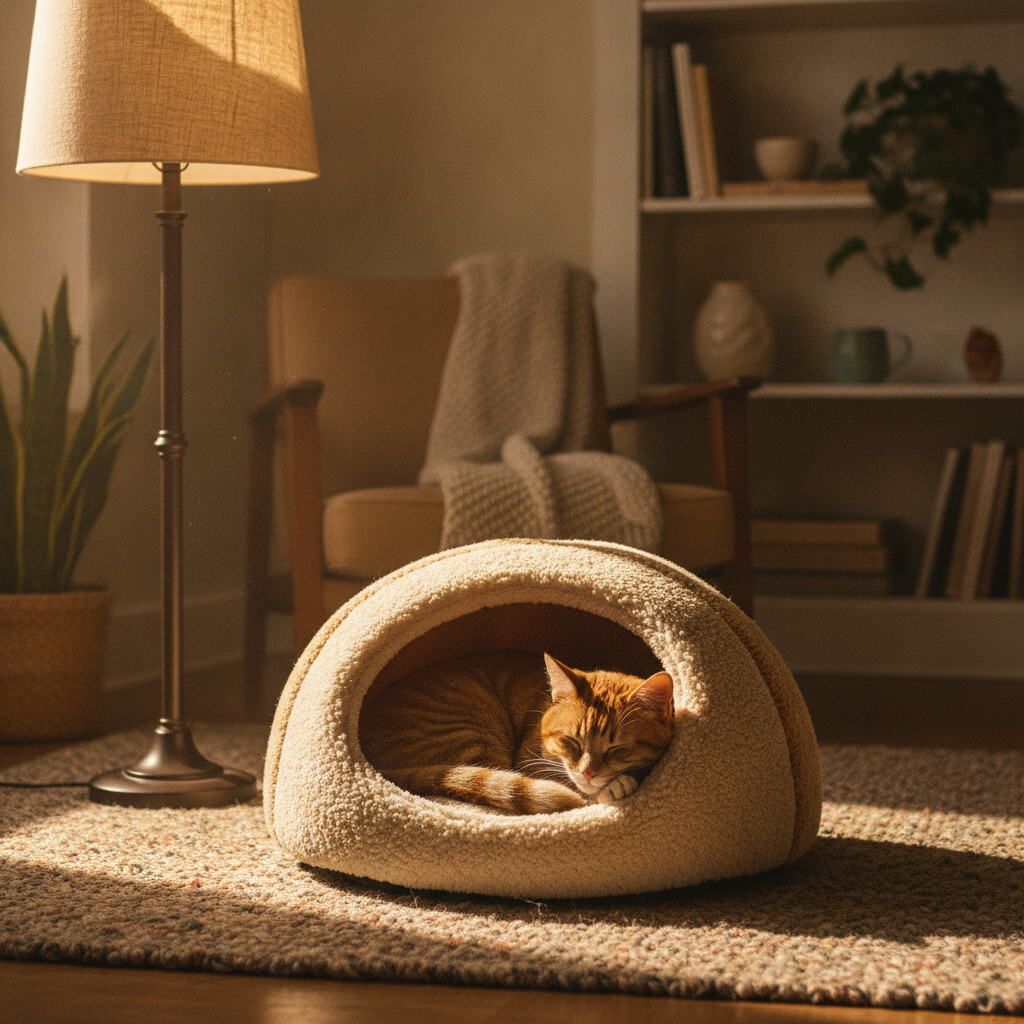
Most cats handle loud noises by hiding, and that’s a perfectly good strategy. The job for you is to make the hiding spot easy to reach, keep the room calm, and skip anything that forces your cat out. Here’s how to help a cat through fireworks, thunderstorms, and other sudden bangs.
Why loud noises frighten cats so much
Cats hear a much wider range than we do. Published hearing studies (Heffner, Hearing Research, 1985) put the upper limit of domestic cat hearing around 79 kHz, versus roughly 20 kHz for people. A firework or thunderclap isn’t just loud to a cat. It arrives with a lot of sharp, high-frequency energy that we never perceive.
Cats are also both predator and prey. A sudden, unexplained bang triggers the prey side: freeze, flee, hide. That’s normal survival wiring, not misbehaviour.
Research on cat stress is thinner than for dogs, so most of the practical advice below comes from the consensus of veterinary and behaviour organisations (AAFP, International Cat Care) rather than large trials. Where the evidence is limited, I’ll say so.
Signs your cat is scared (they’re often subtle)
Cats rarely make a fuss. Look for:
- Hiding under beds, in closets, or behind furniture
- Flattened ears, wide pupils, a low crouch, tail tucked tight
- Freezing in place, or bolting when the noise hits
- Drooling, panting, or trembling
- Skipping meals or ignoring favourite treats
- Sudden litter box accidents
- Overgrooming after the event
Our cat body language guide covers the full set of postures if you want to get better at reading these.
What to do before the noise starts
Set up a safe room. Pick a quiet interior room, ideally without windows or with heavy curtains. Put in a litter box, water, food, and a couple of hiding options such as a covered bed or a cardboard box turned on its side.
Add background sound. Steady TV, a radio, or white noise reduces the contrast between silence and a bang. It won’t erase fireworks, but it softens them.
Close windows and curtains. This cuts both noise and flashes.
Feed early. A calm cat that has eaten is better prepared than a hungry one. Offer a meal or a favourite wet food before the event, not during.
Check the ID. Frightened cats bolt through open doors and windows. Make sure your cat’s microchip registration is current, and keep every door and window latched on fireworks nights. Cats that escape in panic often travel further than usual and hide silently rather than come when called.
What to do during the noise
- Let your cat hide. Don’t drag them out, cuddle them against their will, or reassure them with a loud voice. Staying nearby, quiet and relaxed, is enough.
- Act normal. Your calm is a useful signal. If you’re on edge, your cat will notice.
- Offer distraction only if they seem interested. A gentle play session with a wand toy can help some cats and makes others worse. Follow their lead.
- Don’t punish. Scratching furniture or a missed litter box during a scare is stress, not spite.
Do calming products help?
Mixed evidence. Synthetic feline facial pheromone diffusers (such as Feliway) have some supportive studies for general stress in cats, but results vary between individuals and studies, and I’m not aware of strong trials specifically for fireworks. Some owners find they help; many see no change. Our piece on whether calming products for cats actually work goes through what’s known.
Pressure wraps, calming treats, and herbal supplements have even thinner evidence. They’re generally low risk, but don’t count on them alone for a cat with severe fear.
Preparing for future events
If your cat is only mildly worried, the steps above are usually enough. For cats that react strongly every time, gradual desensitisation with recorded sounds played at very low volume alongside treats is the approach most behaviourists suggest. It takes weeks, needs patience, and works best when started well ahead of fireworks season. Ask your vet or a certified behaviourist to help set it up.
When to see a vet
Call your vet if:
- Your cat hasn’t eaten for more than 24 hours after the event
- They stay hidden and refuse to come out long after the noise has stopped
- You see repeated house soiling, vomiting, or diarrhoea linked to the stress
- Fear of noise is getting worse over time or affecting daily life
- Your cat injures themselves trying to escape
Cats with severe, recurring noise anxiety sometimes benefit from prescription anti-anxiety medication. That’s a decision for your vet, who can also rule out pain or other medical causes for sudden new fearfulness. Don’t give human medication, which can be toxic to cats.
The takeaway
Give your cat a quiet room, a hiding place, and some background sound. Keep doors and windows shut, and let them cope in their own way. Most cats settle within an hour or two once the noise ends. If yours doesn’t, or the fear is escalating, it’s worth a conversation with your vet.