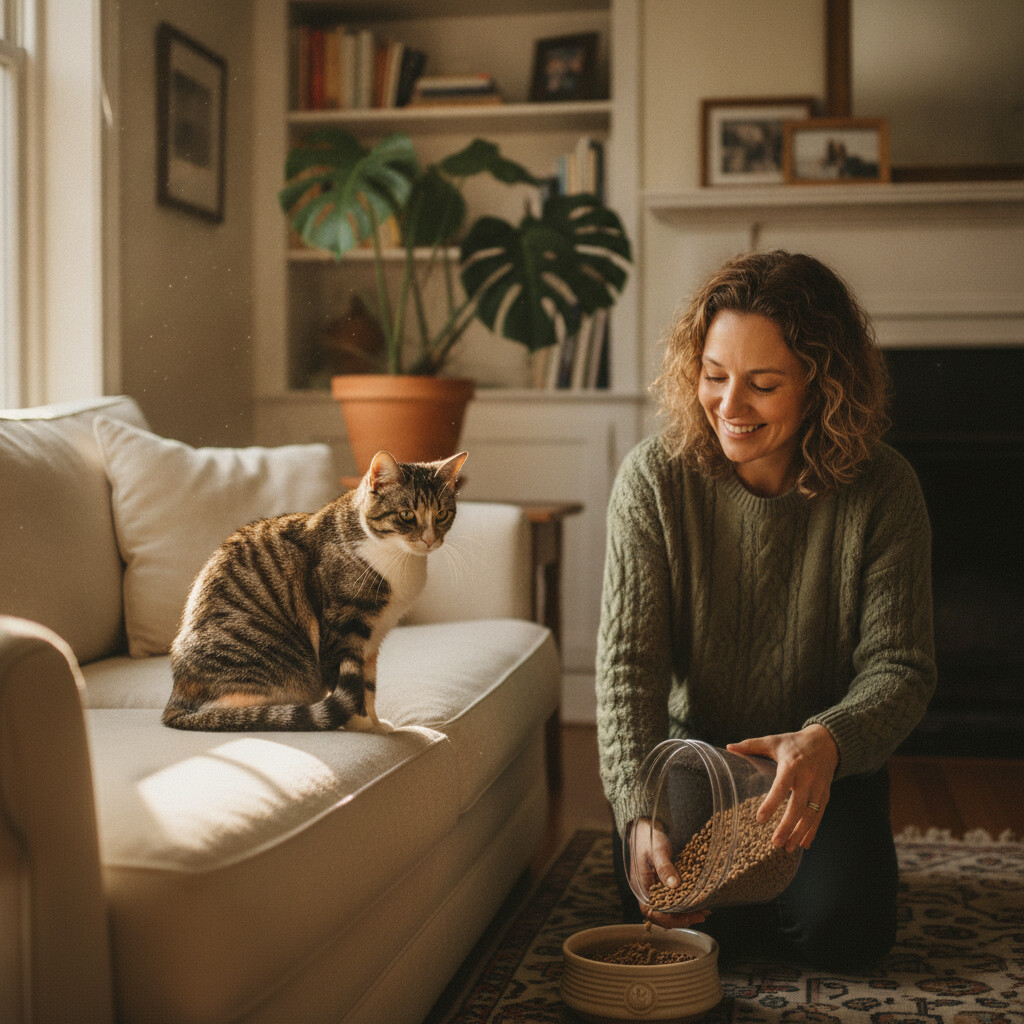
If you’re leaving town and trying to decide between a cat sitter and a boarding facility, here’s the short answer: most cats do better staying home with a sitter than being boarded, because the stress of a new environment usually outweighs the stress of being briefly alone. But not every sitter is a good one, and not every cat is a good candidate for either option. The questions you ask before you book matter more than the price you pay.
Why Sitters Usually Beat Boarding for Cats
Cats are territorial in a way dogs generally aren’t. A dog’s stress response to travel is often about separation from their person; a cat’s stress response is more often about the disruption of scent, territory, and routine. The American Association of Feline Practitioners (AAFP) notes that environmental change is one of the most reliable triggers for stress-related illness in cats, including flare-ups of feline idiopathic cystitis. A cat who stays in their own home, with their own smells, litter box, and hiding spots, generally has an easier time than one moved to an unfamiliar boarding facility full of other animals’ scents and sounds.
That’s not a universal rule. Cats who are extremely social, who thrive on novelty, or who have medical needs requiring more frequent monitoring than a daily visit can provide may actually do better boarded at a vet clinic or a dedicated cat-only boarding facility. The point isn’t that boarding is wrong — it’s that “at home with a sitter” should be your default assumption to test against, not the other way around.
What a Good Cat Sitter Actually Does
A visit that consists of topping off food and scooping the litter box isn’t really cat sitting — it’s cat maintenance. A good sitter should be doing more:
- Observing, not just servicing. Is the cat eating normally? Using the litter box normally? Hiding more than usual? A sitter who can answer these questions when you call is one who’s actually paying attention.
- Following your cat’s routine, not imposing a new one. If your cat eats at 7am and 6pm, that’s when the sitter should show up — cats notice and react to schedule changes more than owners expect.
- Spending real time, not just five minutes in and out. Fifteen to thirty minutes per visit gives a sitter time to notice if something’s wrong and gives your cat some low-key social contact if they want it.
- Knowing basic warning signs. Not eating for 24+ hours, straining in the litter box, vomiting repeatedly, or unusual lethargy are all things that warrant a same-day call to you or your vet — a sitter who doesn’t know this isn’t equipped for the job.
Questions to Ask Before You Book
“What happens if my cat won’t eat or seems sick?” This is the single most important question. You want a specific answer — “I’ll text you photos and call your vet if it’s been more than a day” — not a vague “don’t worry, I’ll handle it.” Cats can develop hepatic lipidosis (a serious liver condition) from going even a few days without eating, so a sitter who doesn’t take appetite changes seriously is a real risk, not just an inconvenience.
“Are you insured and bonded?” Professional sitters typically are; this covers accidental damage and, more importantly, signals a level of seriousness about the work. It’s a reasonable question even for a sitter found through word of mouth.
“Can I get a photo or update after each visit?” Not because you need constant reassurance, but because a sitter willing to send a two-second photo is a sitter who’s actually there and actually looking at your cat, not just topping off the food bowl and leaving.
“What’s your emergency plan?” Ask specifically what they’d do if your cat needed to see a vet while you were unreachable. A good sitter carries your vet’s contact information and has a plan for transport, not just your phone number to call into the void.
“Have you cared for cats with [your cat’s specific situation] before?” Diabetic cats needing insulin, senior cats on medication schedules, or anxious cats who hide from strangers all need a sitter with relevant experience, not just general pet-sitting background.
Trial Visits Are Worth the Extra Cost
Before committing to multiple days, book one visit while you’re still home, or a short overnight test if your schedule allows it. Watch how the sitter interacts with your cat — do they let the cat approach on their own terms, or do they immediately try to pick up and hold a cat who clearly doesn’t want that? A sitter who reads a cat’s body language correctly during a first meeting is one who’ll notice subtler warning signs later, when it actually matters.
Setting Your Sitter Up to Succeed
Leave more information than feels necessary:
- Written feeding instructions, including exact amounts and timing
- Your vet’s name, address, and phone number, plus an emergency vet option if your regular clinic isn’t 24-hour
- A note on hiding spots, so a “missing” cat search doesn’t turn into a panic
- Any behavioral quirks — cats who bolt at open doors, cats who don’t like being picked up, cats on a strict medication schedule
If your cat needs daily medication, don’t assume a general pet sitter is comfortable administering it. Ask directly, and if they’re not experienced with it, consider a vet tech or vet-affiliated sitting service instead.
When Boarding Makes More Sense
Boarding isn’t wrong for every cat. It’s worth considering when:
- Your cat has a medical condition that benefits from professional monitoring more than once a day
- You’re traveling for an extended period and want daily hands-on supervision
- Your home situation makes daily sitter access difficult (no doorman, unreliable lockbox, etc.)
If you do board, choose a cat-only facility over one that houses cats and dogs together — the sound and smell of dogs nearby is a measurable stressor for boarded cats, and cat-only facilities tend to have quieter, more separated housing designed around feline behavior specifically.
The Bottom Line
For most healthy cats, a reliable in-home sitter beats boarding, and the difference between a good sitter and a mediocre one comes down to whether they treat visits as a check-in on your cat’s wellbeing or just a chore to complete. Ask the direct questions before you book, do a trial visit if you can, and leave more instructions than you think you need to. If you want more on reducing your cat’s stress around routine disruptions, see our guide on 10 Signs Your Cat Is Stressed (And What To Do About Each One) — the same warning signs apply whether the trigger is a move, a new pet, or you being away for a week. And if your cat’s the type who paces by the door or yowls when your schedule shifts, our piece on Separation Anxiety in Cats covers what’s actually going on and how a good sitter can help manage it.