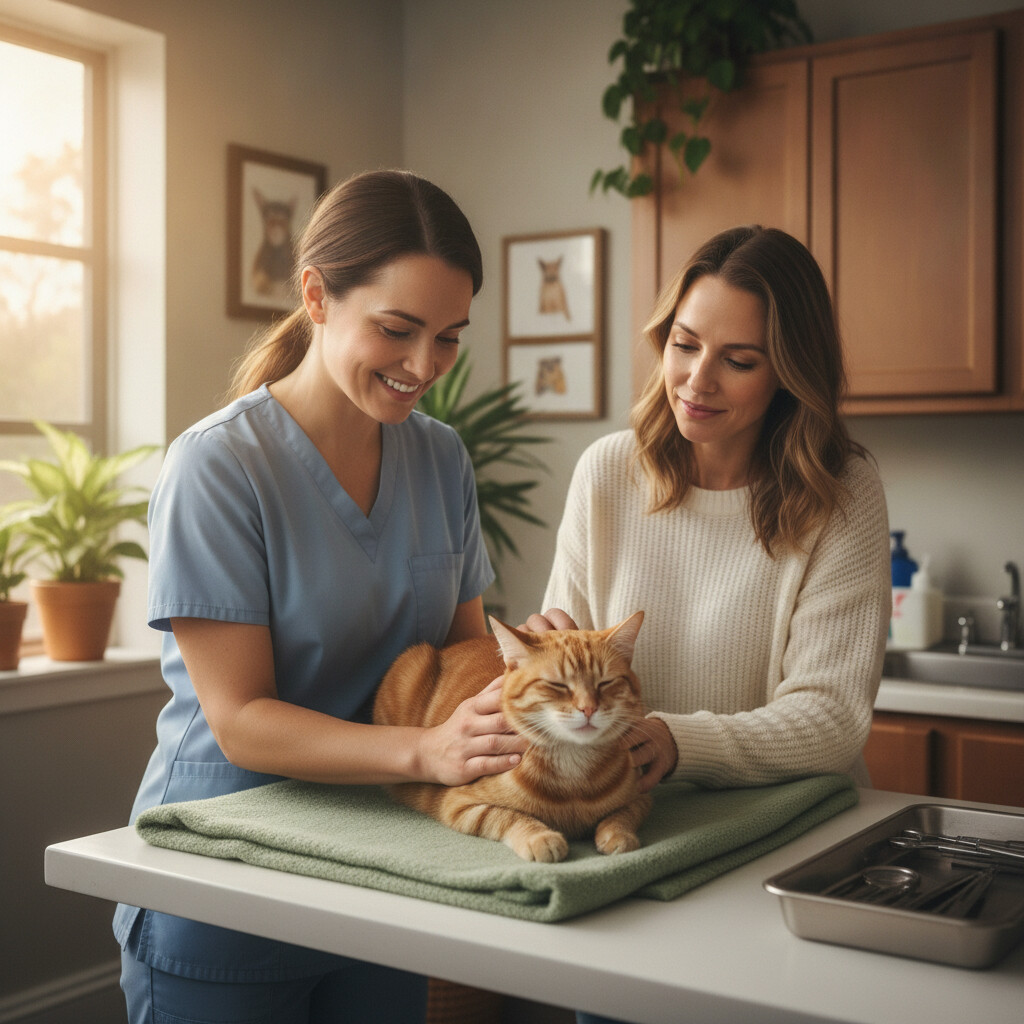
Finding the right vet is one of the most important decisions you’ll make as a cat owner — and it’s not just about geographic convenience. The right vet relationship means better care when something’s wrong, a cat who isn’t traumatised by every appointment, and your own confidence to raise concerns without feeling dismissed.
Here’s what actually matters when choosing a vet for your cat.
What to Look for in a Vet
Feline-specific experience. Cats aren’t small dogs. They have different physiology, different disease patterns, and very different behavioural needs under stress. A practice that mainly sees dogs might be fine for routine vaccines, but you want someone with genuine feline experience for diagnostics, dental work, and anything chronic. Ask directly: “What percentage of your patients are cats?” The American Board of Veterinary Practitioners (ABVP) offers board certification in feline practice — a real marker of expertise, though not the only one.
A cat-friendly environment. The American Association of Feline Practitioners (AAFP) runs a Cat Friendly Practice certification program for clinics meeting specific stress-reduction standards: separate waiting areas for cats, handling protocols that minimise restraint, exam room design that accounts for how cats respond to new environments. Look for this certification at catvets.com. Even without the formal credential, watch for signals: are cats and dogs kept apart? Are exam tables padded with non-slip surfaces? Does the staff approach the cat slowly and read their body language rather than immediately restraining them?
A vet who actually listens. This sounds obvious but isn’t. A good vet explains what they’re finding as they examine your cat, asks about baseline behaviour at home, and takes your observations seriously. They should be honest about uncertainty — “I’m not sure, let’s run a test” is a better answer than a confident guess that’s wrong. You should never leave an appointment feeling like your questions were a nuisance.
Transparent pricing. Veterinary care is expensive, and a good practice knows this. They should provide estimates before procedures and explain what each item covers. A vet who offers tiered options — here’s what’s most important now, here’s what can wait — is treating you like an adult. You shouldn’t have to feel guilty for asking about cost.
Questions to Ask Before You Commit
When evaluating a new practice, bring these questions to an initial wellness visit:
- Who covers emergencies outside business hours? (Most practices use an emergency hospital — fine to know in advance where you’d go)
- How do you handle anxious or fearful cats? What’s your low-stress handling approach?
- Do you have specific experience with [your cat’s condition] if relevant?
- What’s your approach to pain management for procedures like dental cleanings?
How the vet responds — whether they engage with your questions or rush through them — tells you more than the answers themselves.
Red Flags to Watch For
Dismissing concerns before examining. “Cats just do that” without any examination or history-taking is a problem. Even if the behaviour is genuinely normal, a thorough vet tells you why after looking at your cat — not before.
Rough or dismissive handling. Watch closely during the exam. Scruffing (grabbing by the loose neck skin) is increasingly regarded as unnecessary and stressful for routine examinations. A well-run feline practice uses towel wraps, gives the cat time to adjust to the room, and works with the cat’s behaviour rather than overpowering it. If your cat is handled roughly without good reason, find a different practice.
Over-treating at every visit. A vet who recommends extensive supplementation, testing, or procedures for a young, healthy cat at every wellness visit should prompt some questions. Ask what specifically you’re looking for with each test and what the result would change. Evidence-based medicine means some cats at low risk genuinely don’t need extensive workups.
Under-treating or dismissing symptoms. The opposite extreme is equally problematic. Serious symptoms waved away without any diagnostics is not acceptable — especially in cats, who are experts at masking illness until problems are advanced.
Poor follow-up communication. Results from bloodwork or diagnostics should be communicated promptly, with an explanation of what they mean. Waiting weeks without hearing anything is not standard of care.
How Often Should Your Cat See a Vet?
For most adult cats in good health, annually. Senior cats (over 10-11 years) and cats with chronic conditions should be seen every six months — many diseases that hit older cats are easier to manage when caught early. For a more detailed breakdown by life stage, see our vet visit frequency guide.
Kittens need a series of initial appointments for vaccines and development checks — your vet will establish the schedule at the first visit.
Low-Cost Options
Veterinary care is unaffordable for some cat owners, and that’s a real problem. Options worth knowing:
- Humane society and shelter clinics — many run discounted wellness and vaccine clinics; check your local humane society
- Veterinary teaching hospitals — attached to vet schools, they offer services at reduced cost with student vets supervised by experienced staff
- CareCredit — a medical credit card accepted at many practices that lets you spread costs over time
- Pet insurance — starting a policy while your cat is young and healthy can significantly offset future emergency costs; see our pet insurance guide for how to think through whether it makes sense for your situation
When to Switch Vets
You’re allowed to change vets. No explanation required. Switch if:
- You consistently leave appointments feeling dismissed, rushed, or worse-informed than when you arrived
- Your cat’s condition isn’t improving on a plan that should be working and you’re not being offered alternatives
- You felt your cat was handled in a way that caused unnecessary fear or pain
- A serious concern is being brushed off repeatedly without a convincing reason
Getting a second opinion on serious diagnoses — cancer, organ disease, significant behavioural diagnoses — is not disloyal. It’s standard practice, and a confident vet supports it.
Where to Start Your Search
A few reliable starting points:
- AAFP Cat Friendly Practice finder at catvets.com — filter by certified feline-friendly practices
- ABVP directory — find board-certified feline medicine specialists
- Local word of mouth — cat-specific Facebook groups, neighbourhood forums, and community boards often have vetted recommendations from owners who’ve been there
The AVMA (American Veterinary Medical Association) maintains a directory of licensed vets at avma.org, though it doesn’t filter for specialty or quality.
Your cat will have dozens of vet visits over their lifetime. The extra effort you spend finding someone you genuinely trust — and who knows your cat as an individual — pays off every time you’re in that exam room making a difficult decision.