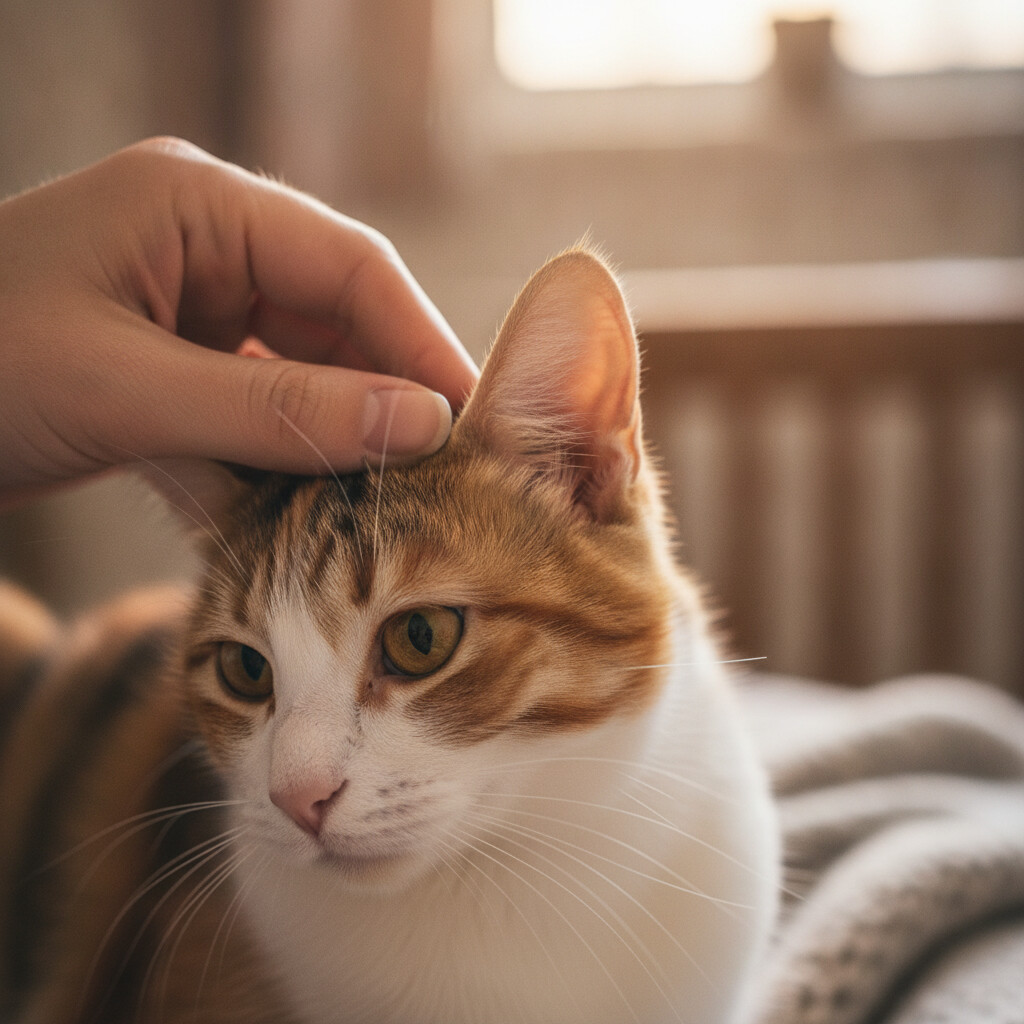
Ear infections in cats usually show up as head shaking, scratching at one ear, and a smell you notice before you see anything. Unlike ear mites — which are a contagious parasite — most cat ear infections are caused by bacteria or yeast that overgrow when something else (allergies, moisture, a polyp) disrupts the normal balance in the ear canal. The fix depends entirely on which one it is, which is why a vet visit with an otoscope and ear cytology, not a guess, is the right first step.
Ear Infection vs. Ear Mites: Not the Same Problem
These get confused constantly because the symptoms overlap — head shaking, dark discharge, a cat pawing at their ear. But they’re different problems with different fixes.
Ear mites (Otodectes cynotis) are a surface-dwelling parasite, highly contagious between pets, and produce a dry, coffee-ground-like discharge. We covered them in detail in Ear Mites in Cats: Symptoms, Diagnosis, and Treatment — worth reading if you have multiple pets, since mites spread fast between them.
Bacterial or yeast infections (otitis externa) are usually secondary — something else changed the environment in the ear canal enough for normal microbes to overgrow. The discharge tends to be waxier, darker brown or yellow, and often has a distinct sour or yeasty odor mites don’t produce. Cats can also get both at once, since chronic mite irritation can pave the way for a secondary bacterial infection.
A vet distinguishes the two in minutes with an otoscope exam and a cytology swab — looking at ear debris under a microscope. Guessing at home wastes time and, with the wrong over-the-counter product, can make things worse.
What Causes Ear Infections in Cats
Unlike dogs — where ear infections are extremely common and often tied to floppy ears or swimming — they’re less frequent in cats, which is actually a useful clue: when a cat does get one, there’s often an underlying reason worth finding.
The American Association of Feline Practitioners and Cornell Feline Health Center both point to a similar list of contributors:
- Allergies (environmental or food) — inflamed ear canals from allergic skin disease are one of the most common underlying drivers of recurring feline ear infections.
- Polyps — benign growths (nasopharyngeal polyps) that develop in the middle ear, more common in young cats, and can cause chronic one-sided ear symptoms.
- Moisture or trauma — from bathing, scratching, or a foreign body like a grass seed lodged in the canal.
- Underlying skin conditions — cats with generalized dermatologic issues are more prone to ear canal inflammation as part of the same process.
- Immune-suppressing illness — cats with FIV or FeLV can be more prone to chronic or recurrent infections because their immune system has a harder time controlling normal ear flora.
This is the main reason vets treat a first-time ear infection differently from a fourth one in the same year — a single infection gets treated and monitored, but a pattern of recurrence means it’s time to look for what’s driving it.
Symptoms to Watch For
- Head shaking or tilting
- Scratching at one or both ears
- Dark discharge — brown, yellow, or waxy (versus mites’ dry, crumbly, dark debris)
- A noticeable odor from the ear
- Redness or swelling visible inside the ear flap
- Sensitivity or pain when the ear is touched
- In severe or long-standing cases: a head tilt that persists even when the cat isn’t shaking it, which can indicate the inner ear is involved
Cats are also good at hiding pain, so a mild infection can go unnoticed longer than in dogs. If your cat seems “off” — less interested in being petted near the head, sleeping oddly to keep one ear down — that’s worth a look even without obvious scratching.
How Vets Diagnose and Treat Ear Infections
Diagnosis starts with an otoscope exam to check the eardrum is intact (important — some medications shouldn’t be used if it’s ruptured) and a cytology sample to identify whether bacteria, yeast, or both are present.
Treatment is targeted to what’s actually growing:
- Yeast infections typically respond to antifungal ear drops within one to two weeks.
- Bacterial infections need a prescription antibiotic drop or ointment matched to the organism found on cytology — broad topical treatment without a diagnosis risks resistance and recurrence.
- Polyps usually require a vet to remove them, sometimes surgically, since ear medication alone won’t resolve the underlying growth.
- Allergy-driven cases need the allergy itself managed — otherwise the ear infection just comes back once the drops stop.
A full course typically runs 10–14 days, and it’s worth finishing it even after symptoms look resolved — stopping early is one of the most common reasons infections return within a few weeks.
When to See a Vet
Book an appointment if you notice:
- Any discharge, odor, or redness in the ear
- Repeated head shaking or scratching at one ear
- A head tilt, especially one that doesn’t go away between shakes
- Visible pain when the ear area is touched
- A third ear infection within a year — that’s a signal to investigate an underlying cause, not just treat the symptom again
Go same-day if there’s a sudden head tilt combined with loss of balance, circling, or abnormal eye movements — these can indicate the infection has reached the inner ear or, less commonly, a separate neurological issue, and both need prompt evaluation.
The Takeaway
A cat pawing at one ear isn’t automatically mites, and it isn’t something to wait out. Get the ear looked at and swabbed before starting any treatment — matching the drops to what’s actually growing is the difference between clearing it in a week and dealing with it for months. If you’re not sure your current vet is a good fit for follow-up care like this, How to Find a Good Vet covers what to look for.