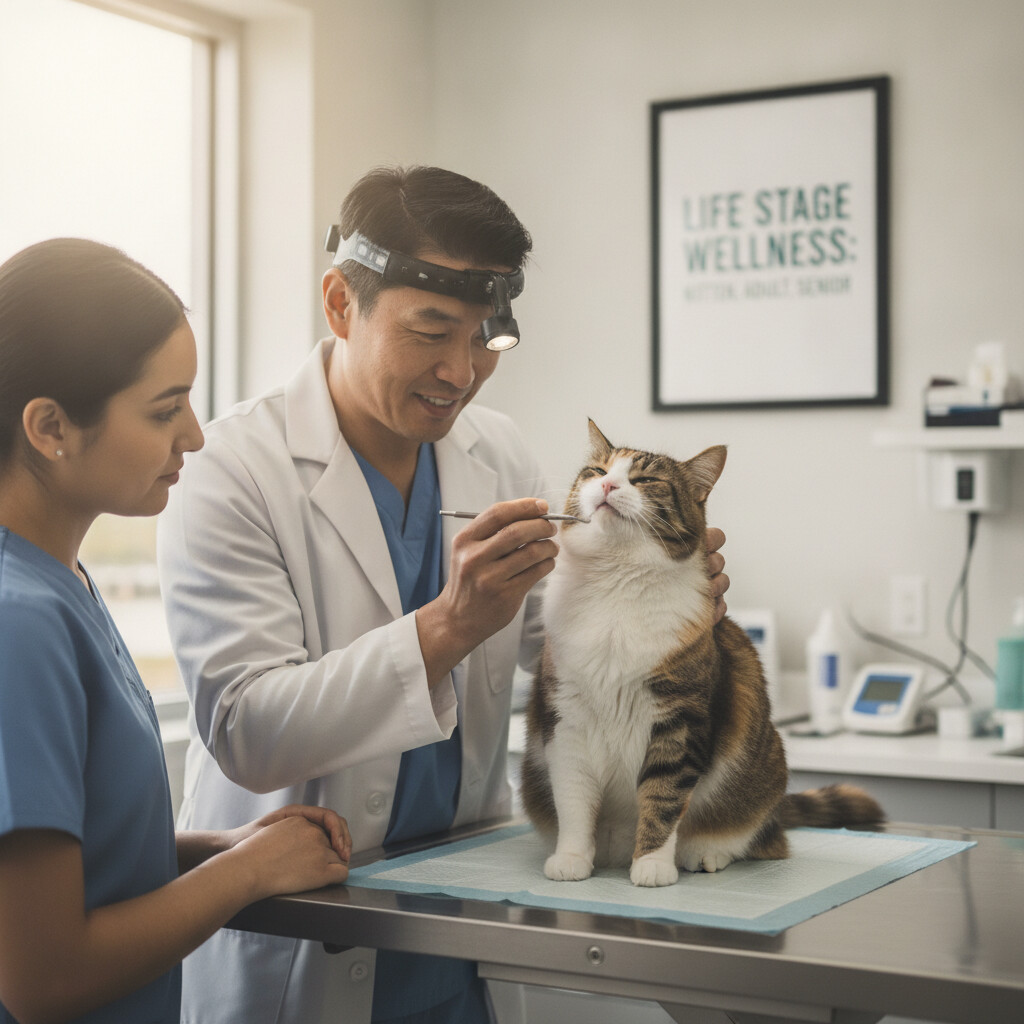
Vets don’t agree on exactly how often healthy cats need checkups — but there’s clear consensus on one thing: most cat owners wait too long. Here’s the schedule that veterinary bodies actually recommend, broken down by life stage.
The Short Answer
- Kittens (0–12 months): Every 3–4 weeks until 16 weeks for vaccines, then once at 6 months (spay/neuter), then annually
- Adult cats (1–10 years): Once a year minimum; twice a year catches more
- Senior cats (10+): Every 6 months — this is the AAFP recommendation, not an upsell
Kittens: More Visits Than You’d Expect
The first year involves the most vet visits of your cat’s life. Here’s why.
Vaccine series. Core vaccines (FVRCP — feline viral rhinotracheitis, calicivirus, and panleukopenia) require a series of boosters given every 3–4 weeks between 6 and 16 weeks of age. This isn’t optional — a single vaccine before 16 weeks may not provide lasting immunity because maternal antibodies can interfere with the immune response. The American Association of Feline Practitioners (AAFP) recommends starting the series at 6–8 weeks, with final boosters at 16 weeks.
Rabies vaccine. Required by law in most US states. Typically given at 12–16 weeks.
Spay/neuter. Usually scheduled at 5–6 months. This visit also catches anything that’s developed since the vaccine series.
First-year total: Most kittens need 4–6 vet visits in their first year. Intensive, but front-loaded — the schedule gets much simpler after this.
Adult Cats: Annual Is the Minimum
The standard advice for healthy adult cats (1–10 years) is one wellness exam per year. That visit typically includes:
- Physical examination (weight, teeth, ears, eyes, heart, abdomen)
- Fecal test if the cat goes outdoors or hunts
- Booster vaccines (3-year FVRCP boosters, annual rabies depending on local law)
- Bloodwork (not always included by default — ask specifically if you want a baseline panel)
Is once a year enough? Arguably not. Cats age roughly 4–5 human years for every calendar year in their adult life. Seeing a vet once a year is the equivalent of a person seeing their doctor every 4–5 years. Many conditions — dental disease, early kidney disease, diabetes — show clear early warning signs in bloodwork long before they’re visible physically. Biannual visits in healthy adult cats catch more, sooner.
That said, annual is the realistic minimum most guidelines support. Feline dental disease is a good example of why frequency matters — it progresses rapidly and painlessly, and most owners don’t notice it until it’s advanced.
Senior Cats: Every 6 Months, No Exceptions
The AAFP defines “senior” as cats 10 years and older and recommends wellness exams every 6 months for this group. This is a genuine clinical recommendation, not a revenue play.
Why 6 months? Several conditions common in older cats — hyperthyroidism, chronic kidney disease, hypertension, diabetes — can change significantly over 6 months. Catching a shift in kidney values early makes a real difference in treatment outcomes. Blood pressure that has crept up over a year can cause retinal damage by the time it’s discovered at an annual check.
A senior wellness exam typically includes:
- Full physical exam
- Complete blood count (CBC)
- Chemistry panel (kidney values, liver enzymes, glucose)
- Thyroid level (T4)
- Urinalysis
- Blood pressure measurement
If your senior cat isn’t getting at least these tests every 6 months, ask your vet directly why not.
Cats with Chronic Conditions
For cats managing ongoing conditions — CKD, diabetes, hyperthyroidism, IBD — vet frequency is set by the condition and how stable it is. Early or active management often means monthly check-ins. Stable, well-controlled conditions might need monitoring every 3–6 months.
Your vet should be giving you an explicit schedule. If they haven’t, ask directly: “How often do you want to see [cat’s name] given their diagnosis?” The answer should be specific, not “just call us if something changes.”
What Actually Happens at a Vet Visit
A standard wellness exam runs 20–30 minutes:
- Weight check. Cats lose weight gradually — the scale catches what the eye misses. A 6-month interval finds a 0.5lb loss that annual checks wouldn’t flag until it’s 1lb+.
- Full physical exam. Head to tail, including ears, eyes, teeth, lymph nodes, abdomen palpation.
- Discussion. Your vet should ask about behavior, appetite, litter box habits. Bring notes if your memory is unreliable.
- Vaccine boosters if due.
- Additional tests based on age or concerns.
If your cat is significantly stressed by vet visits, mention it when booking. Many clinics now offer low-stress or Fear Free™ handling, and some vets can prescribe mild pre-visit sedation for cats with severe anxiety. Signs of cat stress that persist between visits are worth bringing up at the appointment too.
When to See a Vet Between Scheduled Visits
Some signs warrant a call the same day, not “at the next appointment”:
- Not eating or drinking for 24+ hours
- Straining to urinate or producing no urine — especially male cats. This can be life-threatening within hours.
- Rapid breathing or open-mouth breathing
- Sudden loss of coordination or collapse
- Visible injury, swelling, or bleeding
- Significant behavior change (hiding constantly, aggression in a normally calm cat)
Less urgent but still worth calling soon: weight loss you can feel in the spine or ribs, vomiting more than twice a week, persistent diarrhea, or significant changes in litter box habits.
The Practical Takeaway
The annual vet visit is a minimum, not an ideal. Kittens need frequent early visits. Adults benefit from twice-yearly checkups if you can manage it. Seniors need a strict 6-month schedule with bloodwork. Any cat with a chronic condition needs more frequent monitoring than a healthy cat.
The cost of a wellness exam is almost always less than the cost of treating a condition discovered late. Find a vet you trust, establish a relationship, and put the appointments in your calendar like any other important recurring commitment.