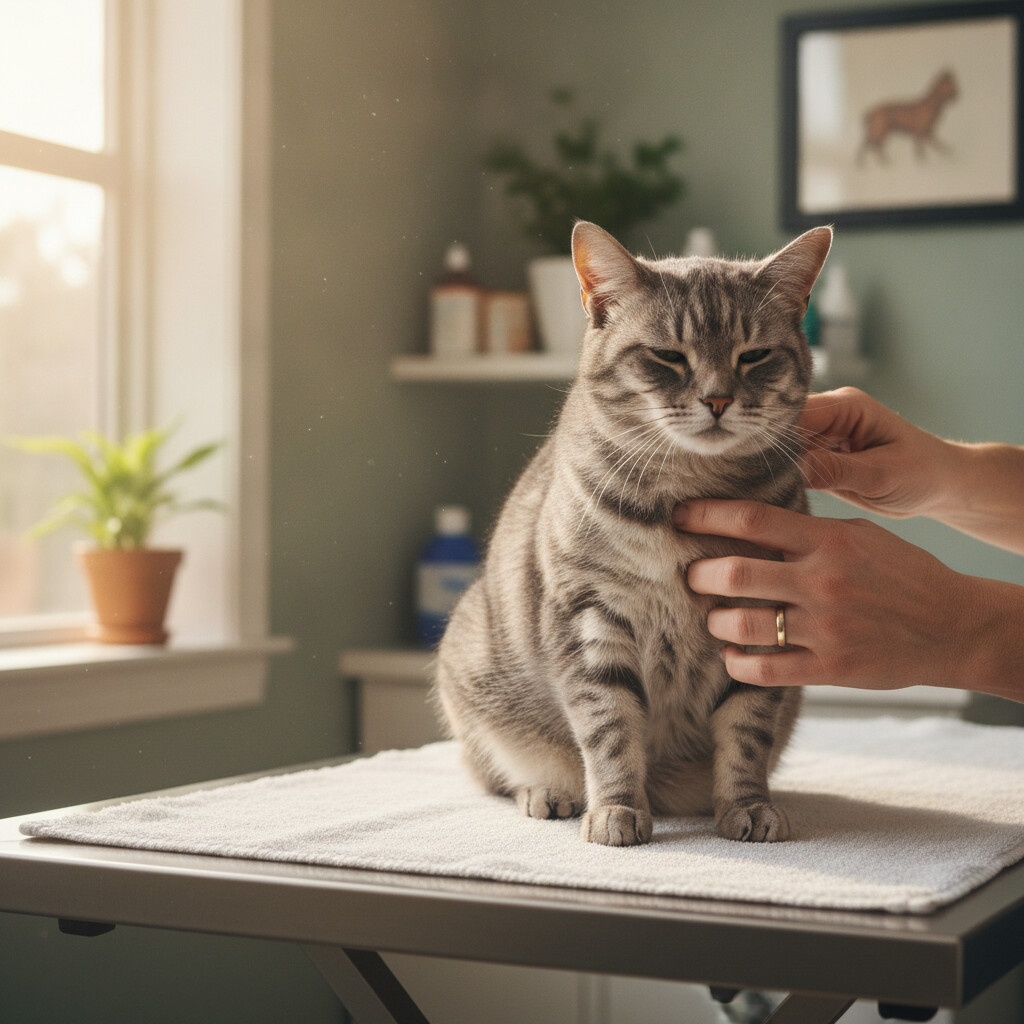
Yes — senior cats still need vaccines, but the schedule and the reasoning behind it change once a cat crosses into her senior years. The core vaccines don’t stop mattering with age; what changes is how often they’re given, which non-core vaccines still make sense, and how much weight a vet puts on your cat’s individual health picture versus a one-size-fits-all schedule.
If you’ve been told “she’s older, she doesn’t really need shots anymore,” that’s not quite right — and it’s not quite wrong either. Here’s what actually changes.
Why Age Changes the Vaccine Conversation (Without Ending It)
Older cats have a different immune profile than kittens or young adults. Immune function gradually declines with age — a process vets call immunosenescence — which can mean both a somewhat weaker response to vaccination and, in some cases, a somewhat higher risk from certain infections if your cat isn’t protected. That cuts both ways: it’s an argument for keeping core protection current, not for dropping it.
The American Association of Feline Practitioners (AAFP), in its joint vaccination guidelines with the American Animal Hospital Association, doesn’t set an upper age limit for vaccination. Age alone is not listed as a reason to withhold a vaccine. What the guidelines do say is that vaccine decisions for senior cats should weigh individual risk factors — lifestyle, health status, prior vaccine history — more heavily than they do for a healthy kitten on a standard schedule.
Core Vaccines: Still Recommended for Life
Core vaccines are the ones considered essential for nearly every cat, regardless of lifestyle, because the diseases they prevent are serious, widespread, or capable of infecting even strictly indoor cats. For cats in the US, that means:
- FVRCP (feline viral rhinotracheitis, calicivirus, and panleukopenia) — protects against three common and potentially severe respiratory and GI diseases
- Rabies — legally required in most US states regardless of age, and fatal once symptomatic
The AAFP/AAHA guidelines recommend core vaccines be boosted every three years for adult and senior cats who have completed their initial series, rather than annually — a schedule based on how long immunity actually lasts, not a senior-specific discount. Some senior cats with well-documented vaccine histories may be candidates for antibody titer testing instead of automatic revaccination, which checks whether existing immunity is still adequate before giving another dose. Ask your vet whether titers make sense for your cat rather than assuming they’re the default — availability and interpretation vary by clinic.
Non-Core Vaccines: This Is Where Senior Cats Diverge
Non-core vaccines — FeLV (feline leukemia virus), for example — are recommended based on exposure risk, not age. This is where senior cats often see real changes to their schedule.
A cat who was vaccinated for FeLV as a kitten because she might go outdoors, but who has lived exclusively indoors with no new cats in the household for the past eight years, may no longer need that vaccine. Her risk of exposure has dropped to close to zero. Conversely, a senior cat who’s recently joined a multi-cat household, gone to a boarding facility, or gained outdoor access needs that risk reassessed on its own terms — her age doesn’t protect her from a virus she’s newly exposed to.
This is the conversation worth having explicitly at a senior wellness visit: not “does she still need shots” but “has her actual exposure risk changed, and does the vaccine schedule need to change with it.”
What Vets Weigh Before Vaccinating an Older Cat
Beyond core-vs-non-core status, a few senior-specific factors shape the decision:
- Chronic illness. Cats with conditions like chronic kidney disease, hyperthyroidism, or diabetes aren’t automatically excluded from vaccination, but a vet will often time it around how stable the condition currently is.
- Prior vaccine reactions. A cat with a history of reacting to a specific vaccine may be managed differently going forward — including, in some cases, titer testing instead of reflexive boosters.
- Injection-site sarcoma risk. This is a rare but serious concern specific to cats, and the AAFP guidelines address it directly by recommending standardized injection sites (for example, low on a rear leg rather than between the shoulder blades) so that if a reaction-related mass ever develops, it’s easier to identify, monitor, and — if needed — treat surgically. This isn’t a senior-specific rule, but it matters more as a cat accumulates more vaccine doses over a lifetime.
- Overall frailty. For a senior cat who’s medically fragile, a vet may recommend spacing out non-essential vaccines or bloodwork visits so the cat isn’t stressed by too much handling at once — a quality-of-life call, not a medical contraindication.
None of this means skipping vaccines by default. It means the decision gets more individualized, which is exactly what a good senior wellness exam is for.
The Bigger Picture: Senior Wellness Visits Do More Than Vaccinate
If your cat is over roughly ten years old, the AAFP and AAHA both recommend wellness exams every six months rather than annually — vaccines are usually a small part of that visit. Bloodwork, blood pressure checks, weight tracking, and dental assessment tend to matter more for catching age-related disease early, since cats are exceptionally good at hiding symptoms until a condition is advanced. If you’re due for that visit and unsure what a good one should cover, our guide on how often you should take your cat to the vet at each life stage walks through what changes with age beyond vaccines.
If your cat’s vaccine history is incomplete or you’re not sure what she’s had, that’s worth flagging at her next visit rather than guessing — starting over with a documented series is straightforward, and vets would rather do that than assume protection that isn’t there. For the full core and non-core schedule at every age, see our complete cat vaccine guide.
When to Call the Vet
Vaccination itself is low-risk, but you should contact your vet if your senior cat:
- Has facial swelling, hives, vomiting, or difficulty breathing within a few hours of a vaccine (a rare but urgent allergic reaction)
- Develops a lump at an injection site that’s still present or growing after three months
- Seems unusually lethargic or off her food for more than 24–48 hours after vaccination
- Has a chronic condition and you’re unsure whether it’s currently stable enough for a scheduled vaccine — ask before the appointment, not after
The Takeaway
Senior cats don’t age out of vaccination — they age into a more individualized version of it. Core vaccines generally continue on a three-year schedule (or titer-guided schedule) for life; non-core vaccines get reassessed based on actual current risk, not history. The best move isn’t to assume your cat needs nothing more, or that she needs the same schedule as a two-year-old — it’s to ask your vet, at her next wellness visit, what her specific risk profile calls for now.