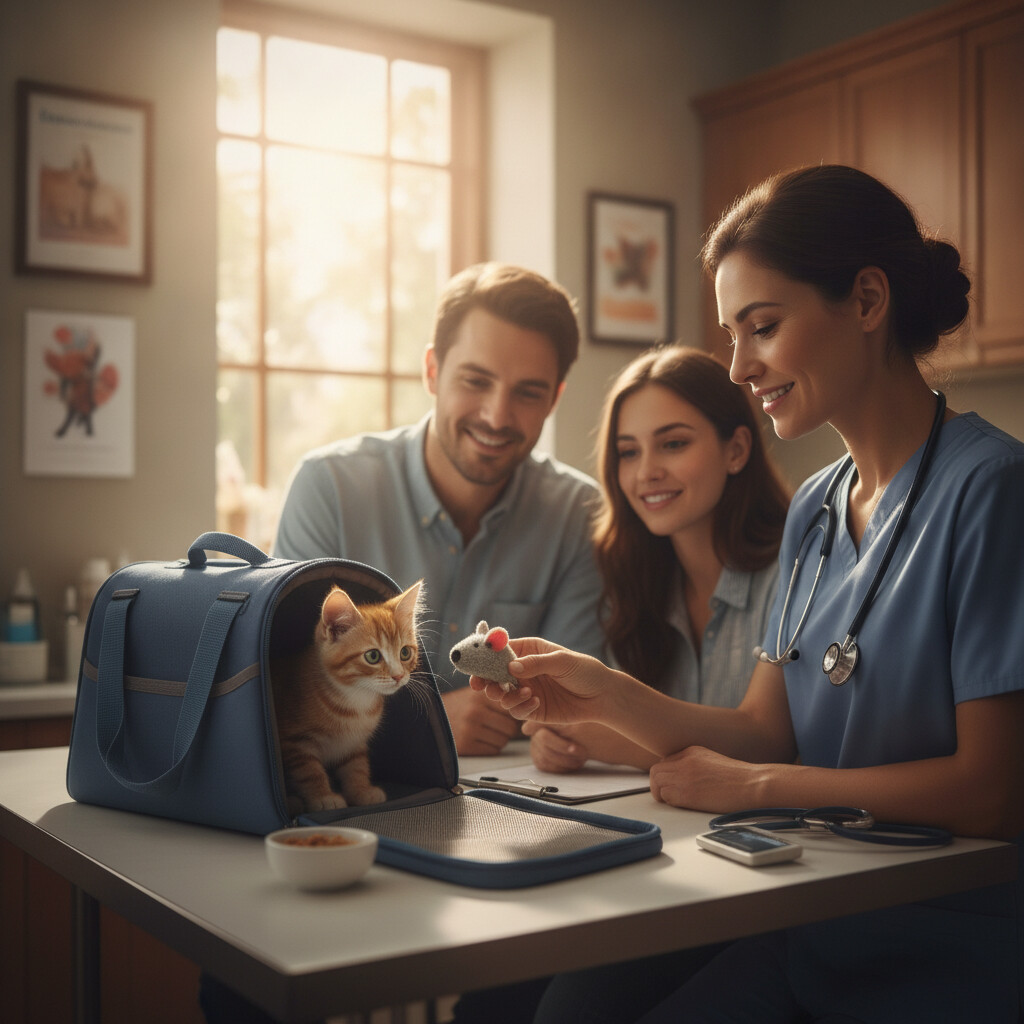
Your new cat’s first vet visit isn’t just a checkup — it’s the baseline everything else gets measured against. Book it within the first week of bringing your cat home, even if they seem perfectly healthy. The exam catches things adoption paperwork won’t show you, gets vaccines and parasite prevention on a real schedule, and gives you a vet who already knows your cat before an emergency ever happens.
When to Schedule It
First week, no exceptions — sooner if your cat is showing any signs of illness (lethargy, not eating, diarrhea, sneezing, discharge from eyes or nose). Shelters and rescues do their own screening, but it’s not a substitute for an independent exam, and private rehoming or a stray you’ve taken in may come with no medical history at all.
If you already have other pets at home, this visit matters even more: a new cat can be incubating something contagious (upper respiratory infections and parasites are the most common culprits) without obvious symptoms yet. Keeping the newcomer separated until after that first exam is a reasonable precaution, not overkill.
What the Vet Will Actually Check
A first visit is more thorough than a routine annual checkup because there’s no history to lean on. Expect:
- Full physical exam — weight, body condition, heart and lung sounds, abdominal palpation, coat and skin condition
- Ears, eyes, and mouth — checking for mites, discharge, and early dental issues
- FeLV/FIV testing, if it wasn’t already done by a shelter or rescue — this is a simple blood test and worth confirming even if you were told your cat is negative, especially with strays
- Fecal parasite check — intestinal parasites are extremely common in cats with any outdoor or shelter history and often show no visible symptoms
- Weight and age assessment, which shapes everything from feeding amounts to when the next vaccine or spay/neuter conversation happens
If your cat came with prior medical records, bring them — even partial ones save the vet from re-testing for things already confirmed.
Vaccines and Parasite Prevention: What Happens at Visit One
What gets administered depends entirely on your cat’s age, prior vaccine history, and lifestyle (indoor-only vs. any outdoor access). For a kitten with no prior vaccines, the first visit typically starts the core vaccine series recommended by the American Association of Feline Practitioners (AAFP) — FVRCP at minimum, with rabies added once age-appropriate. For an adult cat with an unknown history, many vets treat them as unvaccinated and start the series fresh, sometimes with titer testing first if you’d rather confirm existing immunity than re-vaccinate automatically.
Flea, tick, and (if there’s any outdoor exposure) heartworm prevention usually gets started at this visit too, rather than waiting for a follow-up. If you want the fuller picture of what’s core versus optional and why, Cat Vaccines: The Complete Schedule Every US Cat Owner Actually Needs covers it in more detail than a single visit will.
How to Prepare Your Cat (and Yourself)
A few things make the visit smoother and give the vet better information:
- Carrier, not your arms. A secured carrier is safer for transport and required by most clinics. If your cat hasn’t been in one yet, a day or two of leaving it open at home with treats inside helps — panic in an unfamiliar carrier on top of an unfamiliar vet is a rough combination.
- Bring any records you have, even a shelter printout or a note from a previous owner.
- Write your questions down before you go. It’s easy to forget half of them once you’re in the room. Feeding amount, litter box setup, and behavior questions are all fair game for a first visit, not just physical health.
- Don’t feed a large meal right before travel if your cat gets carsick or anxious — an empty-ish stomach makes the ride easier on everyone.
If you’re still setting up the rest of the household — litter boxes, scratching options, safe spaces — Essential Supplies for a New Cat Owner: What You Actually Need and The First 30 Days with a New Cat cover the pieces beyond the vet visit itself.
What to Do If Your Cat Is Terrified at the Vet
Plenty of cats hate the carrier, the car, and the exam room, and that’s normal rather than a sign something’s wrong. A towel draped over part of the carrier to block sightlines, a calm and quiet car ride, and not opening the carrier in the waiting room (ask if you can wait in the car until a room is ready) all reduce stress meaningfully. Vets who work regularly with cats — as opposed to general practices that see mostly dogs — tend to have more low-stress handling techniques on hand. If you haven’t picked a vet yet, How to Find a Good Vet: What to Look For (And Red Flags to Avoid) has questions worth asking before you book.
Don’t Wait for the Scheduled Visit If You See These
Book the first-week appointment regardless, but move it up immediately — or go same-day — if your new cat shows labored breathing, repeated vomiting or diarrhea, refuses to eat or drink for more than 24 hours, has pale or yellow gums, or seems unusually weak or unresponsive. These aren’t “wait and see how the week goes” symptoms.
The practical takeaway: the first vet visit is less about finding a problem and more about ruling things out and starting a clean record. A cat who checks out healthy at week one gives you — and every vet you see after this one — a real baseline to compare against for the rest of their life.