The short answer: look for AAHA accreditation if you can find it, ask how they handle after-hours emergencies before you need to know, and pay attention to whether they explain options or just prescribe one. A good cat vet is easy to spot in a single visit if you know what to watch for — and a bad fit is worth leaving before it costs you money or your cat’s trust.
Start With Accreditation, Not Just Proximity
Most people pick a vet the way they pick a coffee shop — whichever one is closest. That’s fine for a healthy adult cat’s annual checkup. It stops being fine the moment something goes wrong.
The American Animal Hospital Association (AAHA) accredits veterinary hospitals against roughly 900 standards covering everything from anesthesia protocols to pain management to how records are kept. Accreditation isn’t mandatory for a clinic to operate — plenty of excellent vets practice at non-accredited clinics — but it’s a genuine signal, not a marketing badge. You can search AAHA’s directory by zip code before you ever book a first appointment.
Beyond accreditation, look for a vet who is a member of the American Association of Feline Practitioners (AAFP) or who explicitly markets as “cat friendly.” Cats aren’t small dogs — their stress responses, pain signals, and handling needs are different enough that AAFP publishes separate practice guidelines specifically because generalist care sometimes misses feline-specific cues.
What a Good First Visit Actually Looks Like
You can tell a lot from one appointment. A good vet:
- Asks about behavior, not just symptoms. “Any changes in litter box habits, appetite, or how much she’s hiding?” is a better opening question than jumping straight to a physical exam, because behavior changes are often the earliest sign of a health problem in cats.
- Explains the “why” behind a recommendation, not just the recommendation itself. If they’re suggesting bloodwork, they should be able to tell you what they’re ruling out and why it matters at your cat’s age.
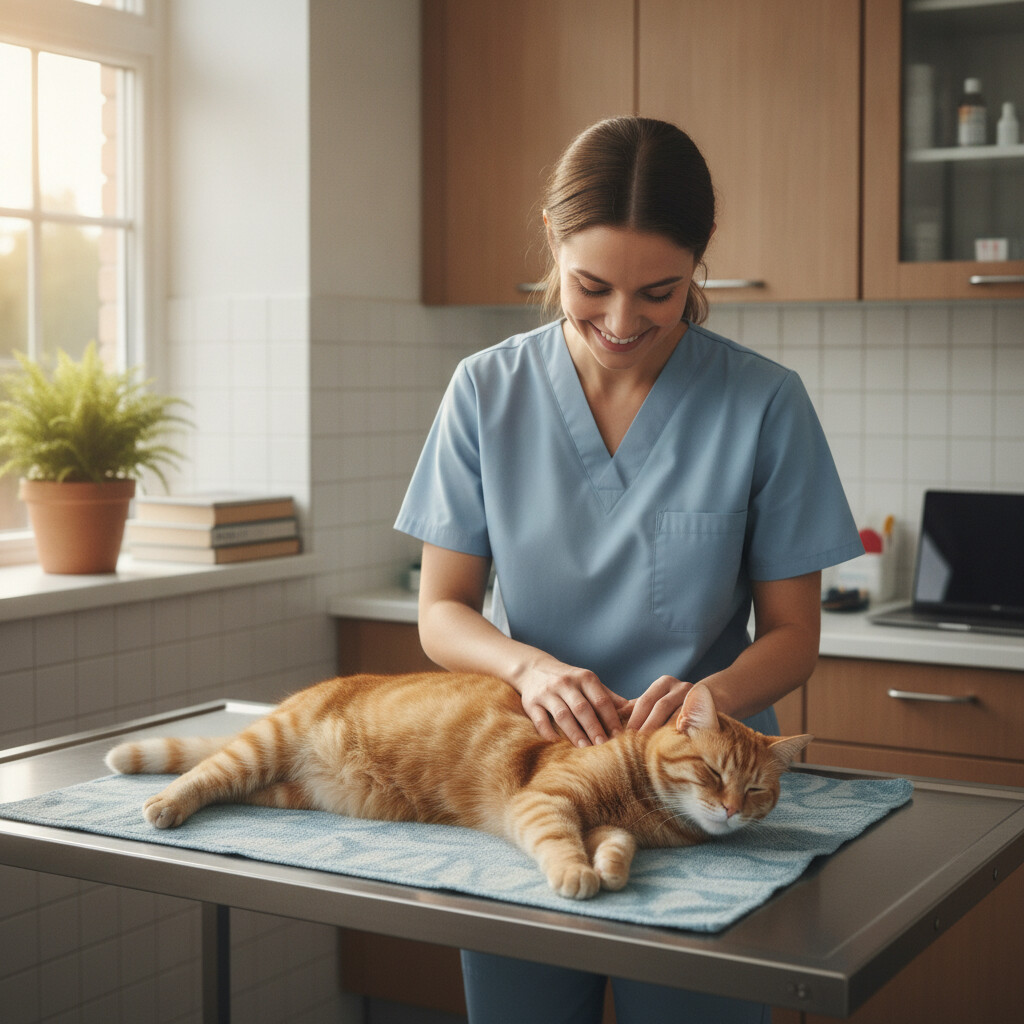
- Handles your cat calmly, using low-stress handling techniques — working with the cat’s body language rather than forcing a position. Fear Free certification (a specific, verifiable credential) is a good sign here if you can find it on their site or ask directly.
- Gives you a straight cost estimate before running tests, not after. Uncertainty about cost shouldn’t come from the vet being vague — it should come from genuinely not knowing yet, and they should say that explicitly.
If a first visit feels rushed, if your questions get brushed off, or if the vet seems irritated by a cat who’s scared and squirming (most cats are, at the vet — that’s normal, not a behavior problem), that’s data. One bad visit isn’t necessarily disqualifying, but a pattern is.
Red Flags Worth Taking Seriously
A few things should make you look elsewhere, even if everything else about a clinic seems convenient:
- Reluctance to explain a diagnosis or treatment plan in plain language. You should never leave an appointment less clear on what’s happening than when you walked in.
- Pressure to buy specific retail products on the spot, especially with urgency framing (“your cat really needs this today”). Legitimate recommendations can wait 24 hours for you to think it over.
- No clear answer about after-hours or emergency care. Ask this directly at your first visit: “If something happens at 9 p.m. on a Saturday, what do I do?” A vet who can’t answer this clearly, or who has no relationship with a local emergency hospital, is a genuine gap in your cat’s care — not a minor inconvenience.
- Dismissing your observations. You know your cat’s baseline behavior better than anyone in the room. A vet who waves off “she’s just not acting like herself” without investigating is worth reconsidering, especially since subtle behavior change is often the first sign something’s wrong in a species that hides pain instinctively.
When to Switch Vets
You don’t need a dramatic reason to change vets, and you don’t owe anyone an explanation. Common legitimate reasons include: you’ve felt rushed or dismissed more than once, costs are consistently unclear until the bill arrives, your cat’s fear response at that specific clinic has gotten worse over repeat visits rather than better, or you’ve simply found a practice that’s a better fit for how you want to make decisions about your cat’s care.
Transferring records is simple — call the new clinic, sign a release form, and they’ll request your cat’s history directly from the old one. You don’t need to have an awkward conversation with the vet you’re leaving.
The Practical Takeaway
Before you need emergency care is the right time to vet the vet, not during a crisis. If you’ve just adopted a cat, check out our guide on what to expect at your new cat’s first vet visit to know what a normal first appointment should include. And if cost is part of what’s holding you back from regular checkups, is pet insurance worth it for cats? is worth reading before — not after — you need it.
A good vet relationship is one of the few things that meaningfully changes outcomes over your cat’s whole life. It’s worth the twenty minutes of research to get it right the first time.