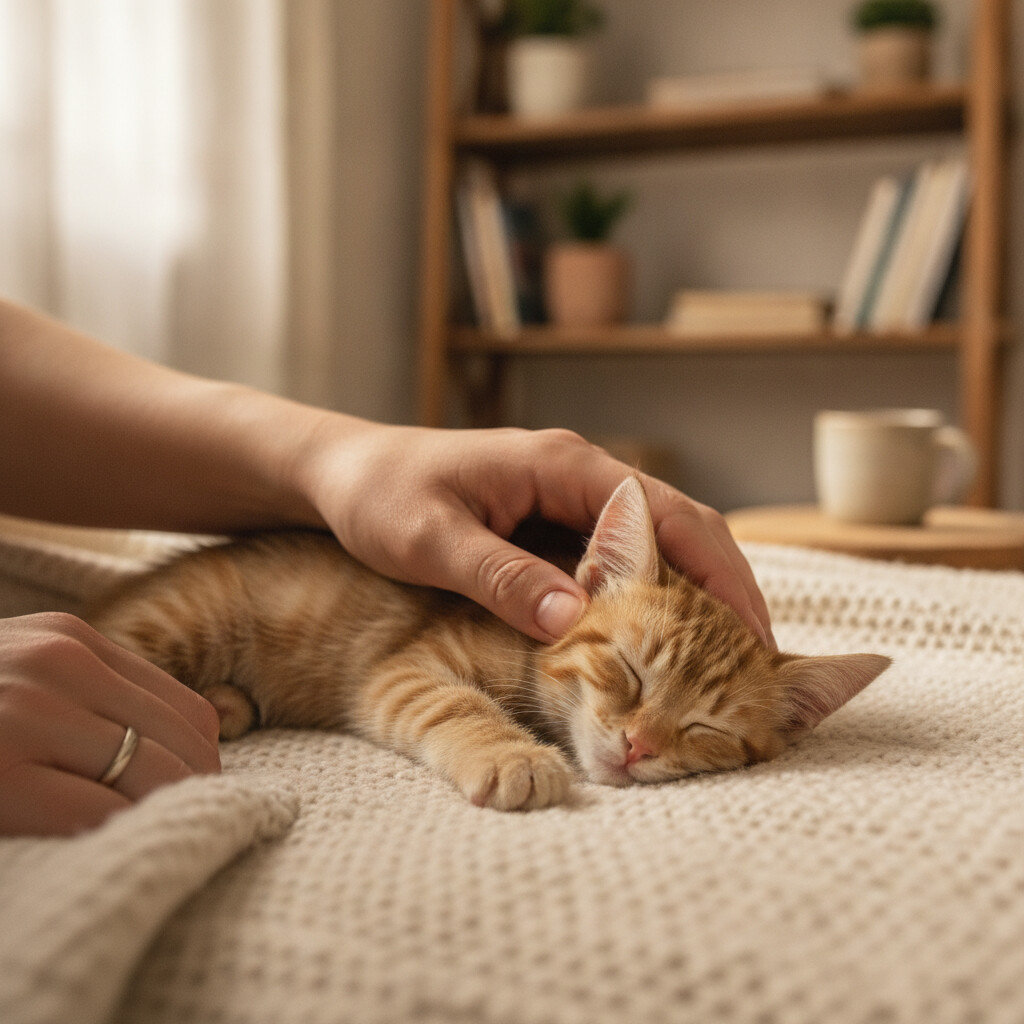
A sick kitten usually tells you in small ways first: eating a little less, sleeping a little differently, a stool that’s off for a day. The signs that matter most are not eating, lethargy, vomiting or diarrhea that keeps going, and any breathing trouble. Kittens have tiny reserves, so problems that an adult cat can ride out for a day or two can turn serious in hours.
Here’s what’s normal, what’s worth watching, and what means you call the vet today.
Why kittens get sick faster than adult cats
A kitten isn’t a small adult cat. Their bodies hold less water, store less energy and run a still-developing immune system. The Merck Veterinary Manual notes that young kittens are prone to low blood sugar, low body temperature and dehydration, and those three can snowball quickly once a kitten stops eating or starts losing fluid through vomiting or diarrhea.
The practical upshot: with kittens, “let’s see how they are tomorrow” is a bigger gamble than it is with a grown cat. The younger and smaller the kitten, the shorter the window.
What a healthy kitten looks like
Knowing the baseline makes the warning signs easier to spot.
- Eats eagerly. Kittens are growing fast and are usually enthusiastic about food, several small meals a day.
- Gains weight steadily. A rough rule of thumb many vets use is about a pound a month for the first five or six months. A kitchen scale and a weekly weigh-in are the simplest early-warning system you can own.
- Sleeps a lot, then plays hard. Long naps are normal (our guide to how much kittens sleep breaks it down by age). What matters is that they wake up bright and curious.
- Clear eyes and nose, clean ears, pink gums.
- Formed stools. Soft for a day after a food change can happen; watery for days is not normal.
Warning signs to watch for
Not eating
This is the big one. A kitten who refuses food for more than about 12 to 24 hours needs a vet call, and for kittens under eight weeks, sooner. Skipping one meal during a stressful move can happen, but a kitten who won’t eat their favourite food is telling you something.
Lethargy
Sleeping a lot is normal. Being hard to rouse, floppy, uninterested in play when awake, or hiding and staying hidden is not. A kitten who feels cool to the touch, especially ears and paws, alongside lethargy needs urgent attention.
Vomiting or diarrhea
A single soft stool or one vomit isn’t an emergency. Repeated episodes, diarrhea lasting more than a day, blood in either, or vomiting combined with not eating are reasons to call. Intestinal parasites are very common in kittens and a frequent cause; our cat diarrhea guide covers the wider list of causes.
Sneezing, runny eyes, or a snotty nose
Upper respiratory infections, usually feline herpesvirus or calicivirus, are extremely common in kittens, particularly those from shelters or multi-cat homes. Mild cases often clear with supportive care, but kittens can go downhill when a blocked nose stops them smelling their food and they stop eating. Thick yellow or green discharge, eyes sealed shut, or mouth ulcers mean a vet visit. More detail in our upper respiratory infection guide.
Pot belly and poor growth
A round, bloated belly on an otherwise skinny kitten is a classic sign of intestinal worms. The Companion Animal Parasite Council (CAPC) recommends deworming kittens every two weeks from a few weeks of age, then moving to a monthly preventive, which is why your vet will ask about deworming history at the first visit.
Pale gums and lots of fleas
Fleas are more than itchy for kittens. A heavy infestation can cause anemia because the kitten is simply too small to keep up with the blood loss. Check the gums: they should be pink, not white or very pale. Don’t use an adult or dog flea product on a kitten; some dog products contain permethrin, which is toxic to cats. See our flea, tick and worm prevention guide for what’s safe.
Head shaking and dark ear debris
Dark, coffee-ground-like gunk in the ears with lots of scratching often points to ear mites, which spread easily between kittens. Easy to treat, but it needs a proper diagnosis first.
Patchy hair loss
Circular patches of broken or missing hair can be ringworm, a fungal infection that kittens pick up readily and that can spread to people. Not an emergency, but worth getting checked before it spreads around the household.
The one disease every new owner should know about
Feline panleukopenia (also called feline parvovirus or feline distemper) is the reason kitten vaccines matter so much. Cornell University’s Feline Health Center describes it as highly contagious and often fatal in young kittens, with signs that include fever, vomiting, diarrhea, severe lethargy and loss of appetite. The virus survives in the environment for a long time and isn’t killed by most ordinary household cleaners.
The core vaccine series in the AAHA/AAFP Feline Vaccination Guidelines starts at six to eight weeks and is repeated every three to four weeks until about 16 to 20 weeks of age. A kitten who hasn’t finished that series isn’t fully protected, so keep them away from unknown cats until your vet says otherwise. Our cat vaccine schedule has the full timeline.
The AAFP also recommends that every newly adopted cat or kitten be tested for FeLV and FIV. If you haven’t done that yet, see our FeLV guide.
Quick checks you can do at home
You don’t need medical training to gather useful information for your vet:
- Weigh them. Same scale, same time of day. Weight loss in a growing kitten is always worth a call.
- Check hydration. Gently lift the skin over the shoulders. It should spring back quickly. Skin that stays tented, or gums that feel sticky rather than slick, suggest dehydration.
- Count breaths while they sleep. A resting cat usually breathes fewer than about 30 times a minute. Open-mouth breathing in a kitten that hasn’t just been playing is never normal. Our guide to fast breathing in cats explains how to count.
- Look at the gums. Pink is good. Pale, white, blue-grey or bright red needs a vet.
- Note the litter box. Is there urine? Is the stool formed, soft, watery or bloody?
Write it down with times. Vets love a timeline, and it saves guesswork.
When to see a vet
Call your vet or an emergency clinic now if your kitten:
- Has not eaten for 12 to 24 hours (sooner if under eight weeks old)
- Is weak, floppy, hard to wake or cold to the touch
- Has repeated vomiting or diarrhea, or any blood in either
- Is breathing with an open mouth, fast, or with visible effort
- Has pale, white or blue-tinged gums
- Has eaten something toxic, or string, thread or a hair tie
- Has had a fall or injury, even if they seem fine afterwards
Book a vet appointment in the next day or two for: mild sneezing with normal eating, a pot belly, fleas, ear debris, patchy hair loss, or weight that has stalled for a week.
And if you’ve just brought your kitten home, the first check-up is worth doing within the first week or so regardless. Here’s what to expect at your new cat’s first vet visit.
The bottom line
With kittens, trust your gut and err on the side of calling. Vets would much rather see a kitten that turns out to be fine than one that waited a day too long. A weekly weigh-in, a quick look at eyes, gums and the litter box, and a finished vaccine series will catch most problems early.
What was the first health scare you had with a new kitten?