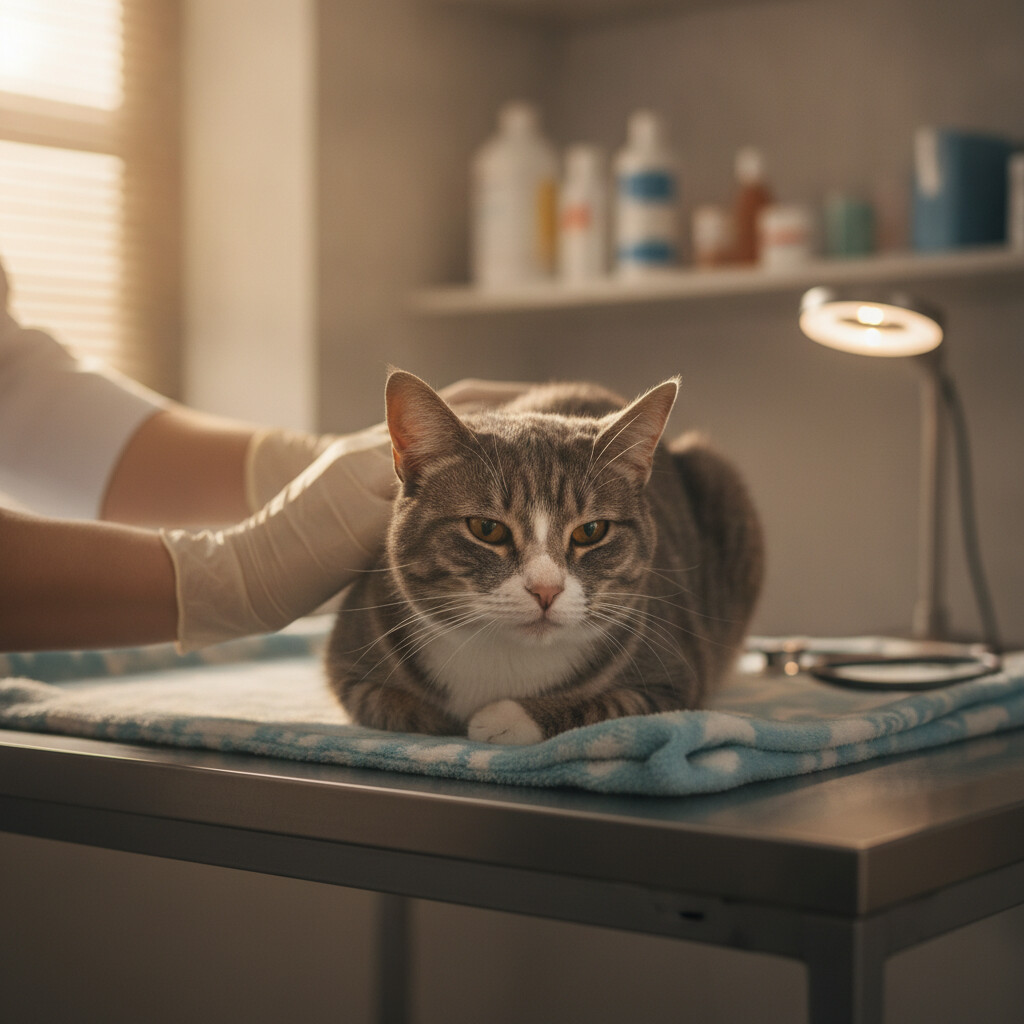
Short answer: a senior cat (generally 10 and up, though some guidelines start at 7) should see a vet twice a year, not once, and those visits should include bloodwork — not just a physical exam. A once-a-year checkup that skips labs will miss most of the diseases that quietly shorten a senior cat’s life, because cats hide illness well and by the time symptoms show up on the outside, the disease is often well established.
Why Senior Cats Need More Frequent Exams Than Younger Cats
A healthy adult cat can reasonably get by on one wellness visit a year. That changes once a cat crosses into the senior bracket, for a simple biological reason: cats age faster than the calendar suggests, and the conditions that show up in older cats — kidney disease, hyperthyroidism, diabetes, dental disease, arthritis — tend to progress gradually and silently before an owner notices anything wrong at home.
The joint AAHA/AAFP Feline Life Stage Guidelines, the reference most US vets work from, recommend twice-yearly wellness visits starting at around age 10, with earlier or more frequent visits for cats with existing conditions. The logic isn’t arbitrary: six months is roughly proportional to a year and a half in a middle-aged human’s life, which is enough time for early kidney disease or a thyroid problem to progress from “invisible on a physical exam” to “showing up in symptoms.”
What a Complete Senior Wellness Exam Actually Includes
A senior wellness visit that’s actually worth the trip covers more than a stethoscope and a weigh-in. What to expect and ask for:
- A full physical exam — weight, body condition score, dental exam, palpation of the abdomen (checking kidney size and shape, looking for masses), joint and mobility assessment, and a listen for heart murmurs or irregular rhythm.
- A complete blood count (CBC) — screens for anemia, infection, and some early signs of illness.
- A serum chemistry panel — the single most useful early-detection tool for a senior cat. It flags kidney values (BUN, creatinine, SDMA), liver enzymes, blood glucose, and electrolytes.
- A total T4 test — checks thyroid hormone levels. Hyperthyroidism is extremely common in older cats and is very treatable when caught early.
- A urinalysis — paired with bloodwork, this is what actually catches early kidney disease. Cats can lose a significant portion of kidney function before blood values alone show it; urine concentration is often the earliest signal.
- Blood pressure measurement — high blood pressure in cats is usually secondary to kidney disease or hyperthyroidism, and left unchecked it can damage the eyes, heart, and kidneys further.
Not every vet runs all of these at every visit by default — some are annual, some are recommended once a baseline is established. It’s a reasonable ask to have your vet walk you through exactly which of these your cat is due for and why.
How Often Should Senior Cats Be Screened?
As a general framework:
- Ages 7–10 (“mature”): annual exam, with baseline bloodwork established around age 7 so later results have something to compare against.
- Ages 10+ (“senior”) and 15+ (“geriatric”): twice-yearly exams with bloodwork at least once a year, more often if a condition is already being managed.
- Cats with a diagnosed chronic condition (kidney disease, hyperthyroidism, diabetes): your vet will set a monitoring schedule specific to that condition, often every 3–6 months.
The baseline matters as much as the frequency. A single blood panel tells you whether a value is inside a normal range; a panel compared against last year’s tells you whether a cat is trending toward trouble while still technically “normal” — which is the whole point of catching things early.
What These Screenings Actually Catch Early
This is where the twice-yearly habit pays for itself. The three most common senior cat conditions — chronic kidney disease, hyperthyroidism, and diabetes — are all manageable, sometimes for years, when caught at an early stage through routine screening. All three are also notoriously easy to miss at home in their early stages, because the visible signs (increased thirst, weight loss, changes in appetite) often don’t show up until the disease has already progressed.
Caught early through bloodwork, chronic kidney disease can often be managed for years with diet and monitoring. Caught late, once a cat is showing obvious symptoms, the kidneys have typically already lost a substantial share of function that isn’t coming back. The same pattern holds for hyperthyroidism and diabetes — earlier treatment is easier treatment, both medically and financially.
When to See a Vet Between Scheduled Exams
Don’t wait for the next scheduled visit if you notice any of the following — these warrant a call regardless of when the last checkup was:
- Sudden or significant weight loss or gain
- A marked increase in thirst or urination
- Vomiting more than once every week or two
- New reluctance to jump, climb stairs, or use the litter box normally
- Noticeable bad breath, drooling, or pawing at the mouth
- Any new lump, swelling, or change in gait
None of these are automatically an emergency, but all of them are worth a vet’s eyes sooner rather than at the next routine visit.
The Bottom Line
A senior cat’s twice-yearly exam is doing real work even when your cat seems perfectly fine — that’s actually the point. If cost is a factor, ask your vet which panels matter most for your cat’s specific risk profile rather than skipping bloodwork altogether; a partial screening still beats none. And keep a simple record of weight and lab values over time — most of the value in senior screening comes from watching the trend line, not any single number.