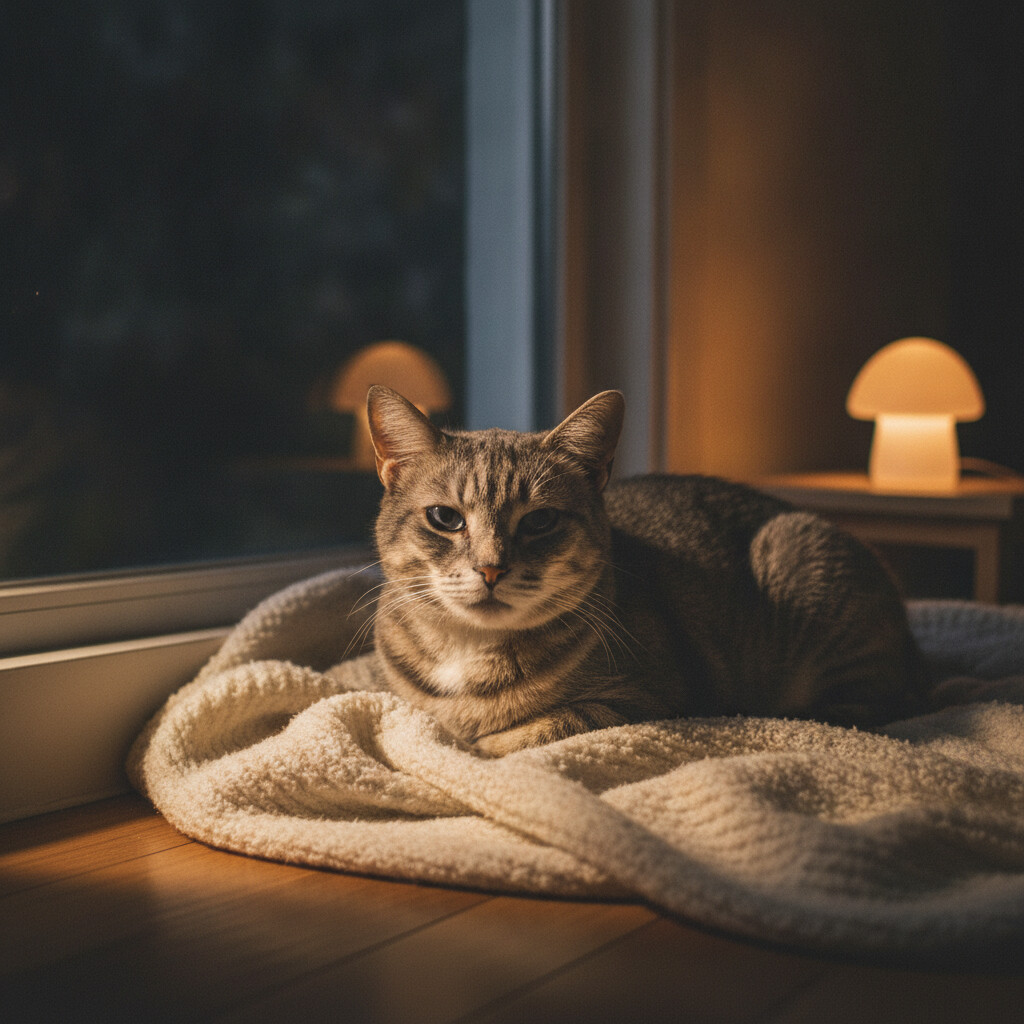
If your senior cat is yowling at 3am for no clear reason, seems lost in rooms they’ve lived in for years, or has started missing the litter box despite no physical illness, cognitive dysfunction is a real possibility — not “just old age” you have to accept without looking closer. Feline cognitive dysfunction syndrome (CDS) is a recognized, age-related decline in brain function, and there’s a meaningful amount you can do once you know what you’re looking at.
What Cognitive Dysfunction Actually Is
CDS is the feline version of what happens in aging human brains — a progressive decline tied to changes in the brain, including the buildup of beta-amyloid plaques, reduced blood flow, and oxidative damage to neurons. It’s not a single disease with one test that confirms it. Vets diagnose it by ruling out other causes of the same symptoms (kidney disease, hyperthyroidism, high blood pressure, chronic pain, sensory loss) and then recognizing a behavioral pattern that fits.
Research on aging cat brains, including work published in veterinary behavior journals over the past two decades, has found measurable brain changes in a large share of cats over 15 — some studies put it above 80% in cats past that age showing at least one sign. It’s under-recognized largely because the symptoms look like “cats being cats” or “cats getting old” until you know the pattern.
Veterinary behaviorists often summarize the signs with the acronym DISHA:
DISHA: The Signs Vets Watch For
- Disorientation — getting “stuck” in corners, staring blankly at walls, forgetting the layout of a familiar home, or seeming confused about where the litter box or food bowl is.
- Interactions (changed) — becoming clingier and following you room to room, or the opposite: withdrawing from people or other pets they used to seek out.
- Sleep-wake cycle changes — sleeping more during the day and pacing, vocalizing, or wandering restlessly at night. This is often the sign that pushes owners to call the vet, because it disrupts everyone’s sleep.
- House-soiling — urinating or defecating outside the litter box despite no urinary or GI illness, often because the cat forgets the box’s location or the steps needed to use it.
- Activity level changes — repetitive behaviors like pacing or excessive vocalizing, reduced grooming, or a general drop in normal exploratory behavior.
Not every cat shows all five. A cat with just disrupted sleep and occasional disorientation can still have CDS — the pattern matters more than hitting every box.
Why It Gets Missed So Often
Two things get in the way of an early catch. First, cats are experts at masking discomfort, so subtle confusion can go unnoticed for months. Second, a lot of these signs overlap almost exactly with other, more common senior conditions — hyperthyroidism causes restlessness and vocalizing, kidney disease can cause litter box lapses, arthritis pain can look like withdrawal and reduced activity. That overlap is exactly why cognitive dysfunction is a diagnosis of exclusion: a vet needs bloodwork and a physical exam first, not a checklist alone.
If your cat is showing any DISHA signs, the right move isn’t to assume dementia — it’s to get the physical causes checked, because several of them are very treatable.
What Actually Helps
There’s no cure, but there’s real, evidence-informed management:
Environmental predictability. Keep furniture, food, water, and litter box locations consistent. Cats with CDS rely heavily on spatial memory, and rearranging the home makes disorientation worse.
More accessible litter boxes. Add boxes on every floor, use low-sided entries, and keep them well-lit at night. A cat that gets confused about where the box is benefits enormously from there simply being more of them, closer to where they spend time.
Night-time lighting. A confused cat wandering a dark house is a stressed cat. Night lights near sleeping areas, hallways, and the litter box reduce disorientation-driven pacing and yowling.
Diet and supplements with actual evidence behind them. Diets enriched with antioxidants, omega-3 fatty acids, and medium-chain triglycerides have shown cognitive benefit in aging-cat studies, and some prescription senior diets are formulated specifically around this research. S-adenosylmethionine (SAMe) has also shown some support in veterinary literature for age-related cognitive decline in cats. Don’t start supplements without running them by your vet, especially if your cat has kidney or liver disease.
Predictable routine and gentle mental stimulation. Short, low-pressure play sessions and food puzzles keep the brain engaged without overwhelming a cat who tires or gets frustrated more easily now. If you haven’t set up any enrichment for your senior cat, solo enrichment ideas built for home-alone cats translate well to older cats too — just lower the intensity.
Medication, in select cases. Selegiline, used off-label in cats based on its use in canine cognitive dysfunction, has some veterinary support for select patients. This is a vet-prescribed decision, not something to pursue independently.
When to See a Vet
Book an appointment — don’t wait to see if it passes — if your cat shows any of the following:
- New or increased nighttime yowling, especially if it’s a change from their normal personality
- Disorientation: getting stuck, staring at nothing, seeming lost in familiar rooms
- Litter box accidents that started recently, particularly in a cat with no history of them
- A sudden increase in clinginess or, conversely, withdrawal from family members or other pets
- Any of the above combined with weight loss, increased thirst, or vomiting — these point toward hyperthyroidism, kidney disease, or diabetes, all of which need bloodwork to rule out or treat
A full senior wellness exam — bloodwork, blood pressure, and a thorough physical — is the right starting point. CDS is a diagnosis reached after those other causes are addressed or ruled out, not a first guess.
The Takeaway
An older cat acting strange overnight, forgetting where the litter box is, or crying into an empty room at 2am isn’t being difficult — their brain is aging, sometimes faster than the rest of them. That’s manageable. Get the physical causes ruled out first, then build a calmer, more predictable, better-lit world for them. Most cats with CDS live comfortably for years afterward when the environment adapts to meet them where they are.