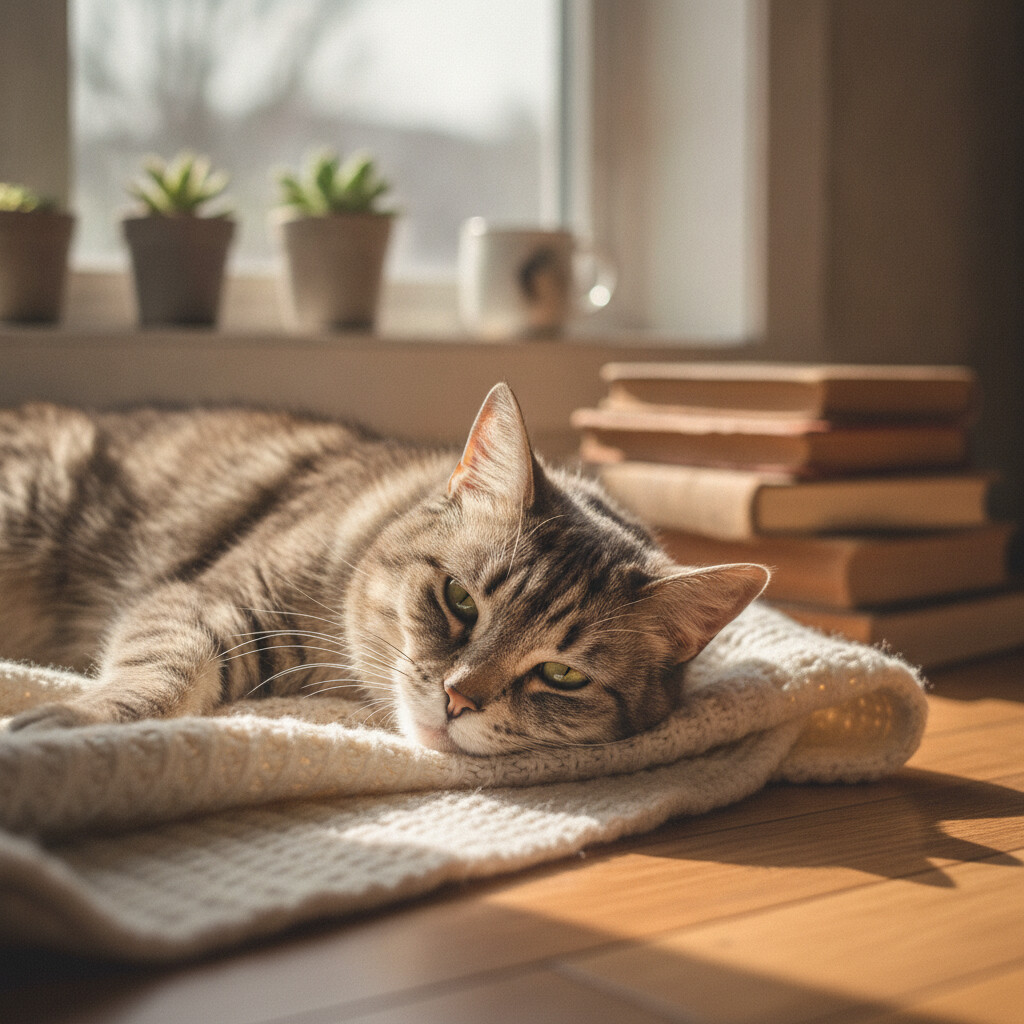
Yes — senior cats still need daily play, just less of it at once. The shift isn’t “less activity because they’re old,” it’s “shorter, lower-impact activity, more often.” A ten-year-old cat doesn’t need the same three-minute laser-chase sprint a kitten wants; they need two or three one-minute bursts spread through the day, pitched at a pace their joints can actually handle.
Why Play Still Matters After Age 10
The AAFP-AAHA Feline Life Stage Guidelines list environmental and physical enrichment as a standing recommendation across every life stage, not something that tapers off once a cat is classified senior. Three concrete reasons it keeps mattering:
- Weight management. Senior cats are prone to both weight gain (from slowing metabolism plus reduced activity) and weight loss (from illness), and regular movement is one of the few levers you control day to day.
- Joint and muscle maintenance. Cats lose muscle mass as they age even without diagnosed arthritis. Low-impact movement helps slow that loss; long stretches of total inactivity accelerate it.
- Cognitive function. Mental stimulation — puzzle feeders, novel scents, short training sessions — is one of the few things that may help slow the progression of feline cognitive dysfunction, the age-related decline that shows up as disorientation, altered sleep, and increased night-time vocalizing.
How Play Needs to Change
The content of play matters less than the shape of it. Adjustments that make the biggest difference for cats past about age 10:
- Shorter, more frequent sessions. Two to five minutes, three to four times a day, beats one 15-minute session that leaves a stiff cat sore afterward.
- Floor-level over vertical. Skip the high leaps off cat trees in favor of toys dragged along the ground or low, gentle up-and-down wand movement. A cat with early arthritis will often still chase eagerly at floor level while quietly avoiding jumps that used to be easy.
- Softer landings. If your cat still likes to pounce from a perch, a folded towel or low ottoman as a landing spot reduces joint impact compared to a hard floor.
- A short warm-up. A minute of slow wand movement before anything faster gives stiff joints a chance to loosen, similar to why you wouldn’t ask an older dog to sprint cold.
Enrichment Beyond Physical Play
Not every senior cat wants to chase things, and that’s fine — mental enrichment carries real weight on its own:
- Floor-level food puzzles instead of ones that require jumping or heavy paw-batting, so cats with sore joints or missing teeth can still work for their food.
- Scent-based enrichment — a few drops of cat-safe herb tincture on a mat, or hiding treats in a low box — engages a sense that doesn’t decline as visibly as hearing or vision often do.
- Predictable routines. Cats with cognitive decline benefit from consistent feeding times, consistent play windows, and minimal furniture rearrangement — familiarity reduces the disorientation that drives some of the nighttime restlessness common in feline cognitive dysfunction.
Signs Your Senior Cat Wants to Play Less Because of Pain, Not Age
This is the distinction worth getting right, because “she’s just slowing down” is sometimes true and sometimes a cover for something treatable. Watch for:
- Stiffness that’s worse right after getting up, then loosens with movement (classic arthritis pattern)
- Hesitating at jumps she used to take without pausing, or taking a longer route around instead of over
- Reacting — a flinch, a low growl, a sharper-than-usual response — when a specific area is touched
- A drop in play interest that happened over days rather than gradually over months
Gradual, mild slowing across many months is consistent with normal aging. A sharper, more sudden drop — especially paired with any of the signs above — points toward pain or a new medical issue rather than simple age-related deceleration. Our guide on keeping an aging cat mobile and comfortable covers home adjustments that can help either way, but the distinction still matters for what you do next.
When to See a Vet
Bring a vet into the conversation if you notice any of the following, rather than assuming it’s “just age”:
- A sudden, rather than gradual, drop in activity or interest in play
- Limping, favoring a limb, or reluctance to use stairs they managed easily before
- Vocalizing, flinching, or hiding when touched in a specific spot
- Weight loss or weight gain alongside the activity change
- New nighttime restlessness, disorientation, or increased vocalizing, which can point toward cognitive decline, hyperthyroidism, or hypertension — all more common in senior cats and all worth ruling out with bloodwork rather than guessing
Senior cats hide pain well, partly because slowing down and hiding are both instinctive responses to feeling unwell. A vet visit that confirms “just age-related wear, nothing acute” is a completely reasonable and common outcome — but it’s a better starting point than assuming that from the couch.
The Takeaway
A senior cat’s play needs don’t disappear, they just need resizing: shorter sessions, floor-level movement, softer landings, and a bit more attention paid to whether a drop in enthusiasm is normal pacing or an early pain signal. Keep offering the invitation to play in a form their body can handle, and treat a sudden change — rather than a slow one — as your cue to get a vet’s opinion instead of writing it off as “just getting older.”