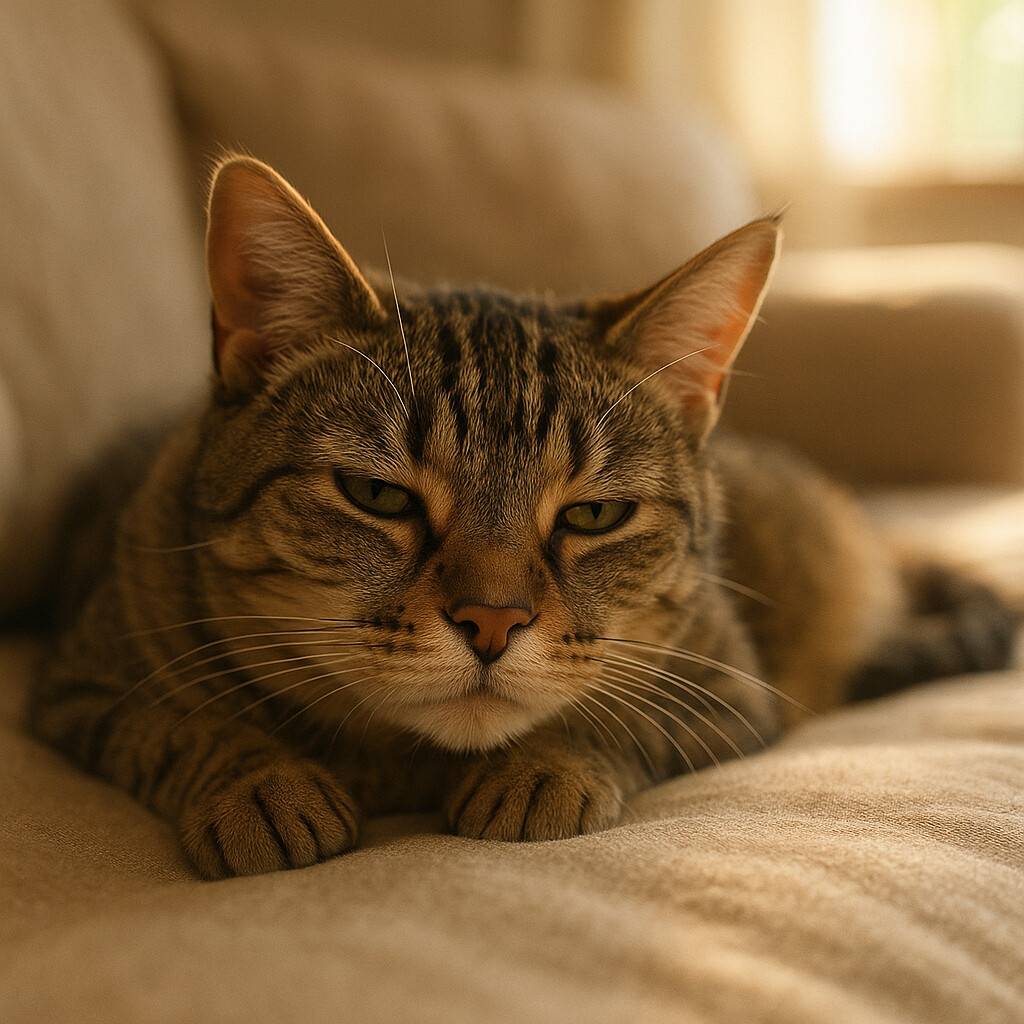
Kidney disease is one of the most common serious health conditions in cats — and one of the most underdiagnosed. Studies suggest that up to 30–40% of cats over age 10 have some degree of chronic kidney disease (CKD), yet many owners don’t catch it until the disease is already in an advanced stage. That’s because cats are experts at hiding illness, and the early symptoms are easy to dismiss as “just getting older.”
This guide breaks down exactly what to watch for, what the numbers mean when your vet runs bloodwork, and what you can actually do to slow the progression.
Why Cats Are So Vulnerable to Kidney Disease
Cat kidneys evolved for a desert-dwelling predator that got most of its hydration from prey. They’re incredibly efficient at concentrating urine — but that efficiency comes at a cost. The kidneys work harder than those of most mammals, which makes them more prone to wear over time.
Add in a lifetime of high-protein diet metabolism, dehydration from dry-food-heavy diets, and genetic predispositions in certain breeds (Persians, Abyssinians, and Siamese have higher rates), and it’s easy to see why CKD is so prevalent in older cats.
Important distinction: Chronic kidney disease (CKD) develops gradually over months or years. Acute kidney injury (AKI) comes on suddenly, often from toxin exposure (lilies, antifreeze, NSAIDs like ibuprofen), severe dehydration, or urinary blockage. AKI is a medical emergency; CKD is a managed condition.
Early Warning Signs Most Owners Miss
The tricky part: cats in Stage 1 or early Stage 2 CKD often look completely normal. By the time obvious symptoms appear, significant kidney function has already been lost. That’s why annual bloodwork for cats over 7 is so critical.
That said, here are the subtle signs worth watching for:
Increased thirst and urination. As kidneys lose their ability to concentrate urine, cats drink more to compensate and urinate more frequently. You may notice the water bowl emptying faster than usual, or a wetter-than-normal litter box. This is often the very first observable symptom.
Weight loss, especially muscle mass. Cats with CKD often lose muscle along the spine and hindquarters before they lose noticeable fat. Run your fingers along your cat’s spine — you should feel the vertebrae with a thin layer of muscle, not sharp protruding bones.
Decreased appetite. Kidney disease causes toxins to build up in the blood (a condition called uremia), which can cause nausea. Your cat may eat less, eat more slowly, or show interest in food but then walk away.
Vomiting. Occasional vomiting that becomes more frequent is a red flag. In kidney disease, cats may vomit bile or undigested food, particularly in the morning or after eating.
Coat and mouth changes. A dull, unkempt coat is a general sign of illness. Uremia can also cause “uremic breath” — a distinctive ammonia or chemical smell from the mouth as the body tries to excrete waste through other pathways.
Lethargy. Less interest in play, sleeping more than usual, and general withdrawal are non-specific but important signs that something is off.
How Kidney Disease Is Diagnosed: What the Numbers Mean
When your vet suspects CKD, they’ll run bloodwork and a urinalysis. Here’s what you’re actually looking at:
BUN (Blood Urea Nitrogen): Urea is a waste product of protein metabolism. Elevated BUN suggests the kidneys aren’t filtering efficiently. Normal range: roughly 14–36 mg/dL. However, BUN can also be elevated from dehydration or high-protein meals, so it’s interpreted alongside other markers.
Creatinine: A more reliable marker than BUN alone. Normal range: approximately 0.8–2.4 mg/dL. When creatinine rises above 2.8, significant kidney damage has usually occurred.
SDMA (Symmetric Dimethylarginine): This is a newer, more sensitive biomarker that can detect kidney function decline earlier than creatinine — sometimes detecting it when up to 40% of kidney function is already lost, versus 75% loss needed for creatinine to rise. Many vets now run SDMA as part of routine senior wellness panels. Normal: below 14 µg/dL.
Phosphorus: As kidneys fail, phosphorus builds up in the blood. Elevated phosphorus accelerates kidney disease progression and is one of the key targets of treatment.
Urinalysis — Urine Specific Gravity (USG): This measures how concentrated the urine is. Healthy cats should produce urine with USG above 1.035. A reading consistently below 1.020–1.025 in a cat that isn’t on IV fluids or diuretics is a significant red flag for CKD.
IRIS Staging: Vets use the International Renal Interest Society (IRIS) staging system (Stages 1–4) based primarily on creatinine and SDMA levels, with substaging based on blood pressure and urine protein. Stage 1 is earliest; Stage 4 is end-stage. Treatment protocols and prognosis differ significantly by stage.
What You Can Actually Do
A CKD diagnosis isn’t a death sentence. Many cats live comfortably for years with appropriate management. Here’s what actually makes a difference:
Hydration is everything. The single most impactful thing you can do for a cat with CKD is maximize fluid intake. Switching from dry food to wet food alone can nearly double your cat’s daily water intake. Add a pet water fountain — running water encourages cats to drink more (this is instinctive behavior, as running water is less likely to be contaminated in the wild). For moderate-to-advanced CKD, your vet may teach you to administer subcutaneous fluids at home — many cat owners learn this skill and it can significantly improve quality of life.
Prescription kidney diets. Renal diets are formulated to be lower in phosphorus and have modified protein levels. The evidence for phosphorus restriction slowing CKD progression in cats is solid. Brands like Hill’s k/d, Royal Canin Renal, and Purina NF are the most studied options. Note: transitioning a sick cat to a new diet requires patience — forcing it can cause food aversion, making things worse.
Phosphorus binders. If diet alone doesn’t control phosphorus, your vet may prescribe binders given with meals (e.g., aluminum hydroxide, calcium carbonate). These bind phosphorus in the gut before it’s absorbed.
Blood pressure management. Hypertension is both a cause and consequence of CKD in cats. Amlodipine is the most commonly used medication. Uncontrolled high blood pressure damages the kidneys further and can cause sudden blindness.
Anti-nausea medications. Maropitant (Cerenia) or famotidine can help manage the nausea and vomiting caused by uremia, improving appetite and quality of life.
Regular monitoring. Once CKD is diagnosed, your vet will want bloodwork every 3–6 months (or more frequently if the disease is progressing) to catch changes early and adjust treatment.
When to Go to the Vet Urgently
The following symptoms in a cat with known or suspected kidney disease require same-day veterinary attention:
- Suddenly stops eating entirely
- Collapse or extreme weakness
- Seizures (a sign of severe uremia or hypertension)
- Complete absence of urination (could indicate a blockage, which is an emergency in male cats)
- Sudden blindness (retinal detachment from hypertension)
The Bottom Line
The best outcome for any cat with kidney disease is early detection. If your cat is over 7, ask your vet to include SDMA testing in the next routine bloodwork panel — it’s the single best early-warning tool available right now. Caught early, the disease is manageable, and cats can maintain a good quality of life for years with the right combination of diet, hydration, and medical support.
Posted by CatLady6