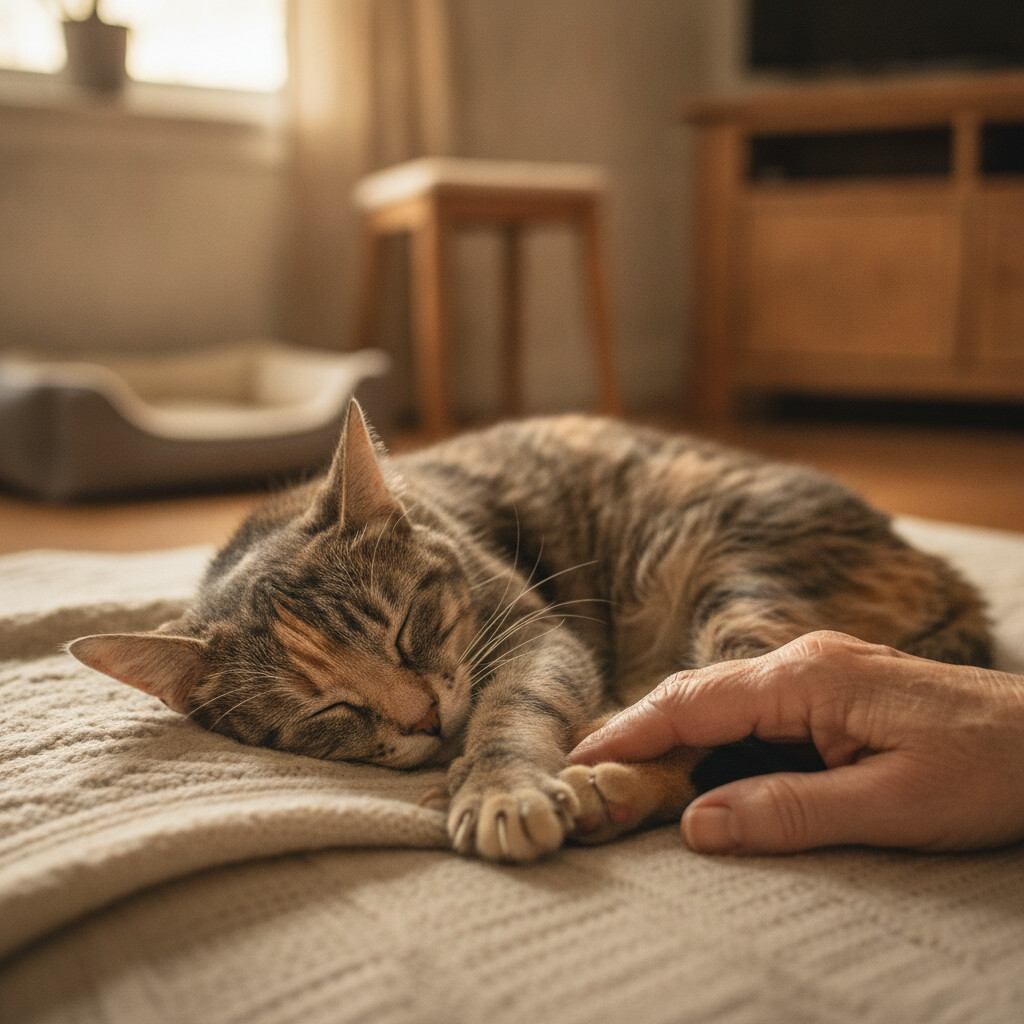
Overgrown claws in senior cats happen because older cats scratch and climb less, so their nails wear down naturally at a much slower rate than a younger, more active cat’s. The result is claws that curl, thicken, and — if left unchecked — can grow directly into the paw pad, which is painful and can lead to infection. The fix is straightforward (more frequent nail checks and trims), but it’s worth understanding why this becomes a senior-cat issue specifically, because the underlying causes often point to other things worth watching too.
Why Claws Overgrow More as Cats Age
A cat’s claws are kept at a manageable length mostly through use — scratching posts, climbing, kneading, and normal play all wear the outer sheath down and expose a fresh, sharper claw underneath. Senior cats do dramatically less of this. Arthritis, reduced muscle mass, and general slowing down all mean less scratching, less jumping, and less of the friction that would otherwise keep nails in check.
On top of reduced activity, aging claws also change structurally. They tend to become thicker, more brittle, and more likely to grow in a tighter curl than a younger cat’s nails. Some of this is simply a function of slower cell turnover in the nail bed as cats get older. The combination — less wear, more curl, thicker growth — is why claw overgrowth becomes noticeably more common in cats past roughly ten to twelve years old, even in cats who were never particularly claw-troublesome earlier in life.
Arthritis deserves a specific mention here, because it works both ways: joint pain makes a cat less willing to scratch and climb (worsening the overgrowth), and overgrown claws that catch on carpet or furniture can make already-painful joints work harder to compensate. If your cat has been diagnosed with — or you suspect — arthritis, claw checks are worth doing more often, not less, since a mobility problem and a claw problem tend to feed each other.
What Happens If It’s Left Unaddressed
An overgrown claw doesn’t just look long — it curls in a circular pattern as it grows, and if it goes unchecked for long enough, the tip curves back around and grows directly into the paw pad. This is genuinely painful, and it’s more common than most owners expect, particularly on the dewclaws (the “thumb” claw higher up on the inner leg), which never touch the ground and get essentially zero natural wear at any age.
Signs an overgrown claw has become a problem rather than just a maintenance task:
- Visible curling where the tip is close to or touching the pad
- Limping or reluctance to walk on a particular paw
- Swelling, redness, or discharge around a claw or pad
- A cat licking or chewing at one paw more than others
- Getting claws snagged on carpet, bedding, or furniture more often
If a claw has already grown into the pad, this needs veterinary attention rather than a home trim — it’s painful to remove, there’s a real infection risk, and a vet may need to sedate or use local anesthesia depending on how embedded it is.
How Often Senior Cats Actually Need Nail Checks
For a younger, active cat, a nail check every few weeks is usually plenty. For a senior cat, especially one with reduced mobility, checking every one to two weeks is a better baseline, with the dewclaws getting specific attention since they’re the most likely to be overlooked and the most likely to overgrow regardless of how active the cat is. We go through the broader routine — brushing, bathing, ears, and claws together — in our complete cat grooming guide, but claws specifically deserve more frequent attention in senior cats than the rest of the grooming routine does.
A quick check takes under a minute: gently press on each toe pad to extend the claw, and look for length, curl, and how close the tip is to curving back toward the pad. Cats who groom themselves less as they age — which is extremely common and covered in more detail in why senior cats groom less — also tend to have claws that pick up more debris and grow a bit more unevenly, which is another reason to check more often rather than less.
Trimming an Older Cat’s Claws Safely
A few things make trimming senior claws different from trimming a younger cat’s:
- Go slow and support the joint. Arthritic paws can be tender even when nothing looks visibly wrong. Support the whole paw rather than just pulling on the toe, and stop if your cat pulls away or seems uncomfortable.
- Trim less at a time, more often. Because senior claws are thicker and more curled, take a smaller amount off each session rather than trying to get a “perfect” length in one go. This also reduces the risk of cutting into the quick, which is harder to see clearly in an older cat’s darker, thicker nail.
- Use sharp, cat-specific clippers. Dull clippers crush rather than cut, which is more likely to cause pain and splitting, especially in brittle senior nails.
- Don’t skip the dewclaws. They’re the ones most likely to be forgotten and most likely to become a real problem since they get no wear at all.
- Get help if your cat won’t tolerate it. A struggling, arthritic senior cat isn’t worth fighting with — a vet tech or groomer can usually do it in a fraction of the time and with far less stress on both of you.
When to See a Vet
Book a vet visit rather than handling it at home if you see a claw that has already curled into the pad, any swelling, discharge, or bleeding around a nail, a limp or reluctance to bear weight on a paw, or if your cat has become too painful or resistant to allow any handling of the paws at all — that resistance itself can be a sign of underlying arthritis or pain that’s worth addressing directly rather than working around.
The Bottom Line
Overgrown claws in senior cats are mostly a byproduct of a normal aging process — less scratching, less climbing, slower nail wear — rather than a sign anything is inherently wrong. But because the consequence (a claw growing into the pad) is genuinely painful and easy to miss until it’s already happened, senior cats need more frequent, gentler claw checks than they did earlier in life. Building it into a short, regular routine is a lot kinder than dealing with it after the fact.