If your older cat’s back legs seem weak, wobbly, or slow, the most common cause is arthritis. But it’s not the only one, and a few of the others are treatable conditions that are easy to miss if you put it down to “just getting old.” One cause is a true emergency. This guide covers how to tell the difference, what your vet will look for, and how to make home easier in the meantime.
The Short Answer
- Sudden weakness or paralysis in one or both back legs, especially with crying, cold paws, or pale or bluish toe pads: Go to an emergency vet now. This can be a blood clot (aortic thromboembolism).
- Gradual weakness over weeks or months: Book a vet appointment within the next week or two. Arthritis is the most likely cause, but diabetes, low potassium, and muscle loss from conditions like hyperthyroidism all need ruling out.
- Walking flat on the hocks (heels touching the ground, “flat-footed”): Get it checked soon. It’s a classic sign of diabetic neuropathy.
Weakness in a senior cat is a symptom, not a diagnosis. Most of its causes respond to treatment.
Arthritis: The Most Common Cause
Osteoarthritis is far more common in cats than most owners realize. In a 2002 study in the Journal of the American Veterinary Medical Association, Hardie and colleagues found X-ray evidence of degenerative joint disease in about 90% of cats over 12. A later study by Lascelles and colleagues (Veterinary Surgery, 2010) found arthritis in at least one joint in roughly 60% of cats aged six and older. Hips, knees, and the lower spine are commonly affected, and all of them can make the back end look weak.
Cats hide arthritis well. You’re less likely to see an obvious limp than these changes:
- Hesitating before jumping, or no longer jumping onto the bed or counter
- Using a chair as a halfway step
- Taking stairs one at a time, or slowly
- Peeing or pooping just outside the litter box, because stepping over the edge hurts
- A scruffy, matted lower back, because twisting to groom is uncomfortable
- Long, thick claws from less scratching and walking (see overgrown claws in senior cats)
Our full guide to arthritis in senior cats goes deeper on signs and management. Treatment has improved a lot in recent years. In 2022 the FDA approved frunevetmab (Solensia), a monthly injection for arthritis pain in cats, and your vet may also discuss other pain medications, weight management, and joint-support diets.
Other Causes Your Vet Will Want to Rule Out
Diabetic neuropathy
High blood sugar over time can damage the nerves to the back legs. The telltale sign is a plantigrade stance: the cat walks or stands with their hocks (the “heel” halfway up the back leg) touching the ground. Other diabetes signs often come first: drinking and peeing more, a big appetite, and weight loss. The good news is that neuropathy often improves, sometimes fully, once blood sugar is well controlled. See our feline diabetes guide for the bigger picture.
Aortic thromboembolism (“saddle thrombus”)
This is the emergency. A blood clot, usually formed in a diseased heart, travels down the aorta and lodges where it splits toward the back legs, cutting off blood flow. It comes on suddenly. The cat may cry out in pain, drag one or both back legs, and have cold back paws with pale or bluish pads. Many of these cats have underlying heart disease that nobody knew about, most often hypertrophic cardiomyopathy. Our article on heart disease in cats covers the quieter warning signs. Outcomes depend heavily on fast treatment and pain control, so don’t wait to see if it passes.
Low potassium (hypokalemia)
Older cats with chronic kidney disease can lose potassium in their urine. Some older cats have an overactive adrenal gland (hyperaldosteronism) that does the same. Low potassium causes general muscle weakness. Back-leg wobbliness is common, and a classic sign is the cat holding their head bent down toward the chest because the neck muscles are too weak to lift it. A simple blood test picks it up, and potassium supplements often bring a quick improvement.
Muscle loss
Cats lose muscle mass as they age (sarcopenia). Some conditions speed that up a lot, especially hyperthyroidism, which burns through muscle even while the cat eats ravenously. If your cat’s spine and hips feel bonier than they used to, that’s worth mentioning to your vet. Our guide to weight loss in senior cats explains what’s normal and what isn’t.
Spinal problems
These are less common than the causes above. Disc disease, spinal arthritis, injury, and tumors (lymphoma is the best-known one in cats) can all affect the nerves to the back legs. Signs may include a hunched back, pain when touched along the spine, a wobbly or “drunken” walk, or changes in bladder and bowel control.
What Your Vet Will Do
Expect a hands-on orthopedic and neurological exam: watching your cat walk, feeling joints and the spine, checking reflexes, and checking pulses in the back legs. Typical next steps include:
- Bloodwork, which covers glucose, kidney values, potassium, and thyroid level (T4)
- Blood pressure, since hypertension often goes along with kidney and thyroid disease
- X-rays of the hips, knees, and spine
- Heart tests (listening for murmurs, and possibly an echocardiogram) if a clot or heart disease is suspected
A short video of your cat walking at home helps a lot. Many cats freeze at the clinic and look completely normal on the exam table. Take a 30-second clip of them walking across the floor and going up a step. If it’s been a while since your cat’s last full workup, our guide to senior cat wellness exams lists what’s worth asking for.
How to Help at Home
Whatever the cause, small changes at home make a real difference for a cat with weak back legs:
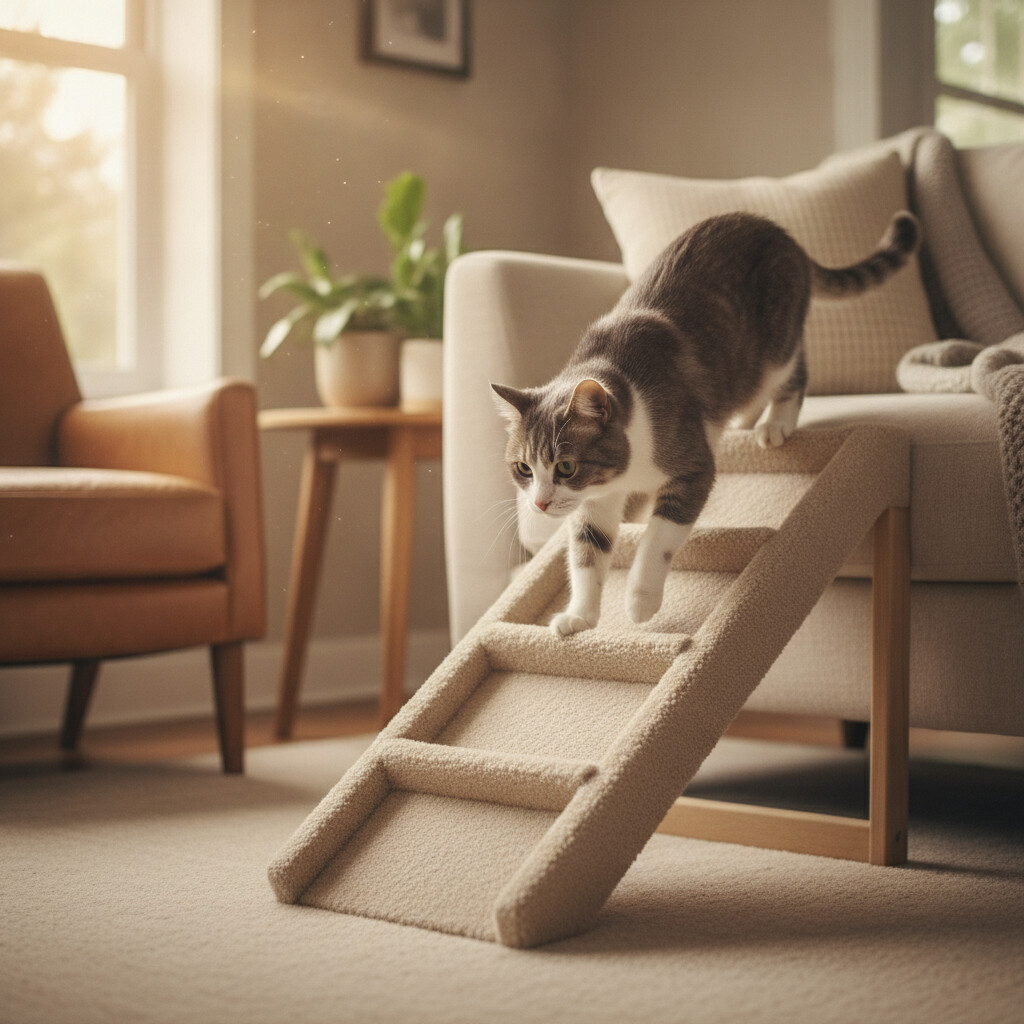
- Add ramps or steps to favorite spots like the bed, sofa, and window ledge. Our guide to ramps and steps for senior cats covers which ones cats actually use.
- Lower the litter box entry. A box with an entry of 3 inches or lower, or a storage tub with a cut-down side, stops the accidents that come from painful stepping. See the best litter boxes for senior cats with mobility issues.
- Cover slippery floors. Rugs or yoga mats on the routes your cat uses most, especially near food, water, and the litter box, give weak legs some grip.
- Put everything on one level. If stairs are a struggle, keep food, water, a litter box, and a warm bed on the floor where your cat spends most of their time.
- Keep them lean. Every extra pound puts more load on sore joints. Don’t cut food without a vet plan, though. Older cats lose muscle easily, and rapid weight loss is risky.
- Keep them moving gently. Short, low play sessions with a wand toy along the floor help maintain muscle without jumping.
- Help with grooming. Gently brush the lower back and hindquarters your cat can no longer reach.
When to See a Vet
Go to an emergency vet immediately if:
- Weakness or paralysis in the back legs comes on suddenly
- Your cat is crying out, panting, or breathing with their mouth open
- The back paws feel cold, or the toe pads look pale, gray, or blue
- Your cat can’t stand, or can’t pee
Book an appointment within a week or two if:
- You notice gradual weakness, wobbliness, or less jumping
- Your cat starts walking flat on their hocks
- They’re drinking and peeing more, losing weight, or eating more than usual
- Litter box accidents start, or the lower back is matted and unkempt
- Their head droops down toward their chest
Back-leg weakness in an older cat is common, but it isn’t something to simply accept. Many cats get much more comfortable once the cause is found, so it’s worth getting a diagnosis.