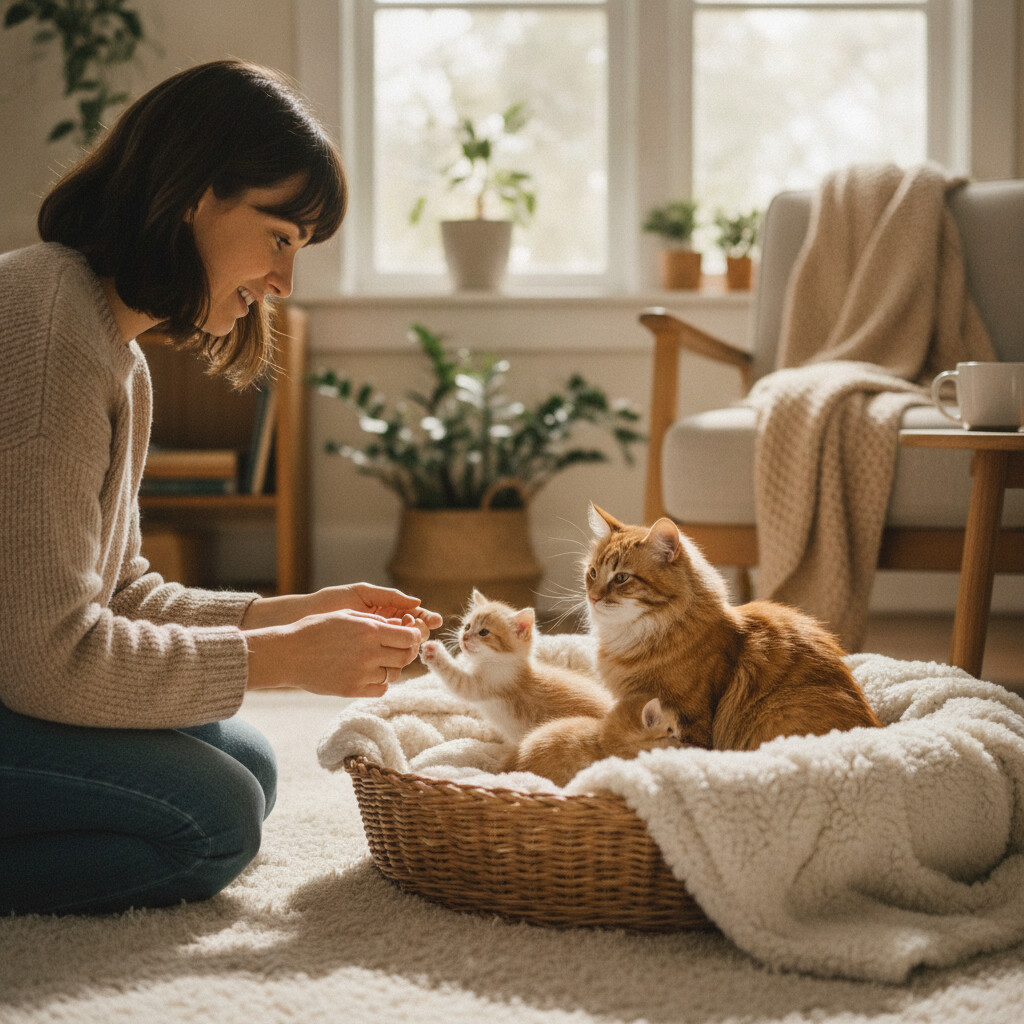
A reputable cat breeder health-tests both parents for known breed-specific conditions, lets you meet the mother and see where kittens are raised, and never pressures you to buy before you’re ready. If a breeder can’t or won’t do those three things, that’s your answer — keep looking.
Buying from a breeder is a legitimate way to get a cat, particularly if you want a specific breed’s known temperament or have your heart set on a pattern like a Bengal’s coat or a Ragdoll’s build. It’s also an area with real risk: backyard breeding and outright scams are common enough that knowing what to check protects both your wallet and the health of the cat you bring home.
Why the Breeder Actually Matters
Purebred cats carry breed-specific genetic risks that a careless breeder can pass straight to you. Maine Coons and Ragdolls are prone to hypertrophic cardiomyopathy. Persians and related breeds carry a meaningfully higher rate of polycystic kidney disease. Devon Rexes and Sphynxes have their own catalog of inherited conditions. None of this means you should avoid these breeds — it means the breeding stock needs to be screened for them before kittens are ever produced.
This is where the breeder’s practices matter more than the breed itself. A cattery that does genetic and cardiac screening on breeding cats is filtering out much of that risk before it reaches a litter. A breeder who skips screening to save money or turn out more litters is passing the risk — and often the vet bills — on to you.
What a Reputable Breeder Actually Does
Look for these markers, and don’t settle for a breeder who’s missing more than one:
Health testing and documentation. Ask for proof of genetic and cardiac screening relevant to the breed, not just a verbal assurance. Reputable breeders can produce paperwork — often from a diagnostic lab or a cardiologist — without hesitation.
Registration with a recognized body. Organizations like The International Cat Association (TICA) or the Cat Fanciers’ Association (CFA) set breed standards and require member breeders to follow ethical guidelines. Registration alone isn’t a guarantee of quality, but a breeder who’s never heard of these organizations is a red flag on its own.
Kittens raised in the home, not a barn or outbuilding. Kittens raised underfoot in a household get early exposure to normal noise, handling, and other pets — all of which shapes a well-adjusted adult cat. A breeder who won’t let you see where kittens are actually kept is hiding something, usually the conditions.
A willingness to let you meet the mother. The queen’s temperament and condition tell you a lot about the kitten’s genetics and upbringing. If a breeder has kittens available but the mother is conveniently unavailable to meet, ask why — and be skeptical of the answer.
A spay/neuter contract or limited registration. Ethical breeders generally require pet-quality kittens to be spayed or neutered, and use limited registration to prevent uncontrolled backyard breeding down the line. This isn’t a breeder being difficult — it’s a sign they care what happens to the line after the sale.
A willingness to take the cat back. Most reputable breeders will state, often in the contract, that they’ll take the cat back at any point in its life if you can no longer keep it. This tells you they see the cat as their responsibility beyond the sale, not just a transaction.
Red Flags That Should End the Conversation
- Multiple breeds or “designer” combinations always available. Ethical breeding programs are usually focused on one or two breeds, with litters on a planned schedule — not a rotating inventory.
- No health testing, or testing you can’t verify. “They’re all healthy” is not documentation.
- Kittens available younger than 12 weeks. Reputable breeders keep kittens with their mother and littermates until at least 12 weeks — earlier separation is linked to behavioral problems later, including inappropriate biting and poor litter box habits.
- Pressure to pay a deposit sight unseen, or to wire money before any contact beyond messages. This is the single biggest scam pattern: fake listings using stolen photos, a “shipping fee” that keeps growing, and a kitten that never arrives.
- No contract at all. A written agreement covering health guarantees, spay/neuter terms, and return policy protects you as much as it protects the breeder.
- Prices dramatically below market for the breed. Health testing, vet care, and proper socialization cost money. A price that seems too good usually means one of those was skipped.
Questions to Ask Before You Commit
- Can I see the health testing results for both parents?
- Can I meet the mother, and can I see where the kittens are raised?
- What’s your policy if the cat develops a health issue linked to genetics?
- Are you registered with TICA, CFA, or an equivalent body?
- What happens if I can no longer keep the cat, at any point in its life?
- Can I speak to a previous buyer?
A breeder who answers these plainly, without getting defensive, is doing this the right way.
Breeder Isn’t the Only Path
If a specific breed’s temperament matters more to you than a kitten’s exact bloodline, it’s worth knowing that breed rescues exist for nearly every popular breed, and general shelters occasionally place purebred or mixed cats with a strong resemblance to a given breed’s traits. Comparing options honestly — including kitten vs. adult cat and what adopting a rescue cat actually involves — can save you from assuming a breeder is the only route to the cat you want.
The Bottom Line
The best protection against a bad breeder is patience: a reputable one won’t rush you, and neither should you rush yourself. Ask for documentation, insist on meeting the mother, and walk away from anyone who treats those requests as an inconvenience. Once you bring a kitten home, raising kittens week by week and getting the right supplies lined up in advance will matter a lot more to how the first few months go than which breeder you chose — as long as you chose a good one.