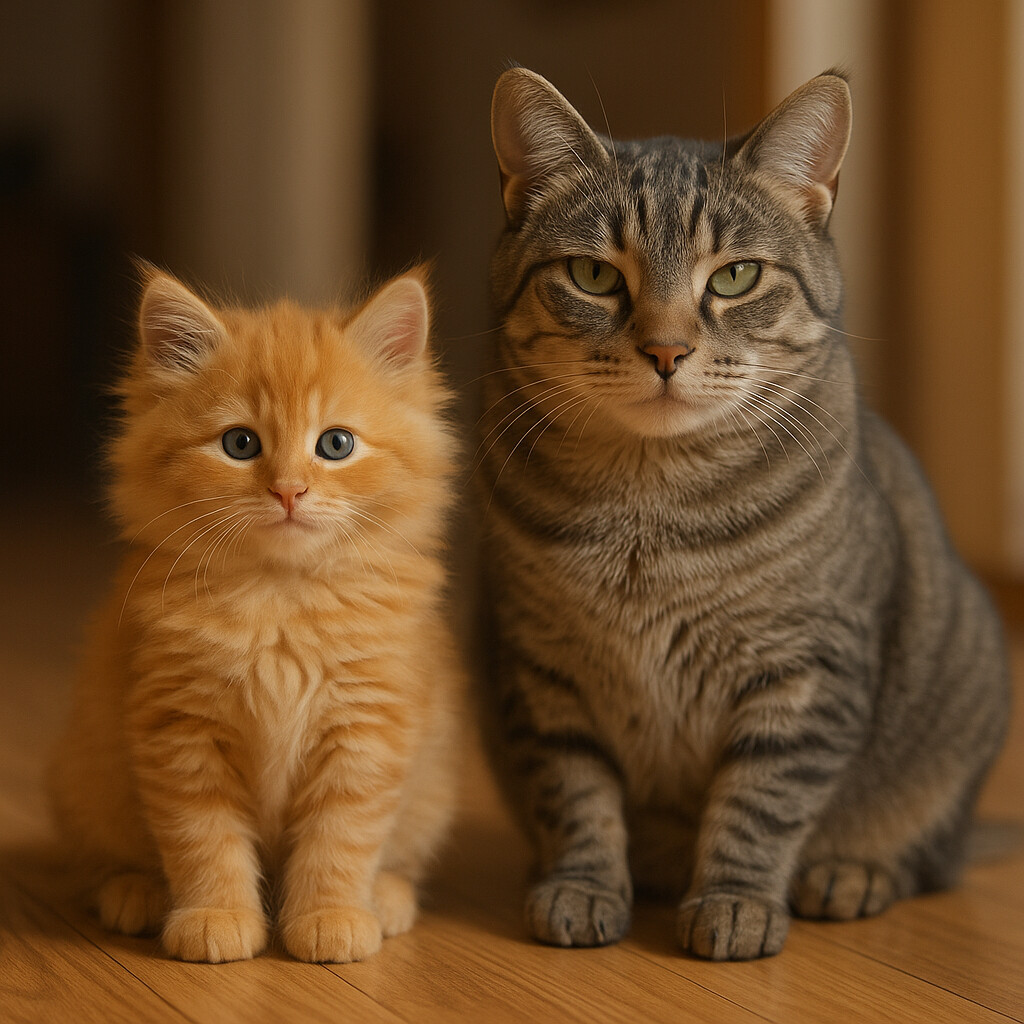
You’ve decided to get a cat. Now comes the real question: do you adopt a kitten or an adult cat? This isn’t a trivial decision — it affects your lifestyle, your schedule, and even your cat’s long-term wellbeing. There’s no universally right answer, but there are clear patterns that make one a better fit depending on your situation.
Here’s a detailed, honest breakdown so you can make the call with confidence.
The Case for Getting a Kitten
Kittens are irresistible — everyone knows that. But beyond the cuteness factor, there are genuine advantages to starting with a young cat.
You shape their personality (partially). Socialization during the first 2–7 weeks of life is the most critical window, and by the time you bring a kitten home at 8–12 weeks, that window is mostly closed. But the period from 8 weeks to about 6 months is still highly formative. Kittens raised in busy households, handled regularly, and exposed to children, other pets, and normal household noise during this period tend to be more confident and adaptable adults. If you want a cat that’s comfortable with dogs or kids, starting young gives you more influence over that outcome.
Easier to introduce to existing pets. A young kitten is less threatening to resident cats and dogs than an adult. Resident pets can’t “catch” a kitten since the kitten is running and playing, not challenging anyone. That said, introductions still need to be gradual and careful — a kitten can be injured or traumatized by an overly rough dog or a territorial adult cat.
Longer time together. Indoor cats typically live 12–18 years, with many reaching their late teens or even 20+ with good care. Getting a kitten means more years together — potentially 15–18 years from the start.
You know their full history. You’re there from nearly the beginning. You know what vaccinations they’ve had, what they’ve eaten, what health challenges they’ve faced.
The Real Downsides of Kittens
Let’s be honest about what kittens actually involve:
They are exhausting. Kittens aged 8–16 weeks are relentlessly active. They will wake you at 3 AM. They will knock everything off every surface they can reach. They will find every small opening in your home and explore it. Plan for this.
Kitten-proofing is serious work. Kittens can and do die from household hazards that adult cats typically ignore — dangling blind cords, open toilet lids, recliner chairs, washing machines left open, rubber bands and hair ties swallowed. Before a kitten comes home, you need to treat your house like a toddler is moving in.
Two kittens is often better than one — but that means two cats. Single kittens raised alone tend to be more anxious, more likely to bite hard during play, and more likely to cause behavioral problems in adulthood. A bonded pair of kittens who grow up together are often calmer, better socialized, and easier to live with. If you’re adopting one kitten, seriously consider two. But be prepared: two cats means two vet bills, two personalities, and twice the chaos during year one.
Their adult personality isn’t fully known. A 10-week-old kitten can’t tell you whether they’ll grow up to be a lap cat or an aloof one, whether they’ll be anxious or laid-back. Genetics play a big role, but there’s genuine uncertainty.
Kittens need more vet visits. The first year involves multiple rounds of core vaccinations, spay/neuter surgery, fecal tests, and potentially addressing parasites or minor infections. Budget $300–$600+ for first-year vet costs on top of adoption fees.
The Case for Getting an Adult Cat
This is wildly underrated, and the shelter system is full of wonderful adult cats waiting for a second chance.
What you see is what you get. An adult cat’s personality is set. You can meet them, spend time with them, and get a genuine sense of whether they’re a lap cat or an independent type, whether they’re comfortable with noise, whether they’ll tolerate being picked up. Many shelters and rescues can give you detailed behavioral histories. This is a massive advantage if you have specific needs — a calm cat for an apartment, a social cat for a household with kids, a cat that can be left alone for longer stretches.
Lower maintenance during adjustment. Adult cats don’t need round-the-clock supervision like kittens do. They’re not going to chew through your laptop charger or climb into the back of your refrigerator. Most adults adopted from shelters settle in within a few days to a few weeks, not months.
Already litter-trained. This sounds minor but it genuinely isn’t. Virtually all adult cats from shelters are reliably litter-trained. Kittens can have accidents while learning, especially very young ones.
Lower energy demands. If you work full-time and want a cat that can handle 8–10 hours home alone without destroying the house, a calm 3–5 year old cat is a much better fit than a kitten.
You’re giving a home to a harder-to-place animal. Kittens get adopted quickly. Adult cats — especially those over 5 — can sit in shelters for months or years. If you’re drawn to the idea of rescue, adopting an adult cat means you’re genuinely saving an animal that might otherwise be overlooked.
The Real Downsides of Adult Cats
Unknown early history. For cats from shelters, you may not know how they were raised, what traumas they experienced, or what their early medical history looks like. Many behavioral quirks (fear of men, aggression around food, hiding under beds for weeks) are rooted in experiences you can’t fully undo.
Adjustment takes longer for some. A scared adult cat may hide for 1–4 weeks before they start to trust you. This isn’t unusual and doesn’t mean something is wrong — but it requires patience, especially for first-time cat owners who expect immediate connection.
Potentially shorter time together. Adopting a 7-year-old cat means you may have 8–11 years together, not 15+. For some people this doesn’t matter at all; for others it does.
May come with existing health issues. Senior cats (10+) may already have early dental disease, early kidney changes, or other conditions. This doesn’t mean they’re less worthy of love — but factor in potential vet costs.
The Decision Framework
Here’s a practical way to think about it:
- Under 2 years old, work from home, no other pets, want a long relationship: Kitten (ideally a pair) is a good fit.
- Full-time job, moderate energy, clear personality preferences: Adult cat aged 2–6 is often the sweet spot — past the chaos of kittenhood, still plenty of life ahead.
- Want maximum calm, minimal adjustment, just want a companion: Adult cat aged 3–8, ideally from a foster home where behavior is well-documented.
- Have a dog at home: Either can work, but a kitten raised with a dog often adapts more easily. Alternatively, adopt a shelter cat already confirmed to be dog-friendly.
- Have young children: Both can work, but an adult cat with a known, gentle temperament is lower risk than a wildcard kitten.
If you’re thinking about setting up an outdoor-access space for your new cat once they’re settled in, the transition from indoor to outdoor life is something worth planning for from day one — whether you’re getting a kitten or an adult cat.
Bottom Line
Neither choice is wrong. Kittens give you more time and more influence over their development. Adult cats give you certainty and a lower daily-care burden. The shelter system is full of extraordinary cats of every age — the right one is whichever fits your actual life, not just your idea of what a cat should be.
Posted by CatLady6