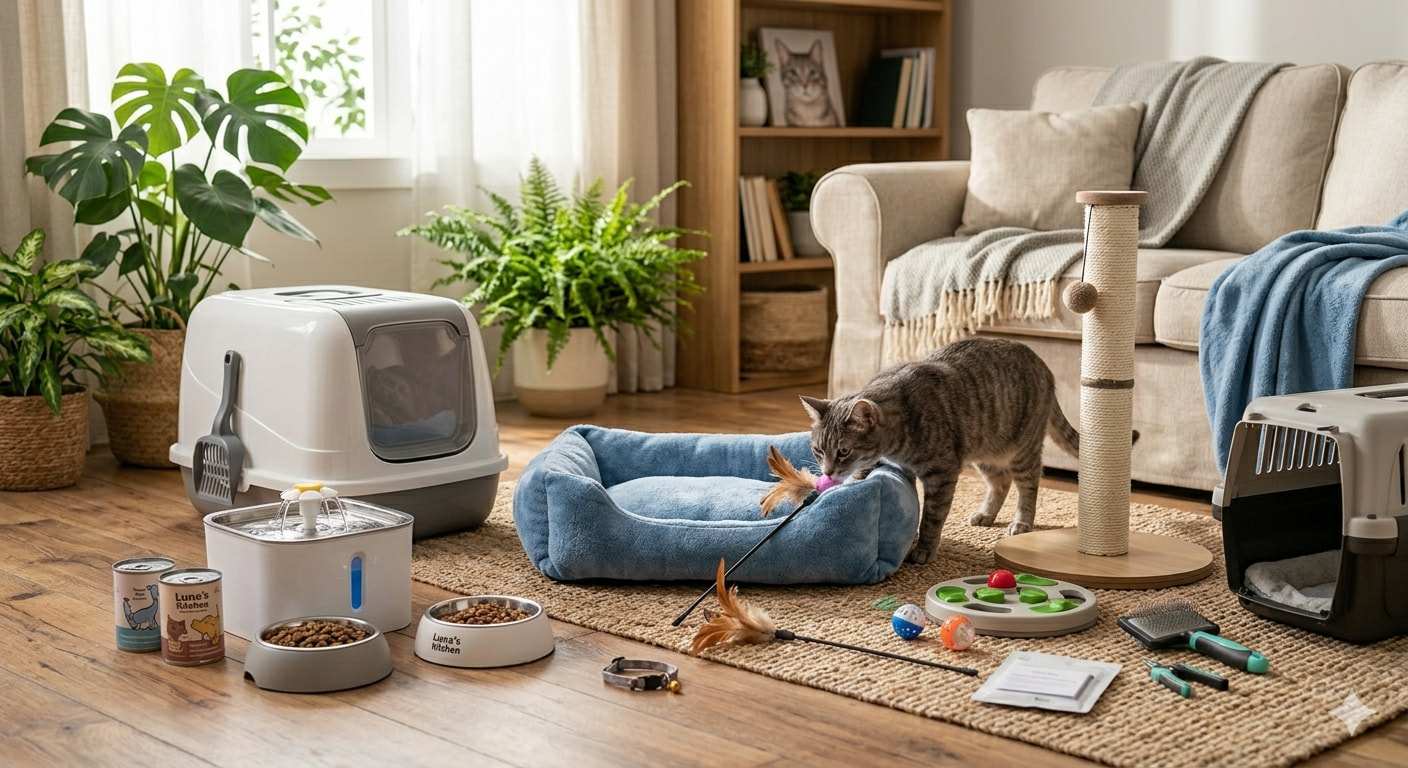
Most new cat owners either overbuy (elaborate cat furniture before they know their cat’s personality) or underbuy (miss the basics that make the first weeks go smoothly). Here’s the actual list — what you genuinely need before bringing a cat home, and what can wait.
The Litter Setup
This is the most important thing to get right. A cat that won’t use its litter box consistently makes everything harder.
What you need:
- At least two litter boxes — the standard recommendation from the American Association of Feline Practitioners (AAFP) is one per cat plus one. For a single cat, that means two. This reduces the chance of accidents and is especially important if your home has multiple floors.
- A litter the cat will actually use — unscented, clumping litter is the safest default. Cats have a strong preference for fine-grained, unscented substrate. Heavily scented litters put off many cats. If you’re switching from what the shelter or breeder used, transition gradually. Our cat litter comparison guide covers clumping, crystal, biodegradable, and self-cleaning options in detail.
- A litter scoop — you’ll be using it daily. A sturdy one with a fine mesh is worth the few extra dollars.
- A mat under the box — reduces litter scatter on your floors.
The box itself: most adult cats prefer uncovered boxes. Covered boxes trap odours inside, which bothers cats far more than it bothers us. If you prefer covered for aesthetics, at minimum get the largest size available — a cramped box is a reason a cat avoids it.
Food and Water
Food: Start with whatever the cat was eating before you brought them home. Switching food immediately on top of the stress of a new environment is a recipe for digestive upset. Get a small bag of their current food, then transition slowly over 7–10 days if you want to change.
For ongoing feeding, you’ll need:
- Wet food — cats are obligate carnivores with a low thirst drive; they evolved to get most of their moisture from prey. Wet food significantly increases daily water intake, which matters most for urinary and kidney health. Even a mixed diet (wet plus dry) is meaningfully better than dry-only.
- Dry food — useful for free-feeding if your cat self-regulates, or as the base of a measured meal. Not inherently harmful, but shouldn’t be the sole food source if you can avoid it.
- Food bowls — stainless steel or ceramic, not plastic. Plastic bowls can harbour bacteria in micro-scratches and have been associated with feline acne (chin breakouts). Flat, wide bowls are preferable; many cats dislike whisker contact with deep bowls.
Water: A fresh bowl alongside the food bowl is the minimum. Many cats drink more readily from running water — a simple cat water fountain costs around $25–$40 and makes a real difference for cats who are reluctant drinkers. Hydration matters especially in older cats and any cat prone to urinary issues.
A Safe Space First
Before anything else, prepare one room where your cat will decompress for the first few days. New cats — even confident ones — benefit from starting small. A bedroom or bathroom with their litter box, food, water, a hiding spot, and a place to sleep is enough. Don’t force exploration.
What you need for this space:
- A covered hiding spot — a cardboard box on its side works perfectly. Cats feel safer when they can observe from concealment.
- A soft bed or blanket they can claim as their own. If you can, bring something with the scent of their previous environment (shelter, breeder, foster home) — familiar smells reduce stress during transition.
For a full week-by-week guide to the first month, see The First 30 Days with a New Cat for what to expect and how to pace the introduction.
Scratching and Vertical Space
Cats scratch. This is not a behaviour problem — it’s a biological need. Scratching maintains claw health, stretches muscles, and marks territory visually and through scent glands in the paws. Cats that don’t have an approved outlet will use your furniture.
What you need:
- A scratching post, minimum 90 cm (about 36 inches) tall — cats scratch at full stretch; a short post won’t get used. Sisal rope is the most popular substrate; cardboard is a close second and some cats strongly prefer it. Carpet-covered posts can confuse cats about which carpet is acceptable to scratch.
- Placement matters — put the post where the cat already wants to scratch (near their sleeping area, near high-traffic areas). A post tucked in a corner nobody visits won’t be used.
If you have the space, a cat tree with a high perch is worth adding early. Vertical space is how cats establish security — being able to get up high and observe is calming, especially in a new environment.
Carrier
Get this before day one. You need it to bring the cat home, and you’ll need it for every vet visit. The carrier that’s already familiar is far less stressful for the cat than being stuffed into a strange box on short notice.
Choose a hard-sided carrier with both a top-opening and a front door — this lets the vet examine your cat without fully removing them, which is much less stressful. Leave the carrier out in your home with a blanket inside so it becomes a normal piece of furniture rather than a scary object that only appears before vet trips.
Grooming Basics
Short-haired cats: A rubber brush or fine-toothed comb once a week is sufficient for most. More important is getting them comfortable being handled — ears, paws, teeth — early.
Long-haired cats: Daily or every-other-day brushing is usually necessary to prevent matting. A slicker brush and a dematting comb are worth having from day one.
Nail trims: A small pair of pet nail clippers and starting to handle paws early makes a meaningful difference to long-term cooperation.
What You Don’t Need Immediately
- Elaborate interactive toys — a cardboard box and a piece of string will tell you more about your cat’s play style before you invest in puzzle feeders and automated toys.
- Cat grass or catnip — cats under 6 months often don’t respond to catnip at all (the response is genetic and doesn’t develop until adulthood).
- A second cat — if you’re considering getting two cats, it’s much easier to introduce them properly than to manage a botched introduction. Get your first cat settled before adding another.
- Calming sprays or supplements — most cats settle without intervention given time and space. Introduce these only if you’re seeing signs of persistent stress after a couple of weeks.
The Short List
If you want the essentials stripped to the minimum before pickup day:
- Two litter boxes + unscented clumping litter + scoop
- Stainless or ceramic food and water bowls
- One week’s supply of their current food
- A carrier
- A cardboard hiding box or igloo bed
- A tall scratching post
- A blanket or bed they can claim
Everything else can wait until you know your cat.