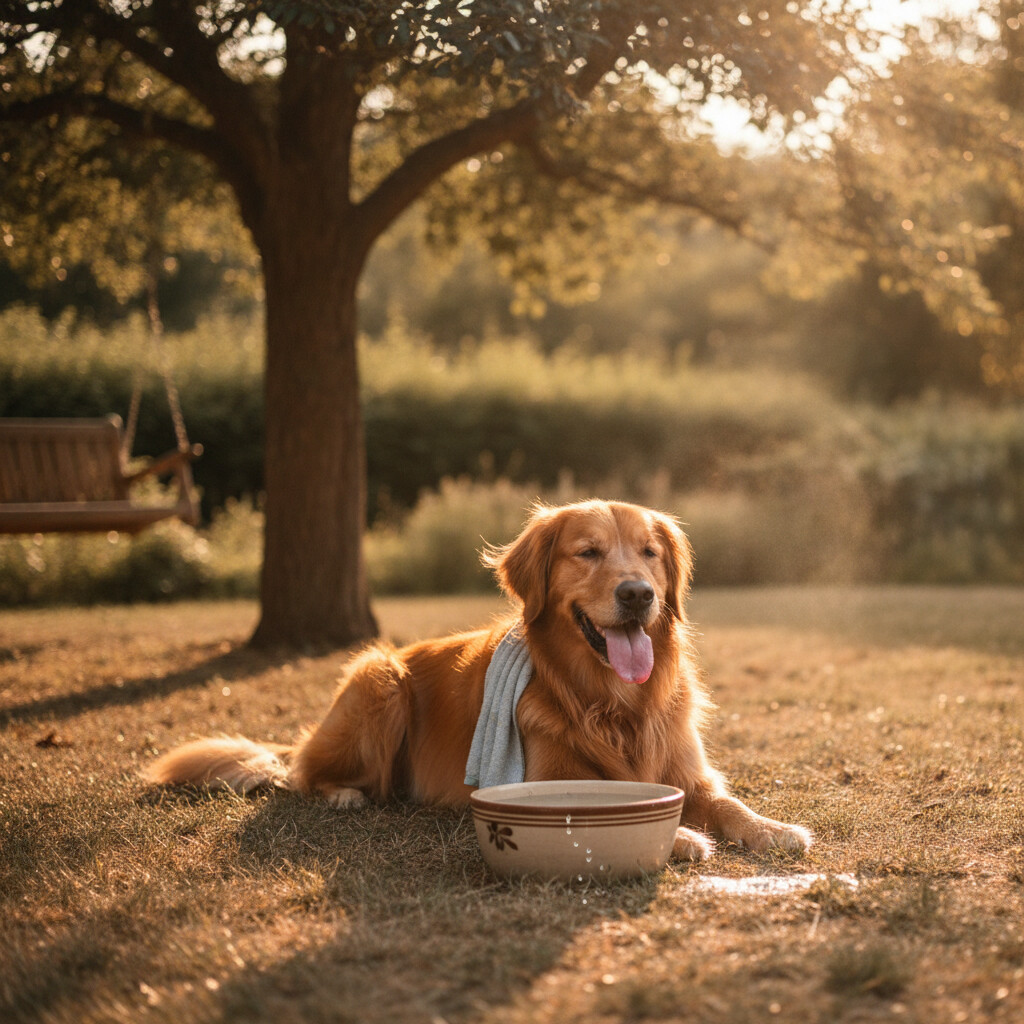
Heatstroke can kill a dog in under 30 minutes, and it doesn’t take a locked car to cause it — a brisk walk on a warm, humid afternoon is enough for the wrong dog. If your dog is panting hard, glassy-eyed, or won’t stop drooling after time outside, you need to know the difference between “just hot” and “medical emergency” right now, not after a Google spiral.
The short version: dogs cool themselves almost entirely through panting, because they barely sweat. When the air is too hot or too humid for panting to work, their body temperature climbs unchecked. Above about 106°F (normal is 101–102.5°F), organ damage starts. This is not a “give them some water and wait” situation — it’s a “get to a vet” situation.
What Heatstroke Actually Looks Like
Early signs are easy to miss because they look like normal hot-weather behavior:
- Heavy panting that doesn’t slow down when you offer shade and water
- Bright red or purple gums and tongue
- Thick, ropey drool
- Wobbliness or a drunken-looking walk
- Refusing to move, or collapsing
As it progresses: vomiting, diarrhea (sometimes bloody), seizures, and eventually collapse or unconsciousness. A 2020 study of UK dogs under veterinary care (Hall, Carter & O’Neill, published in Scientific Reports) found that dogs showing neurological signs — stumbling, seizures, collapse — had significantly worse outcomes than dogs caught at the panting-and-drooling stage. Catching it early is the single biggest factor in survival.
Which Dogs Are Most at Risk
That same study is one of the largest of its kind, and it identified clear risk patterns worth knowing:
- Flat-faced (brachycephalic) breeds — Bulldogs, Pugs, French Bulldogs, Boxers — have narrower airways and can’t pant as efficiently. They were dramatically overrepresented in heatstroke cases and deaths.
- Larger, heavier dogs generate more metabolic heat relative to their surface area.
- Dogs over 10 years old and dogs with existing respiratory or heart conditions have less physiological buffer.
- Dogs exercised during exertion — the majority of cases in the study happened during or shortly after activity, not just from being left in heat.
If your dog checks more than one of these boxes, treat “warm day” as a bigger deal than you might for a lean, young, short-nosed-free dog.
First Aid: What to Do in the First Five Minutes
If you suspect heatstroke, the American Veterinary Medical Association’s guidance is consistent on one point: start cooling immediately, then get to a vet — don’t choose one or the other.
- Move the dog out of heat — shade, air conditioning, anywhere cooler.
- Apply cool (not ice-cold) water to the body — soak towels or use a hose, focusing on the belly, armpits, groin, and paw pads where blood vessels sit close to the skin. Ice water can cause blood vessels near the skin to constrict, trapping heat inside — cool, not freezing, is the target.
- Use a fan on the wet fur to speed evaporation.
- Offer small amounts of water if the dog is alert enough to drink on its own. Don’t force water into a dog that’s disoriented — aspiration is a real risk.
- Call your vet or an emergency clinic while you’re cooling the dog, and go in even if they seem to be recovering. Internal organ damage from heatstroke can show up hours later, including kidney failure and clotting problems that aren’t visible from the outside.
Prevention: The Boring Part That Actually Works
Most heatstroke cases are preventable, and the fixes are unglamorous:
- Walk during the cooler parts of the day — early morning or after sunset — once temperatures climb past the mid-70s°F, especially with any humidity.
- Test pavement with your hand for 7 seconds before a walk. Too hot for your palm means too hot for paw pads, and it also means the air just above the ground — where your dog’s whole body is — is hotter than the temperature on your phone.
- Never leave a dog in a parked car, even briefly, even with windows cracked. Car interiors climb far faster than most people expect, in minutes, not hours.
- Bring water on every outing longer than a quick bathroom break, and offer it before your dog seems desperate for it.
- Know your dog’s exercise tolerance — a Bulldog and a Border Collie do not have the same heat budget on the same walk, even side by side. For guidance on how much activity is appropriate for your dog’s breed and age, see our guide on how much exercise your dog actually needs.
When to See a Vet
Any dog showing heavy unrelenting panting, wobbliness, vomiting, or collapse after heat exposure needs emergency veterinary care — not a wait-and-see approach. Even dogs who seem to bounce back after cooling should be checked, because heatstroke can cause organ damage that isn’t obvious for 24–72 hours. If your dog is acting strangely after time in the heat and you’re not sure what you’re seeing, our guide to reading your dog’s body language can help you spot the early distress signals before they escalate — but when in doubt, a phone call to your vet costs nothing and a delay can cost everything.
The bottom line: heatstroke moves fast, and the dogs most at risk are often the ones owners least expect — not just the ones stuck in cars, but the ones out for a normal walk on a day that felt fine to the person holding the leash.