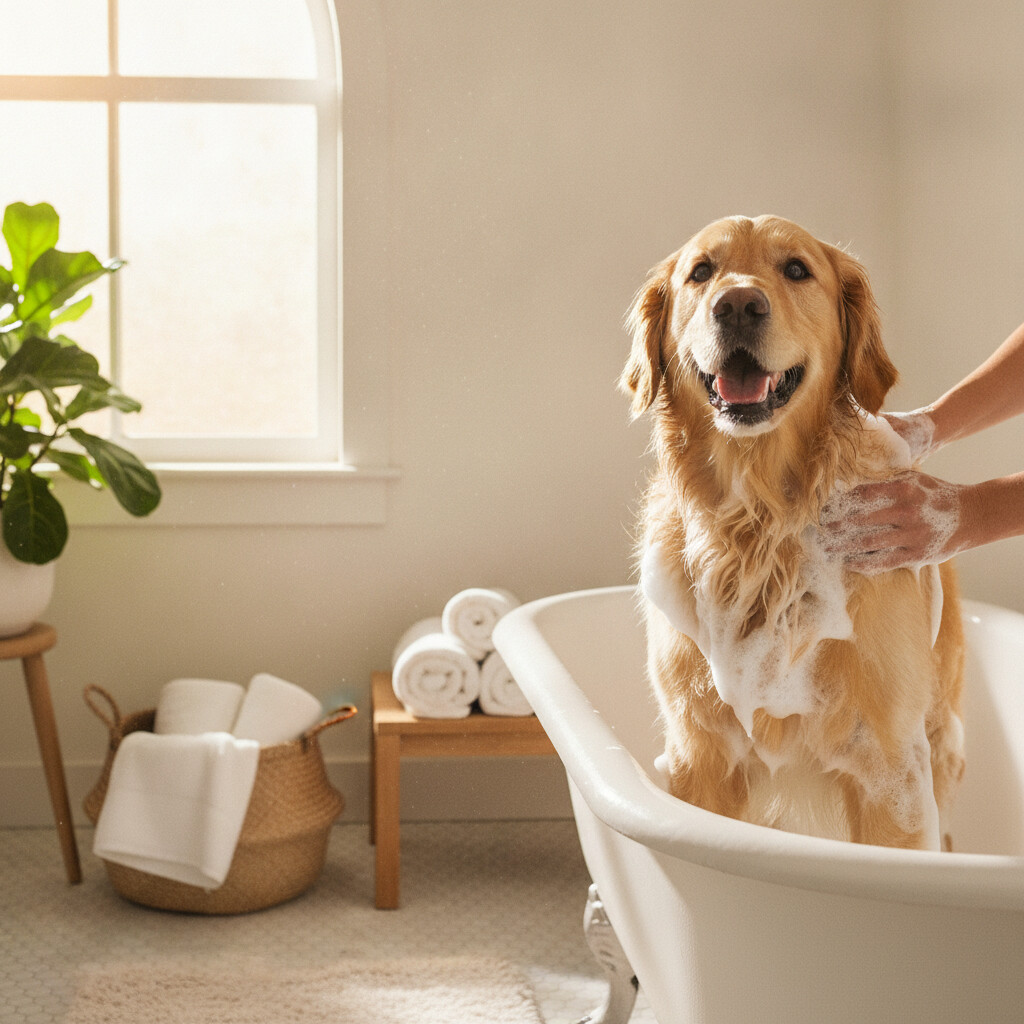
Most healthy dogs need a bath somewhere between once a month and once every three months. Where your dog falls in that range depends mostly on their coat type, their skin, and how much they roll in things. Bathing more often than that isn’t dangerous with the right shampoo, but for many dogs it isn’t necessary either, and brushing does more of the day-to-day work than baths do.
Here’s how to work out the right schedule for your dog, coat by coat, and the signs that a smell or itch needs a vet rather than more shampoo.
The short answer: how often to bathe a dog
The ASPCA’s general guidance is to bathe your dog at least once every three months, and more often if they get dirty or smelly. Many vets and groomers suggest roughly every four to eight weeks for an average dog with healthy skin.
There’s no magic number because dogs vary enormously. A Basset Hound with an oily coat and skin folds has very different needs from a Siberian Husky, whose double coat is built to stay fairly clean on its own. The better question is: what does your dog’s coat and skin need, and what is your dog actually getting into?
As a rough starting point:
- Every 1–4 weeks: dogs with oily coats or skin conditions, hairless breeds, dogs who swim in lakes or roll in mud often, and dogs on a vet-prescribed medicated shampoo schedule.
- Every 4–8 weeks: most short-coated and medium-coated dogs, and dogs with long, silky coats (who also need frequent brushing).
- Every 2–3 months or as needed: double-coated breeds such as Huskies, Malamutes, Akitas and many shepherds, as long as they’re brushed regularly.
Then adjust based on how your dog’s skin and coat respond.
Bathing schedules by coat type
Short, smooth coats (Beagles, Boxers, Dachshunds, Pit Bull types). These coats shed dirt fairly easily and don’t mat. A bath every month or two is usually plenty. A weekly wipe-down with a damp cloth or a rubber curry brush keeps them looking good between baths.
Oily coats and skin folds (Basset Hounds, Cocker Spaniels, Bulldogs, Shar-Peis). These dogs can get a greasy, yeasty smell faster. Many do best with a bath every two to four weeks, and the skin folds may need cleaning and drying more often than that. Bulldogs’ facial folds, for example, often need a quick clean and thorough dry a few times a week.
Double coats (Huskies, Malamutes, German Shepherds, Golden Retrievers, Labradors). A double coat has a dense undercoat and a weather-resistant outer coat. Frequent bathing isn’t needed and can strip the natural oils that help the coat repel water and dirt. Every two to three months is common, with extra baths when they get filthy. The real work is brushing, especially during the heavy seasonal sheds in spring and autumn. The most important part of bathing a double-coated dog is drying them completely, right down to the skin. A damp undercoat trapped against the skin is a common set-up for hot spots.
Long, silky or continuously growing coats (Yorkies, Shih Tzus, Maltese, Poodles, Doodles). These coats tangle and mat, and they trap dirt. Bathing every three to six weeks is typical, often alongside professional grooming. Always brush out tangles before the bath: water tightens mats. A forum member recently asked how often Yorkies need grooming in hot, dusty weather, and the honest answer is that brushing frequency matters more than bath frequency for that coat.
Wire coats (many terriers, Schnauzers, wire-haired Dachshunds). Wire coats are naturally dirt-resistant. Too much bathing can soften them. Bathing every one to three months is usually enough, with regular brushing and hand-stripping or clipping as the breed needs.
Hairless and very thin-coated breeds (Chinese Crested, Xoloitzcuintli, American Hairless Terrier). With no coat to absorb oils, their skin can get oily, develop blackheads, or burn in the sun. They often need a gentle bath every week or two, plus moisturising and sun protection as advised by your vet.
Can you bathe a dog too often?
Yes, though how much it matters depends on the shampoo.
Frequent bathing with harsh products can strip the skin’s natural oils and disturb its protective barrier, leaving skin dry, flaky and itchy. On the other hand, some dogs with allergic skin disease benefit from more frequent bathing, not less. The International Committee on Allergic Diseases of Animals (ICADA) includes bathing with a mild, non-irritating shampoo as one part of managing flare-ups of canine atopic dermatitis, partly because it rinses allergens off the skin.
So the risk isn’t really the water. It’s the product and the dryness. Signs your dog is being bathed too often, or with the wrong shampoo:
- Dry, flaky skin or dandruff
- More scratching in the days after a bath
- A dull, brittle coat
- Red or irritated patches
If you see these, space baths out, switch to a gentle, fragrance-free dog shampoo, and talk to your vet if it doesn’t settle.
Can you use human shampoo on a dog?
It’s best not to. Dog skin is, on average, less acidic than human skin, and it’s thinner, with fewer cell layers. Shampoos formulated for human hair and scalp aren’t designed for that, and repeated use may irritate a dog’s skin. Baby shampoo is gentler, but a basic dog shampoo is cheap and a better choice for regular use.
If your vet has prescribed a medicated shampoo, for example chlorhexidine or miconazole for a bacterial or yeast skin infection, follow their instructions exactly. Medicated shampoos often need to stay on the skin for around 10 minutes before rinsing to work, and the schedule may be two or three times a week at first.
Practical tips for a better bath
- Brush first. Removing loose hair and tangles before the bath gets shampoo to the skin and saves your drain.
- Use lukewarm water. Not hot. Test it on your wrist as you would for a baby.
- Keep water out of the ears. Wipe the ears with a damp cloth instead of spraying them, and dry them gently afterwards. Water trapped in the ear canal can contribute to ear infections in dogs, especially in floppy-eared breeds.
- Rinse thoroughly. Leftover shampoo residue is a common cause of post-bath itching. Rinse until the water runs clear, then rinse again.
- Dry fully. Towel off, then use a blow dryer on a cool or low setting if your dog tolerates it. This matters most for thick and double coats.
- Check spot-on flea and tick products. Many topical treatments say not to bathe for a set time (often around 48 hours) before or after applying them. Check the label on the product you use.
- Puppies: gentle baths are fine once a puppy can regulate their body temperature. Use a puppy-safe shampoo, keep the room warm, and dry them quickly. If you’re unsure when to start, ask your vet at the next vaccination visit.
In summer, a cool rinse can help after a hot walk, but it isn’t a substitute for shade and water. Our guide to heatstroke in dogs covers the warning signs.
Why does my dog still smell after a bath?
A dog who smells bad again within a few days of a bath usually has something going on that shampoo won’t fix. Common culprits include:
- Ear infections, which can have a strong, yeasty or sour smell.
- Skin infections, often bacterial or yeast, especially in skin folds, paws and armpits.
- Dental disease. Bad breath is one of the dental warning signs most owners miss.
- Anal gland problems, which produce a distinctive fishy smell. If your dog is also scooting, read why dogs scoot.
- Allergies, which often show up as itchy, red, smelly skin or constant paw licking (see why dogs lick their paws so much).
Bathing more often to cover up these smells can make some of them worse, particularly if it dries out irritated skin.
When to see a vet
Book a vet visit if you notice any of the following:
- A bad smell that comes back within days of a bath
- Persistent itching, scratching, chewing or licking (our guide to why dogs get so itchy covers the common causes)
- Red, scabby, greasy or flaky patches of skin
- Hair loss, especially in patches
- Head shaking, ear scratching, or discharge from the ears
- Hot spots: moist, red, painful areas that appear quickly
- Lumps or bumps you find while bathing or brushing
Bath time is actually one of the best chances you’ll get to check your dog over properly. Run your hands along their body, look between their toes and inside their ears, and look at the skin under the coat. You’ll get to know what’s normal for your dog, and you’ll notice early when something changes.