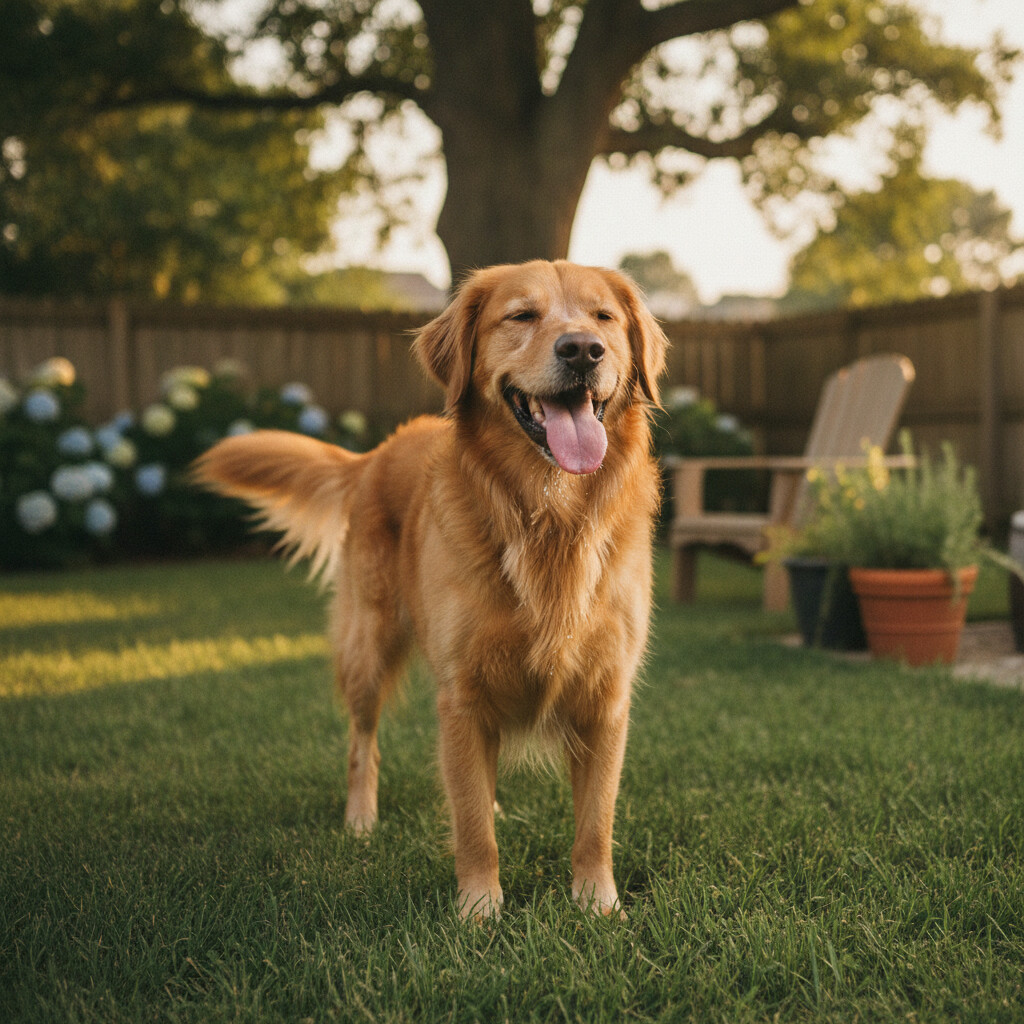
Most panting is just a dog cooling off — they don’t sweat through their skin the way we do, so panting is their main air-conditioning system. But panting that starts out of nowhere, doesn’t match the situation, or comes with other symptoms is worth paying attention to. Here’s how to tell ordinary panting from the kind that means something’s wrong.
Why Dogs Pant in the First Place
Dogs regulate body temperature almost entirely through panting and a small amount of sweating through their paw pads. When a dog pants, air moves rapidly over the moist surfaces of the tongue, mouth, and upper respiratory tract, and evaporation cools the blood flowing through that area. It’s an efficient system — efficient enough that a healthy dog can regulate its temperature through a warm afternoon with nothing more than an open mouth and a lolling tongue.
Normal panting shows up after exercise, in hot or humid weather, during excitement (the door bell, a car ride, a visitor), or in short bursts of stress (the vet’s waiting room, a thunderstorm). It’s rhythmic, the dog can be distracted out of it, and it settles down within a reasonable window — usually 10 to 20 minutes once the trigger passes.
Brachycephalic breeds — Bulldogs, Pugs, Boston Terriers, French Bulldogs — pant more than other dogs at baseline because their airway anatomy makes air movement less efficient. That’s a structural issue (sometimes called brachycephalic airway syndrome), not a symptom of a new problem, though it does mean these breeds overheat faster and need extra caution in hot weather.
When Panting Signals a Problem
The panting that should get your attention is the kind that doesn’t fit the moment: panting hard while resting quietly indoors, panting that started suddenly with no obvious trigger, or panting that doesn’t taper off after the dog has cooled down and calmed down. A few specific patterns are worth knowing:
Heatstroke. Excessive panting combined with bright red or purple gums, thick drool, disorientation, vomiting, or collapse is an emergency, especially in warm weather or after exertion. Dogs cool down far less efficiently than humans and can go from uncomfortable to critical quickly. If you suspect heatstroke, move the dog to shade or air conditioning, offer water, and get to a vet immediately — don’t wait to see if it resolves.
Pain. Panting is a common, easy-to-miss pain response in dogs. An older dog with arthritis, a dog recovering from an injury, or a dog with an underlying condition like pancreatitis may pant more than usual simply because they’re uncomfortable, even without limping or crying out. If the panting is paired with restlessness, reluctance to lie down comfortably, or a hunched posture, pain is worth ruling out.
Cushing’s disease (hyperadrenocorticism). According to Cornell University College of Veterinary Medicine, increased panting is one of the classic early signs of Cushing’s disease, alongside increased thirst, increased urination, a pot-bellied appearance, thinning fur, and skin changes. It’s most common in middle-aged and senior dogs and develops gradually enough that owners often chalk it up to “just getting older.”
Heart or respiratory disease. Dogs in early congestive heart failure or with respiratory conditions may pant more at rest, particularly at night or after mild activity that never used to bother them. This is often paired with a cough, reduced stamina, or labored breathing rather than the open-mouth, relaxed panting of a hot dog.
Bloat (gastric dilatation-volvulus). In large, deep-chested breeds — Great Danes, Standard Poodles, German Shepherds, Weimaraners — sudden heavy panting along with a visibly swollen abdomen, unproductive attempts to vomit, drooling, and restlessness is a life-threatening emergency. GDV can progress from first signs to critical in a matter of hours. This is one of the few situations where “wait and see” is genuinely dangerous.
Anxiety and phobias. Thunderstorms, fireworks, car rides, or separation from an owner can trigger heavy panting even in a cool, calm room. This kind of panting usually comes with pacing, trembling, drooling, or clinginess, and eases once the trigger is removed. It’s not an emergency, but frequent anxiety-driven panting is worth addressing — chronic stress isn’t good for a dog’s health or quality of life.
What’s Actually Normal vs. What Isn’t
A useful gut check: normal panting has an obvious cause (heat, exercise, excitement) and resolves within about 20 minutes of the trigger going away. Panting becomes worth investigating when it happens at rest with no clear trigger, lasts well beyond the situation that caused it, sounds different — raspier, more labored, or paired with a change in gum color — or shows up alongside other new symptoms like increased thirst, weight change, or reduced energy.
Older dogs are more likely to have an underlying cause for changed panting patterns simply because conditions like Cushing’s, heart disease, and arthritis become more common with age. If your dog’s panting has noticeably changed over the past few weeks or months — not just today — that trend matters more than any single episode.
When to See a Vet
Treat it as an emergency (same-day or urgent care) if panting is severe and comes with pale, blue, or brick-red gums, collapse, a distended abdomen, disorientation, or if it follows heat exposure or intense exertion in hot weather. These situations can deteriorate fast.
Schedule a regular vet visit if you’ve noticed a gradual increase in panting over weeks or months, especially alongside increased thirst or urination, weight gain around the belly, hair thinning, reduced stamina, or a new reluctance to jump or climb stairs. These are the kind of slow-building signs that are easy to dismiss individually but add up to something a vet should evaluate.
When in doubt, it costs nothing to call your vet and describe what you’re seeing — a five-minute phone conversation is generally enough for a vet tech to tell you whether it’s a “come in now” or “keep an eye on it” situation.
The Bottom Line
Panting is a normal, healthy part of how dogs manage heat and excitement — most of it needs no action at all. What separates ordinary panting from a red flag is context: no clear trigger, no let-up after the trigger passes, or a change from your dog’s usual baseline. Pay attention to the pattern over time, not just the individual moment, and you’ll catch the cases that actually need a vet.
For more on recognizing when your dog is uncomfortable, see our guide on signs your dog is in pain, and if panting shows up alongside anxious pacing or clinginess, our piece on separation anxiety in dogs covers the anxiety side in more depth. If heat is a factor, our heatstroke in dogs guide walks through first aid steps.