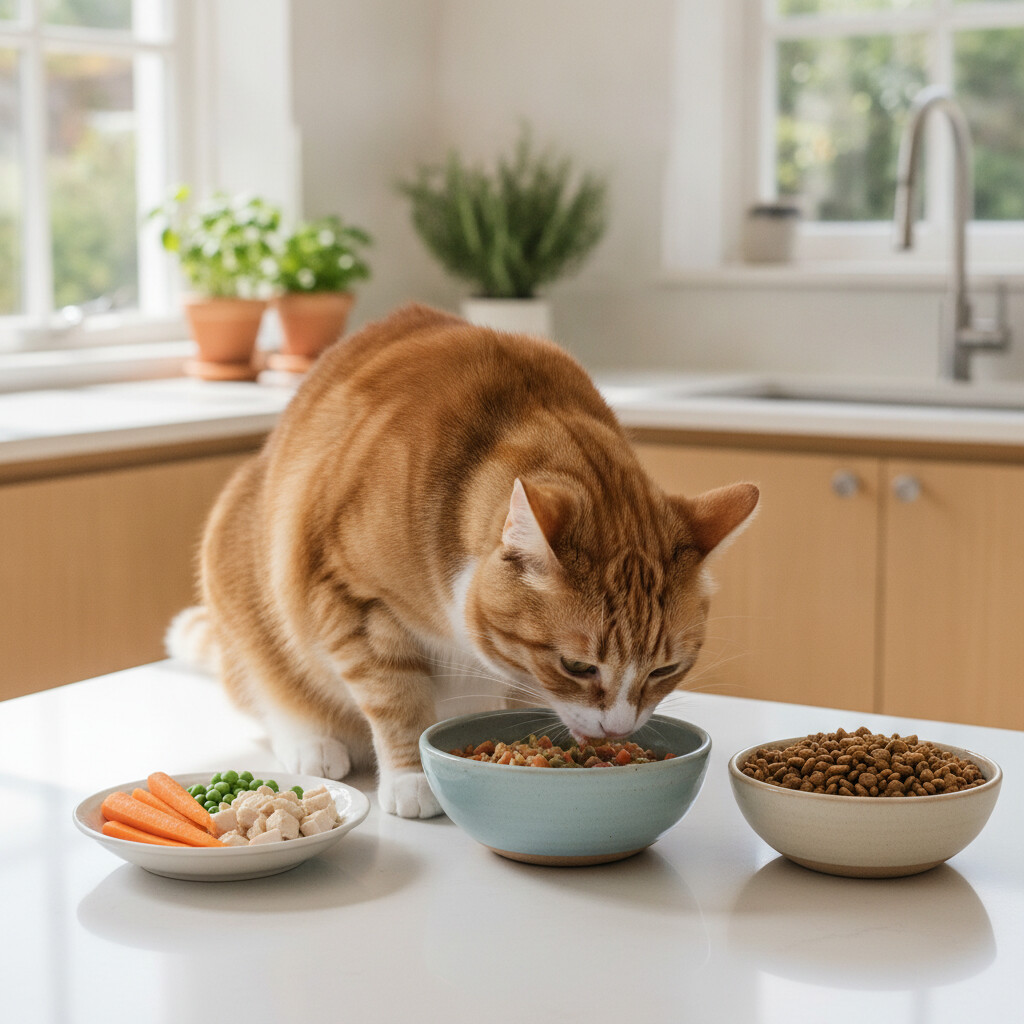
No — cats don’t have a dietary requirement for carbohydrates the way they do for protein and certain fats. But “no requirement” isn’t the same as “harmful,” and a true zero-carb diet is neither realistic nor necessary for almost any cat. The honest answer sits between the two extremes you’ll find online: cats aren’t built to run on carbs, but small to moderate amounts aren’t the villain some diet trends make them out to be.
What “Obligate Carnivore” Actually Means
Cats are obligate carnivores, which is a specific biological claim, not a marketing term. It means their bodies evolved to get essential nutrients — taurine, arginine, arachidonic acid, and preformed vitamin A — from animal tissue, because cats lost the metabolic pathways to make these compounds from plant-based ingredients the way dogs and humans can. As we’ve covered before, this is why protein content and quality matter so much more for cats than for most other pets.
Being an obligate carnivore is about what a cat needs, though — it doesn’t automatically mean everything else is off-limits. Cats also lack a dedicated pathway for using carbohydrates as a primary energy source the way omnivores do; their metabolism defaults to protein and fat for energy instead. That’s the real basis for the “cats don’t need carbs” claim, and it’s accurate as far as it goes.
Why Grain-Free Isn’t the Same as Carb-Free
This is where a lot of the confusion starts. “Grain-free” describes the absence of wheat, corn, rice, and similar grains — it says nothing about total carbohydrate content. Manufacturers still need some binding, texture-providing ingredient to hold kibble together, so grain-free dry foods typically substitute peas, lentils, potatoes, or tapioca — all of which are carbohydrate sources. Some grain-free formulas end up with a similar or even higher carbohydrate percentage than the grain-inclusive food they’re marketed as replacing.
If minimizing carbohydrates is actually your goal, the label to check is the guaranteed analysis and ingredient list, not the word “grain-free” on the front of the bag. As a rough rule: wet food is almost always lower in carbohydrate content than dry kibble, regardless of grain status, simply because kibble requires starch to hold its shape during manufacturing. We go into the broader wet-versus-dry tradeoffs, including this one, in our full comparison. For a deeper look at whether grain-free formulas specifically deliver on their health claims, see our breakdown here.
Can Cats Actually Digest Carbohydrates?
Yes, to a meaningful degree — this is another point that gets lost in more extreme “zero-carb” arguments. Cats produce amylase (the enzyme that breaks down starch) in smaller quantities than omnivores, but studies on feline carbohydrate digestibility have generally found that cooked, digestible starches (like those in commercial kibble, which is cooked under heat and pressure during extrusion) are absorbed reasonably well — often in the 80–90% range for well-processed starches. Raw or unprocessed starch is a different story and is digested far less efficiently, which is one reason commercial diets cook their carbohydrate ingredients rather than leaving them raw.
None of this means cats benefit from carbohydrates the way they benefit from protein. It means their bodies can process moderate, cooked carbohydrate content without it being a metabolic emergency — which matters, because completely carbohydrate-free commercial diets are difficult to formulate and not widely available for a reason.
Is a High-Carb Diet Actually a Problem?
This is where the evidence gets more interesting, and more cautious. Several studies have linked diets very high in carbohydrates to weight gain in cats, partly because high-carb dry foods tend to be calorically dense and easy to overfeed, and partly because excess calories from any source — carbohydrate, fat, or protein — become body fat if a cat isn’t burning them off. Obesity, in turn, is a well-established risk factor for type 2 diabetes in cats.
That’s a meaningfully different claim than “carbs directly cause diabetes,” which isn’t well supported by current research — the relationship runs mostly through weight gain and overall calorie intake, not through carbohydrates having some unique toxic effect. A cat maintained at a healthy weight on a moderate-carbohydrate commercial diet isn’t at the same risk as a cat that’s overweight, regardless of what makes up the calories.
If your cat has diagnosed diabetes or prediabetes, this is genuinely one area where a lower-carbohydrate diet has real clinical support — many vets recommend it specifically for diabetic cats as part of management, sometimes alongside insulin therapy. That’s a vet-directed decision, not a general wellness trend to apply to every cat.
So Should You Actively Avoid Carbs?
For most healthy cats, no — chasing “zero carb” isn’t necessary and can mean paying a premium for a marketing claim rather than a meaningful health benefit. What’s worth paying attention to instead:
- Total calories relative to your cat’s ideal weight matter more than carbohydrate percentage for most cats.
- Protein quality and quantity should be the primary thing you’re evaluating on a label — that’s where cats have an actual, non-negotiable requirement.
- Wet food is a reasonable default lean toward lower carbohydrate content if you want to hedge, especially for cats prone to weight gain.
- A vet-recommended low-carb therapeutic diet is worth taking seriously if your cat has diabetes, prediabetes, or significant weight problems — this is the one scenario where the evidence for actively restricting carbohydrates is strong.
The takeaway: cats don’t need carbohydrates to survive or thrive, but a completely carb-free diet isn’t realistic, necessary, or clearly beneficial for a healthy cat. Focus on protein quality and appropriate calorie intake first; treat carbohydrate restriction as a targeted tool for specific medical situations rather than a default rule for every bowl.